

Why in news?
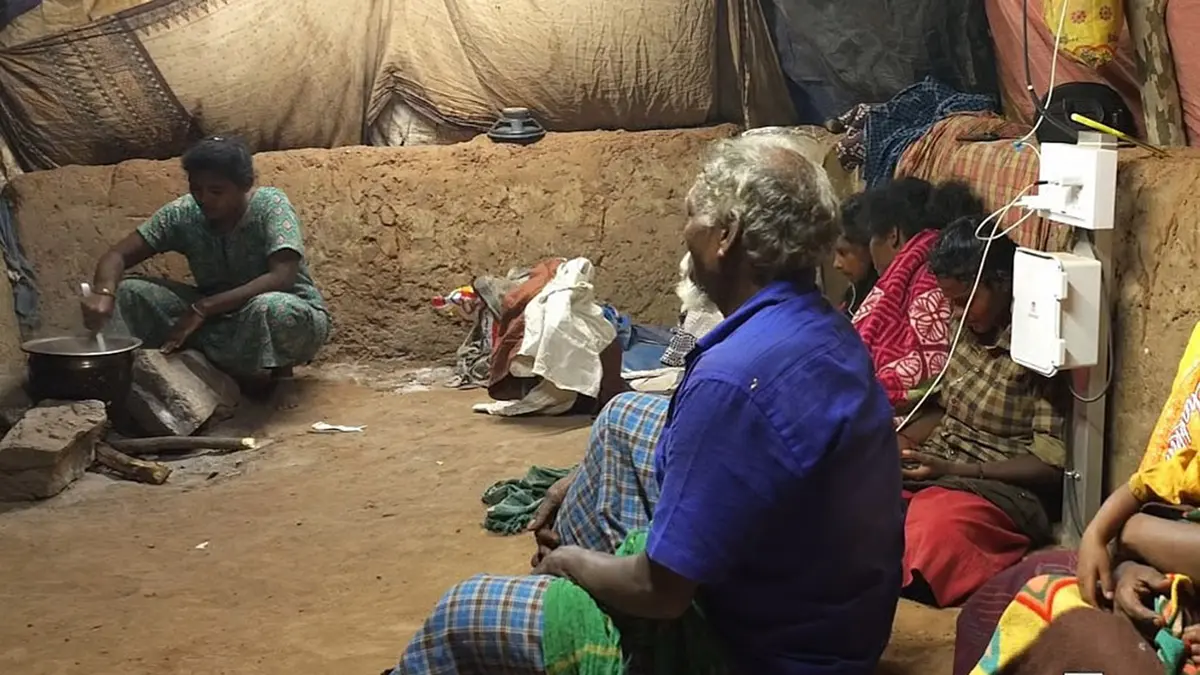
A solar mini-grid inaugurated on 22 September has brought electricity to Nochiodai, a remote Paliyar settlement in Tamil Nadu. The New Indian Express's 24 September report identifies 18 families and 76 residents in the Srivilliputhur–Megamalai Tiger Reserve. The ₹25-lakh project was funded by the National Bank for Agriculture and Rural Development, or NABARD, and implemented by the Forest Department. It provides household lighting, mobile charging, street lights and electricity for the community hall. For residents who previously relied on kerosene lamps and travelled to charge phones, the immediate change is access to basic electrical services. The project concerns this settlement, not universal electrification of every Paliyar habitation. Its long-term value will depend on reliable operation and maintenance.
A community, not simply a remote location
The report identifies Nochiodai's residents as members of the Paliyar community and says the households hold land documents. The news is therefore about services reaching an existing community, not about people being newly settled in a forest. Paliyar identity should not be reduced to a timeless description of forest isolation. Education, employment, mobility and access to public services can differ across households and settlements. One village's conditions cannot represent every member of a community.
The Ministry of Tribal Affairs' official Scheduled Tribes list for Tamil Nadu includes entries such as Palleyan, Palliyan and Palliyar. Legal recognition is tied to the relevant state list and notified names. Similar spellings should not be treated casually when determining an individual's eligibility for a benefit. Nor does Scheduled Tribe status automatically mean inclusion in every narrower administrative category. The immediate report does not establish such a separate classification for this settlement.
The protected landscape around Nochiodai
Srivilliputhur–Megamalai Tiger Reserve was notified on 8 February 2021 by bringing together the two sanctuary landscapes. It lies in the southern Western Ghats in Tamil Nadu. Official assessments describe connections with Kerala's Periyar landscape to the southwest and the wider Anamalai landscape to the northwest. These connections matter because wildlife does not remain within a single administrative boundary. A reserve's ecological role includes maintaining habitat relationships across the surrounding mountains.
The state notification identifies sanctuary areas in Theni, Madurai and the Srivilliputhur side of the landscape. The forested hills form part of a wider water-producing and biodiversity-rich mountain system. For residents, the same terrain can make transport and infrastructure difficult. A service designed for an easily accessible town may not work in a remote forest settlement. The geography therefore helps explain the choice of a local electricity system rather than simply providing background scenery.
How a solar mini-grid works
A mini-grid combines local electricity generation with a small distribution network serving nearby users. In a solar system, photovoltaic cells convert sunlight into electrical energy. The electricity can supply connected loads, while storage may allow energy produced during the day to be used later. An inverter converts direct current into alternating current where the connected equipment requires it. These are general system functions, not a description of unreported specifications at Nochiodai.
Installed panels and dependable service are different measures. Solar output varies with sunlight, while demand changes as residents use lights and appliances. A system must balance generation, storage and the connected load. The inauguration report does not provide the plant's capacity, battery specification or guaranteed hours of supply. Those details would be needed to judge how much additional equipment it could support. Household lighting should not be assumed to imply unlimited electricity for every possible use.
What the reported installation provides
The newspaper records 36 solar street lights, light-emitting diode lamps in homes, phone-charging facilities and an electrified community hall. The project began in August 2025 before its September 2026 inauguration. These details describe specific facilities, rather than a promise of every wider development benefit. Easier charging can support communication, and lighting can make evening activities more practical. However, improved examination results, household incomes or wildlife safety would require separate evidence over time.
Reliability is particularly important where repair services are distant. A failed component, damaged cable or depleted battery can interrupt access even when the original installation remains in place. Clear responsibility for inspection, fault reporting and replacement is therefore part of the service. Residents also need to understand which appliances the system can safely support. These are practical maintenance requirements, not evidence that a fault has occurred in the new installation.
Forest rights and conservation belong in the same account
The Scheduled Tribes and Other Traditional Forest Dwellers (Recognition of Forest Rights) Act, 2006 addresses recognised forest-related rights and historical exclusions. Commonly called the Forest Rights Act, it covers individual and community rights under its conditions and procedures. The Ministry of Tribal Affairs also describes provisions for basic development facilities. Living in a protected landscape does not, by itself, establish that a community's occupation is unlawful. It is not sufficient reason to assume that essential services must be denied.
The law also assigns conservation responsibilities to rights holders and the Gram Sabha, the village assembly. Rights recognition and protection of forests are therefore not presented as inherently opposite objectives. A local energy project still needs to respect the applicable environmental and administrative requirements. Its design must consider both residents' needs and the surrounding habitat. The inauguration does not decide unrelated land disputes elsewhere in the reserve, which require their own records and legal processes.
The test after installation
A useful assessment would follow whether homes continue receiving the announced services through changing weather and ordinary wear. It would also examine who responds to faults, how replacements are financed and whether residents can participate in decisions. The cost of initial equipment is only one part of that picture. Long-term access depends on the organisation supporting the equipment after the inauguration. Community experience is essential evidence in evaluating that support.
Conclusion
Nochiodai's solar project addresses a concrete gap in lighting and communication access within a difficult forest setting. Its significance is strongest when described through those actual services, rather than broad claims about transforming every aspect of community life. Sustained maintenance, recognised rights and conservation-sensitive operation will determine whether the initial installation becomes dependable everyday infrastructure for the residents it serves.