

Why in news?
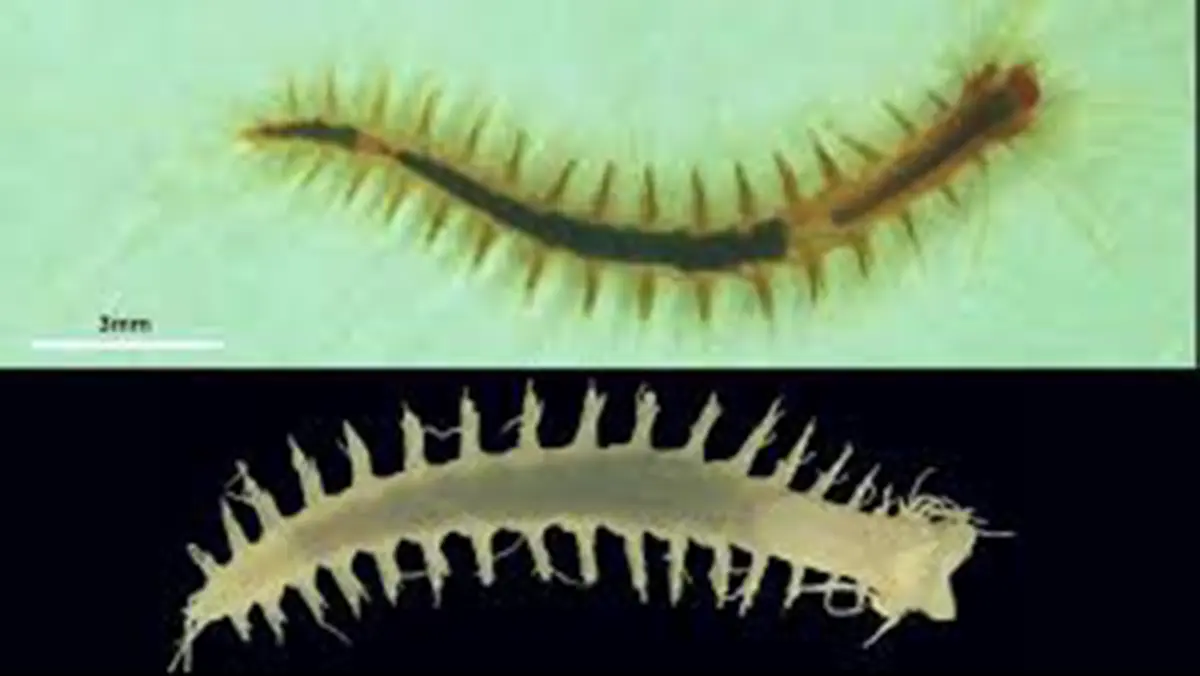
Marine biologists have discovered a new species of bristle worm, Paraleocrates indica, in the intertidal mudflats of the Champa Estuary in West Bengal. This is the first time a member of this rare genus has been recorded in Indian waters.
Background
Bristle worms (polychaetes) of the family Hesionidae are colourful, segmented worms often found in association with other marine organisms. Prior to this discovery, only two species in the genus Paraleocrates were known worldwide, both from Southeast Asia. A team from the Zoological Survey of India and Mexican collaborators conducted surveys of coastal mudflats between December 2023 and April 2024, using simple hand shovels to collect specimens.
Description of the species
- Appearance: The worm appears reddish to the naked eye and ranges from 14 mm to 35 mm in length. Its front pair of eyes is five times larger than the rear pair, giving it a distinctive look.
- Feeding apparatus: It possesses a pair of fang‑shaped jaws – one on the upper lip and one on the lower – and long, sensitive antennae to navigate its murky habitat.
- Bristle count: Under a microscope, P. indica has fewer bristles (neurochaetae) per bundle than its relatives. Each bristle ends in a single‑pointed blade without the protective guard found in other species.
- Taxonomic significance: The species name “indica” honours India, the country where it was first discovered.
Significance
- Biogeographic insight: The find expands the known range of the genus and suggests that India’s mudflats may harbour many undiscovered invertebrates.
- Conservation message: Estuarine ecosystems often face pollution and reclamation. Discovering new species there underscores the need to protect these fragile habitats and conduct systematic surveys.
- Scientific collaboration: The research involved cooperation between Indian and Mexican scientists, illustrating the benefits of international collaboration in biodiversity studies.
Conclusion
Paraleocrates indica is only the third known species in its genus and the first from India. Its discovery highlights the hidden diversity of India’s coasts and the importance of supporting taxonomic research.
Source: Research Matters