
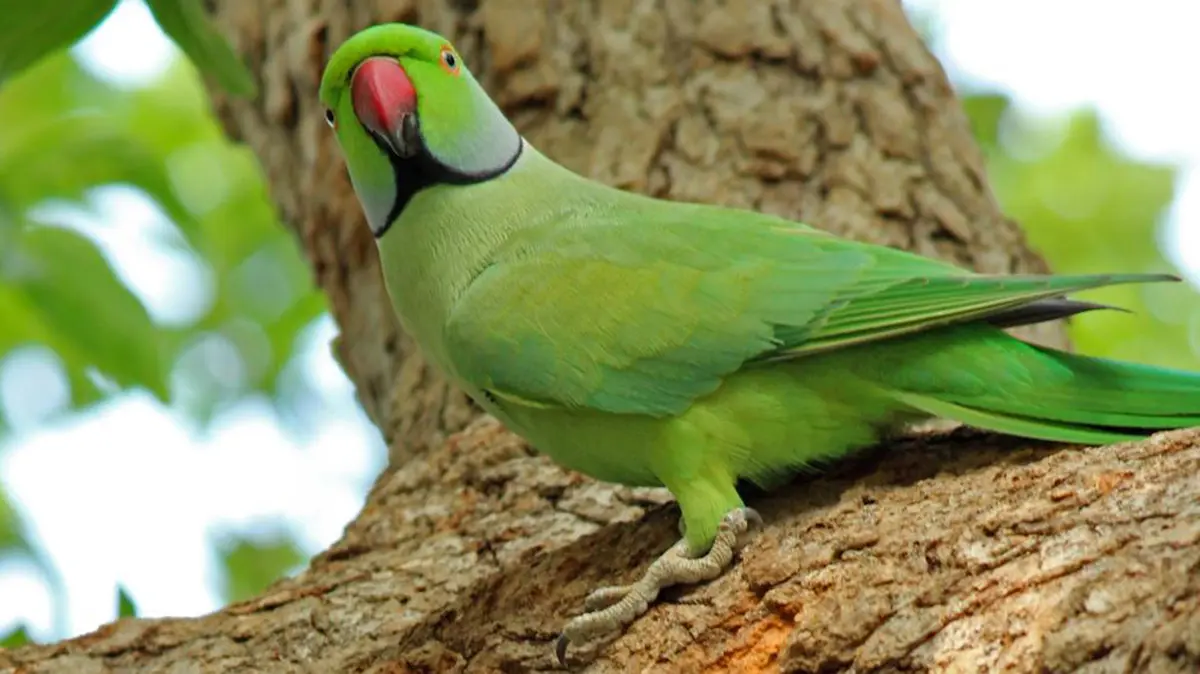
Why in news?
Researchers confirmed Parrot bornavirus 4 in captive Indian birds for the first time. They tested 83 parrots across three states, and 44 carried the virus. The finding requires stronger testing, quarantine and captive-bird surveillance.
Background
Psittacine birds include parrots, parakeets, macaws and cockatoos, and many such birds are kept in zoos, breeding centres and homes.
Bornaviruses can infect the nervous systems of animals, and some avian bornaviruses cause a serious disease in psittacine birds.
That illness is called proventricular dilatation disease, and the proventriculus is the glandular first chamber of a bird’s stomach.
The disease was recognised during the late 1970s, and scientists linked avian bornaviruses to it in 2008.
What is Parrot bornavirus 4?
Parrot bornavirus 4 (PaBV-4) is a virus belonging to the family Bornaviridae, and it falls within the genus Orthobornavirus.
Its genetic material is ribonucleic acid, commonly called RNA. The virus carries this material inside a protein coat and outer envelope.
Scientists describe its genome as negative-sense single-stranded RNA, and host cells must copy it before making viral proteins.
What did the Indian study examine?
Researchers collected samples between 2020 and 2024, and the birds came from Assam, Karnataka and West Bengal.
The study covered 83 captive birds from 13 psittacine species. It included sick birds, dead birds and healthy cage companions.
- Forty-four of 83 birds tested positive, giving 53.01 per cent.
- Eighteen of 33 suspected living birds tested positive.
- Twenty-one of 24 dead birds tested positive.
- Five of 26 healthy cage companions also carried the virus.
- Every positive genetic sequence belonged to Parrot bornavirus 4.
The study appeared in Scientific Reports on 15 June 2026. It provided India’s first molecular detection and genetic characterisation.
Meaning of molecular detection: Researchers found viral genetic material in samples, and they did not rely only upon visible symptoms.
What disease can it cause?
Parrot bornaviruses can cause proventricular dilatation disease, and the illness damages nerves controlling digestion and movement.
- A bird may lose weight despite continuing to eat.
- It may regurgitate food or pass undigested seeds.
- The proventriculus may become enlarged and poorly functioning.
- Nervous signs can include tremors, imbalance and seizures.
- Severe cases may develop weakness, paralysis and death.
Infection does not always cause immediate disease, and apparently healthy birds may carry and shed the virus.
How might the virus spread?
The exact natural transmission route remains unsettled, and close contact with infected secretions and droppings appears important.
Contaminated feather dust may also spread viral material, and shared cages, feeding equipment and crowded facilities can increase exposure.
Asymptomatic carriers make control difficult, and a normal-looking bird cannot be declared uninfected without suitable testing.
Can the disease be cured?
No specific antiviral medicine or approved vaccine can eliminate the infection. Veterinary care therefore focuses on support and symptom management.
- Facilities should isolate infected or suspected birds.
- New birds need quarantine before joining existing collections.
- Repeated testing may detect infection missed by one sample.
- Cages and equipment require careful cleaning and disinfection.
- Stress reduction and nutritional support can improve welfare.
Does it threaten humans?
The Indian finding concerns an avian virus and captive-bird health, and it does not establish a human disease outbreak.
The immediate risks involve bird welfare, breeding collections and conservation, and claims about human infection would need separate scientific evidence.
Why is the study important?
The virus had earlier been reported from several other countries. These included Canada, Israel, Japan, South Korea and the United States.
Its detection in India fills a major surveillance gap. The high positivity requires wider studies, not assumptions about all Indian birds.
Do not generalise: The 53.01 per cent figure applies only to 83 sampled captive birds. It is not India’s overall prevalence.
Conclusion
India’s first confirmed Parrot bornavirus 4 detection reveals a hidden captive-bird risk. Quarantine, molecular testing and responsible bird management can reduce further spread.