

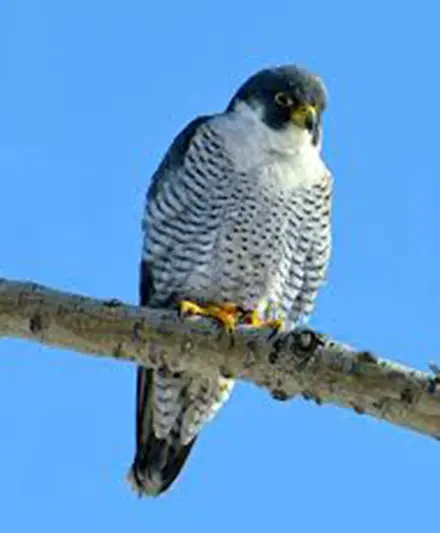
Why in news?
A wildlife researcher in central Australia photographed a Siberian peregrine falcon, marking the first recorded sighting of this subspecies in the region. Peregrine falcons are known for their remarkable speed and wide distribution.
Background
The peregrine falcon (Falco peregrinus) is a large bird of prey in the family Falconidae. It occurs on every continent except Antarctica and occupies a variety of habitats, from coastal cliffs and tundra to skyscrapers in cities. It is famed for its hunting stoop, during which it dives on prey at speeds exceeding 300 km/h, making it the fastest animal in the world.
Key points about the species
- Distribution and habitat: Peregrines breed on cliff ledges, tall trees and increasingly on human structures such as towers and bridges. They favour open landscapes where they can spot and pursue birds in flight.
- Diet and behaviour: They are daytime hunters and primarily feed on medium‑sized birds like pigeons, doves and waders. Outside the breeding season they are usually solitary and defend territories.
- Conservation status: The species is listed as “Least Concern” by the IUCN. Populations declined dramatically in the mid‑20th century due to pesticide poisoning (DDT), but successful bans and reintroduction programmes have led to strong recoveries.
- Siberian subspecies: The peregrine in the recent sighting belongs to the subspecies that breeds in Siberia and migrates south during winter. Its presence in central Australia suggests either an unusual migration route or changing environmental conditions.
Significance of the sighting
- Migratory insights: Such out‑of‑range records help ornithologists track changes in migration patterns, which may be influenced by climate change or shifts in prey availability.
- Public interest: Peregrine falcons capture popular imagination due to their speed and agility. Unique sightings can inspire citizen science and greater appreciation of raptors.
Conclusion
The appearance of a Siberian peregrine in Australia underscores the adaptability of this species and highlights the importance of monitoring bird movements across continents. Continued study will reveal whether such occurrences are rare vagrancies or part of a broader trend.
Source: Live Science