

Why in news?
A 2026 study examined cultural loss and weak awareness surrounding Phulkari’s Geographical Indication. It found that formal recognition had not automatically empowered surveyed artisans.
The craft and its social setting
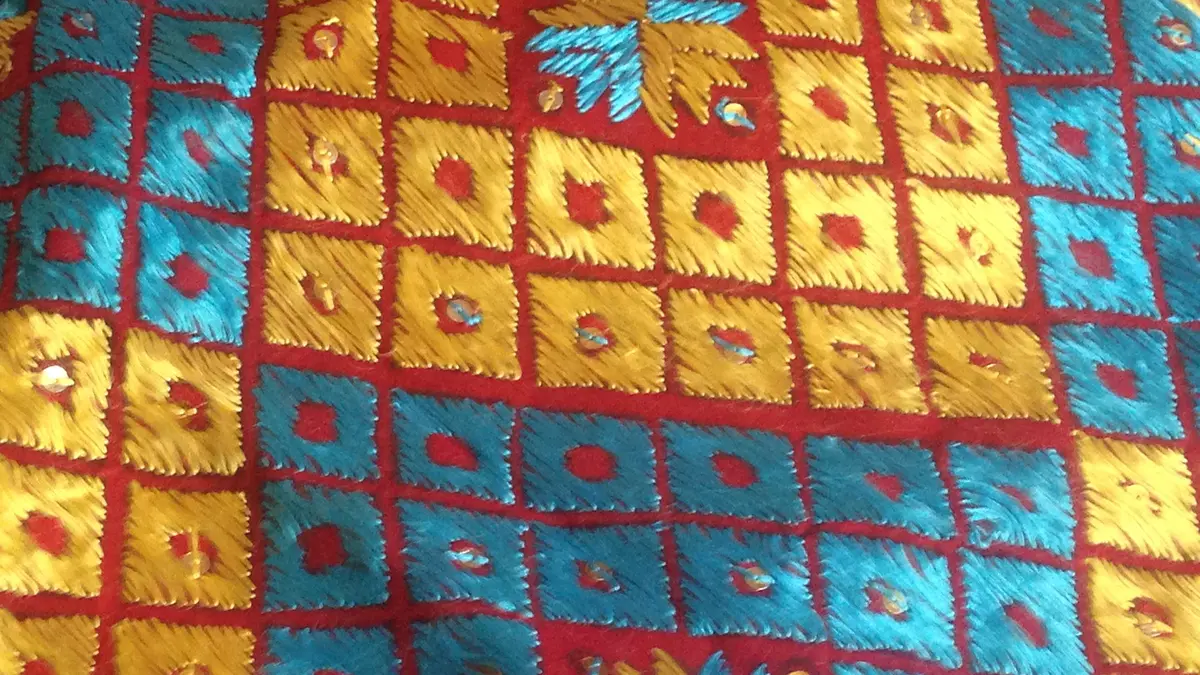
Phulkari means “flower work” and describes an embroidery tradition from the Punjab region. Artisans create motifs through counted stitches on the fabric’s reverse.
Traditional work often uses untwisted silk floss on handwoven cotton called khaddar. Geometric forms, flowers and everyday objects carry family and regional meanings.
Women historically produced Phulkari within households and community gatherings. Textiles marked marriages, births and other important transitions.
Commercial production has widened the craft’s market. It has also encouraged machine embroidery and standardised designs that can obscure handmade origins.
What the Geographical Indication (GI) registration covers
Phulkari is registered under India’s Geographical Indications of Goods system as embroidery. The registered geographical area covers Punjab, Haryana and Rajasthan. The application was filed in March 2005. The certificate was issued on 22 October 2010 and remains renewed until March 2035.
Punjab Small Industries and Export Corporation Limited is the registered proprietor. A Geographical Indication can protect a name linked with origin and traditional qualities.
It does not give every artisan automatic income or market access. Producers must understand registration, authorised-user processes, standards and enforcement.
What the recent research suggests
The qualitative study reported very low GI awareness among its surveyed artisans and shopkeepers. It also described fragmented supply chains and weak bargaining power.
These findings come from a case study, not a census of every Phulkari producer. They should therefore guide further inquiry, rather than support sweeping conclusions.
Nevertheless, the central concern is credible. A legal label offers little protection when custodians cannot use it or distinguish authentic goods.
From recognition to benefit
First, producer groups need accessible registration support and clear quality standards. Holograms or digital traceability can help buyers identify authorised work. Second, marketing should explain differences between hand embroidery and machine-made products. Honest labelling can support price premiums without banning innovation.
Third, cooperatives and artisan-owned enterprises can reduce dependence on middlemen. Direct digital sales help only when logistics, photography and payment systems are available.
Government schemes have supported training, toolkits and marketing events; their success should be measured through artisan earnings and sustained orders.
Tradition can evolve
Protection should not freeze Phulkari into one historical form. New products and designs can sustain livelihoods when artisans retain credit, consent and a fair share.
Conclusion
Phulkari’s GI secures a legal foundation, but recognition alone cannot preserve a living tradition. Real protection requires informed artisans, credible labelling and fair market power.