

Why in news?
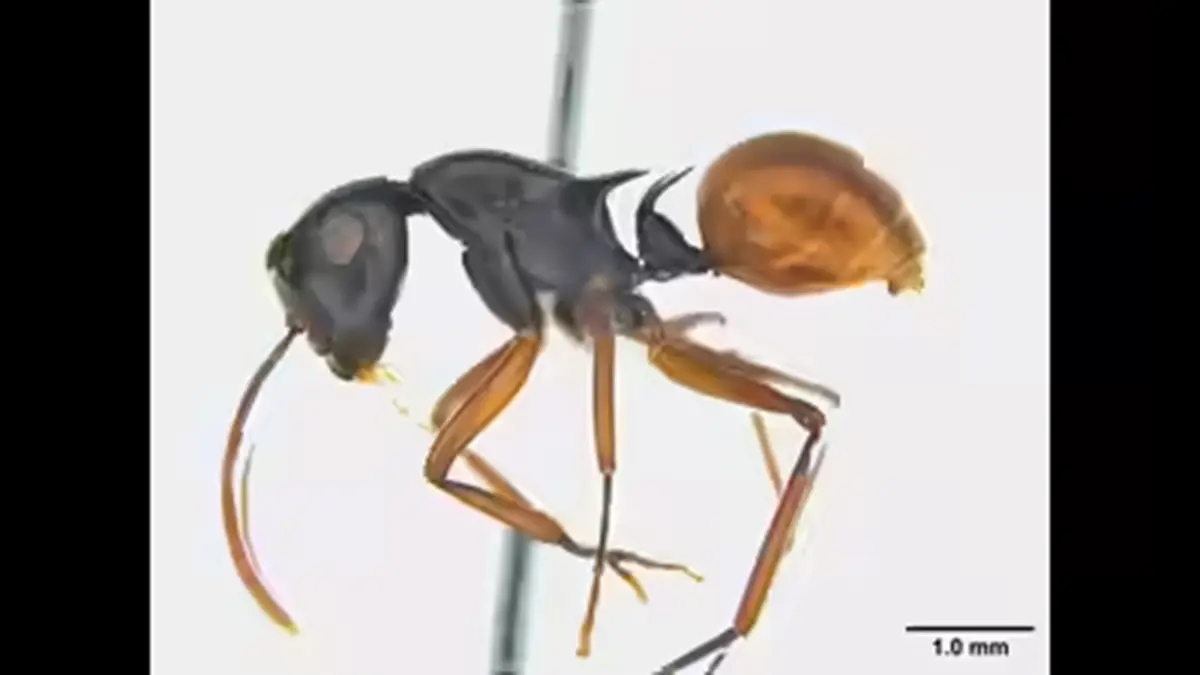
Scientists have described a new species of spiny ant, Polyrhachis garbhangaensis, found in the Garbhanga Reserve Forest on the outskirts of Guwahati. The discovery highlights the hidden biodiversity of urban forest patches and underscores the need to conserve such green spaces.
Background
Polyrhachis is a large genus of ants spread across the Old‑World tropics. The newly discovered species belongs to the rare mucronata group and was collected during field surveys in 2023. Researchers from the National Institute of Advanced Studies (NIAS) and collaborators published the formal description in the journal Asian Myrmecology in January 2026. The species is named after the 117‑square‑kilometre Garbhanga Reserve Forest, which connects Guwahati to the Rani Reserve Forest.
Characteristics of the new ant
- Appearance: Workers measure about 5.6 millimetres in length and have a striking yellow–orange abdomen, unlike the typically dark bodies of related species. Curved spines on the thorax and abdomen likely deter predators.
- Ecological role: As with other Polyrhachis ants, the species is likely arboreal and may nest in tree cavities. Its diet probably includes small insects and honeydew from plant‑feeding bugs.
- Associated mimicry: Researchers also recorded an ant‑mimicking spider that closely resembles the new ant. Such mimicry helps predators avoid misidentifying the spider as prey, illustrating complex ecological interactions.
- Conservation message: Finding a previously unknown species in a forest near a rapidly growing city shows that urban green spaces can harbour unique life forms. Protecting these areas maintains ecological connectivity and biodiversity.
Conclusion
The discovery of Polyrhachis garbhangaensis adds to the rich diversity of ants in India, which now includes more than 70 species of Polyrhachis. It also serves as a reminder that careful scientific surveys and conservation of urban forests are essential to uncover and safeguard lesser‑known species.
Source: TOI