Why in news?
A parliamentary delegation led by the Vice‑President of Portugal’s Assembly of the Republic recently met with India’s Deputy Chairman of the Rajya Sabha in New Delhi. The visit underscored the deepening relationship between India and Portugal and provided an opportunity to discuss cooperation in trade, technology and culture.
Background
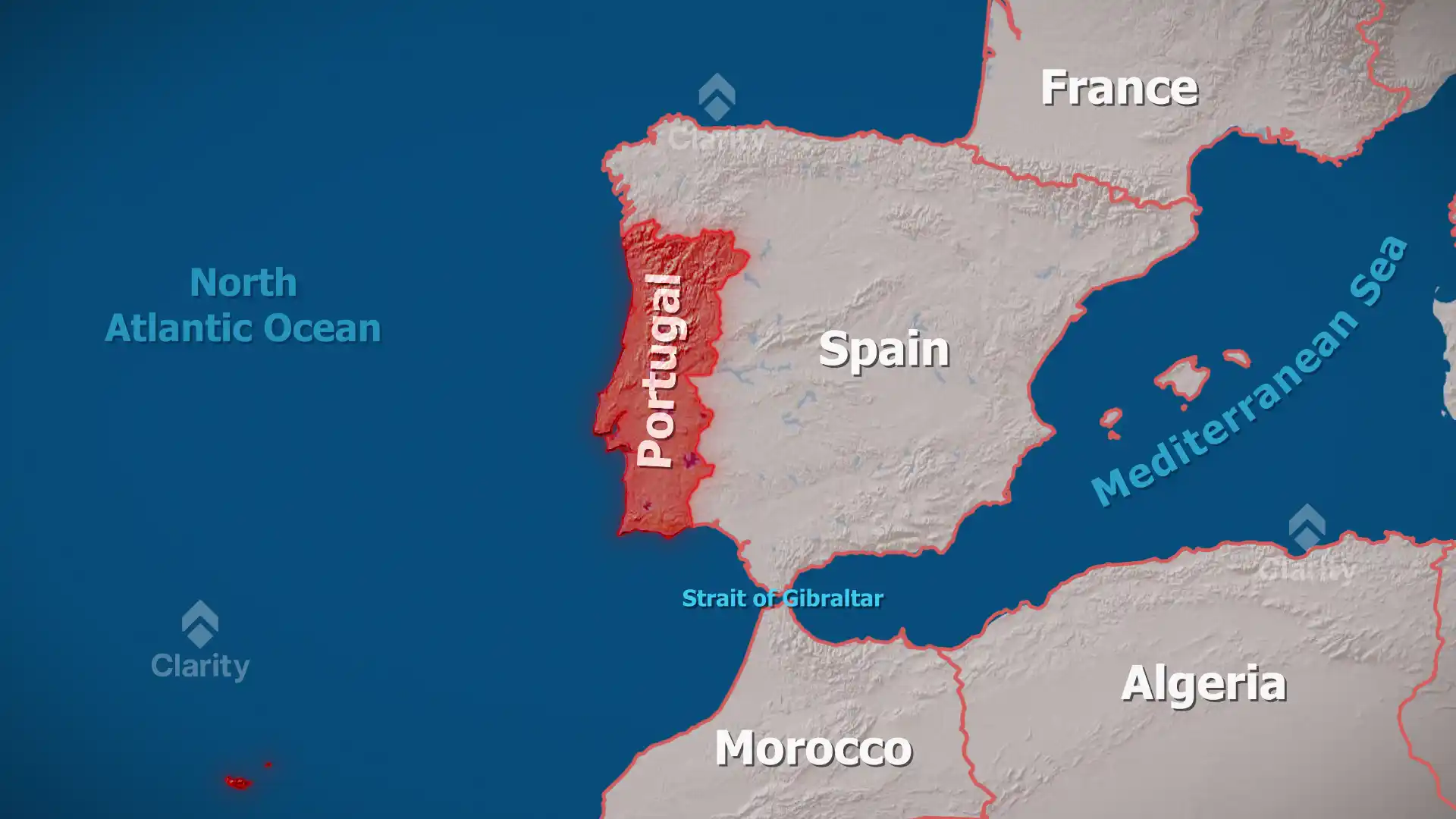
Portugal is the westernmost nation on mainland Europe, occupying most of the western edge of the Iberian Peninsula. Its sole land border is with Spain to the north and east, while the Atlantic Ocean borders it to the south and west. The country also administers the autonomous island regions of Madeira and the Azores in the Atlantic. Lisbon is the capital and largest city.
The country has a Mediterranean climate—hot, dry summers and mild, wet winters. The Tagus River, flowing west into the Atlantic, divides Portugal into a mountainous, forested north and rolling plains in the south. The highest point is Ponta do Pico, a volcano on Pico Island in the Azores. Portugal’s mineral resources include iron ore, copper, zinc, tin, tungsten, silver, gold, uranium, marble and gypsum.
India–Portugal relations
- Historical ties date back over 500 years. Vasco da Gama’s arrival in Calicut in 1498 opened direct sea trade between Europe and India.
- Portugal maintained several enclaves in India until the early 1960s; Goa, Daman and Diu joined India in 1961. Despite this colonial past, bilateral relations today are friendly and cooperative.
- The two countries collaborate on renewable energy, science and technology, water management and cultural exchanges. The community of people of Indian origin in Portugal contributes to this bridge.
Sources: Press Information Bureau