

Why in news?
Researchers have used stalagmites from Slovenia’s Postojna Cave to derive mathematical equations that explain how different shapes form. By studying drip patterns and chemical reactions they can predict whether a stalagmite will be conical, columnar or flat‑topped. The findings deepen our understanding of cave formations and how they record past climate changes.
Background
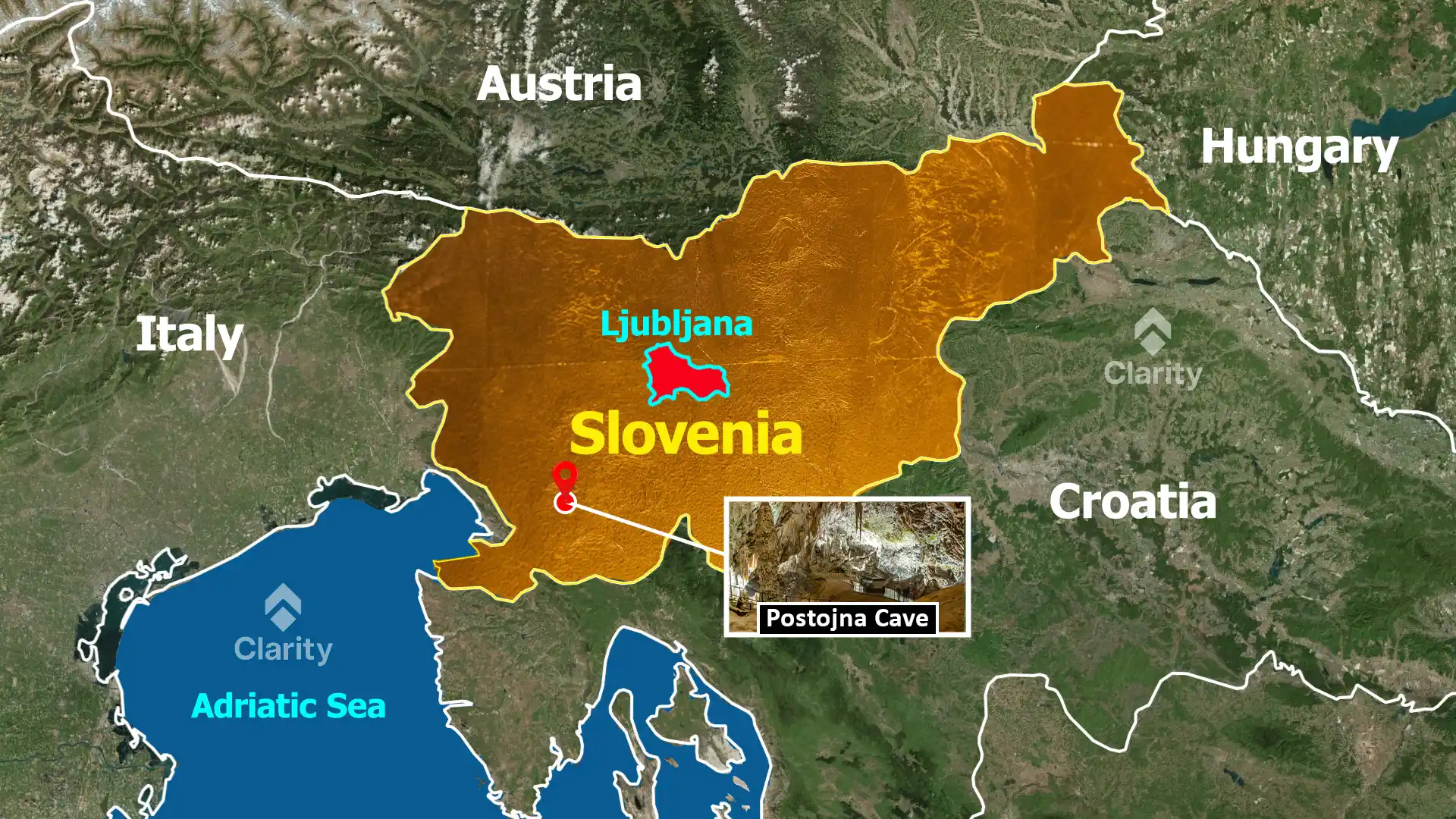
Postojna Cave is a 24‑kilometre long karst system near the town of Postojna in southwestern Slovenia. Formed by the Pivka River over millions of years, it features an extraordinary network of halls, galleries and limestone formations. The cave was discovered in 1818 and opened to tourists soon after. Today visitors ride on an underground railway to see its spectacular stalactites and stalagmites, with electric lighting illuminating the formations. The cave is also home to the endemic blind salamander known as the olm and remains a major attraction.
What the new study found
- Damköhler number: Scientists applied a dimensionless quantity called the Damköhler number, which relates reaction rate to mass transport, to describe how water dripping from cave ceilings deposits minerals on stalagmites. Depending on the ratio of dripping rate and chemical precipitation, the stalagmite takes on different shapes.
- Three primary forms: Low drip rates create conical stalagmites; moderate rates produce columnar forms; and high drip rates result in flat‑topped structures. These shapes are determined by how calcium carbonate spreads before hardening.
- Climate records: Variations in stalagmite shape influence the layering of mineral deposits, which serve as natural archives of rainfall and temperature. Understanding how shape affects layering improves interpretation of climate proxies preserved in caves.
- Model validation: The researchers compared their equations with actual stalagmites from Postojna Cave, finding a good match between theory and real shapes. The model may be applicable to other caves worldwide.
Significance
- Decoding geological history: Stalagmites grow slowly and record environmental conditions over thousands of years. Better models allow scientists to extract more accurate climate data from their growth rings.
- Tourism and education: Postojna Cave attracts more than a million visitors each year. Understanding its features enhances interpretive tours and fosters appreciation for karst landscapes.
- Protecting fragile ecosystems: By learning how stalagmites form and what affects them, conservationists can design policies to protect caves from pollution and uncontrolled tourism.
Conclusion
The study of stalagmites at Postojna Cave shows how physics and geology combine to explain natural wonders. It reminds us that cave formations are not just beautiful but also valuable scientific archives that need protection.
Source: Earth.com,