

Why in news?
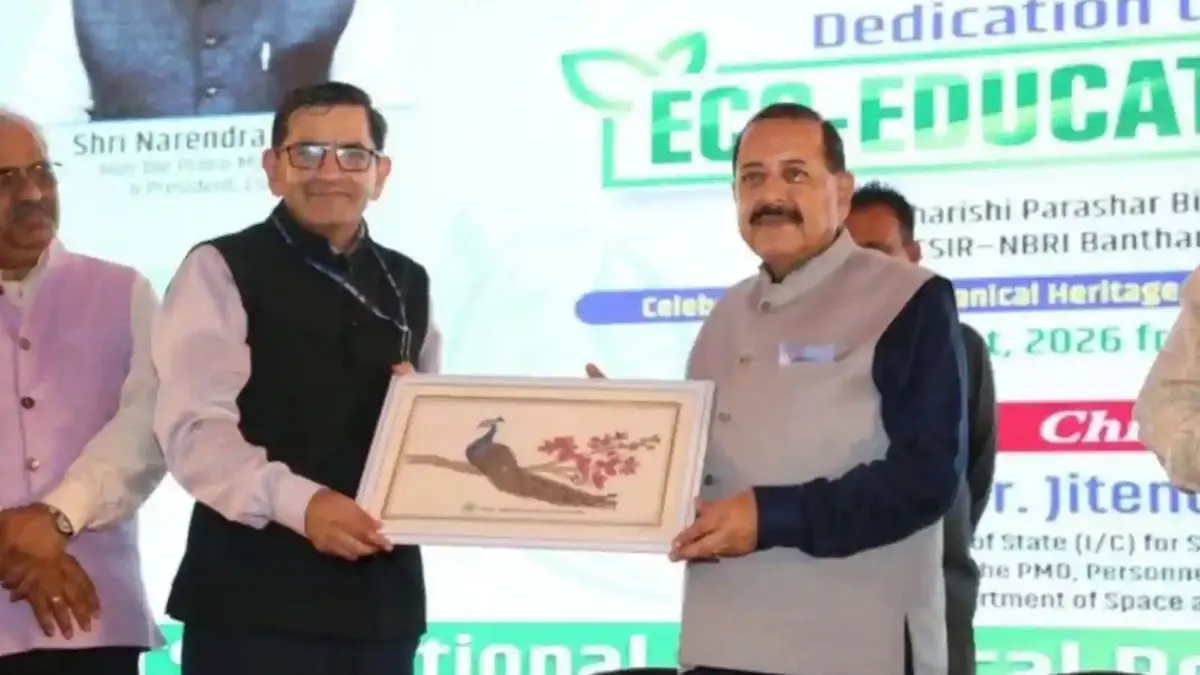
Prakriti Gyan Dham was dedicated at Lucknow’s national botanical institute. The Council of Scientific and Industrial Research–National Botanical Research Institute (CSIR–NBRI) developed it.
The institution behind the initiative
The institute is known as CSIR–NBRI and is based in Lucknow. Its work covers plant science, conservation and botanical services. Its historic botanic garden began in 1789. It now extends across about 65 acres and maintains thousands of plant taxa.
Living collections support research, identification, education and conservation outside natural habitats. Public interpretation makes those functions visible to non-specialists.
What the hub adds
The new hub uses themed spaces and an interpretive trail. Its displays connect plant diversity with heritage, threatened species and state floral identities. Such design can turn labelled specimens into a guided learning sequence. Visitors understand relationships rather than reading isolated names.
Accessible sensory features can widen participation. They also help children link plant form, smell and texture with scientific ideas.
Geographic and ecological context
Lucknow lies on the Gomti River in Uttar Pradesh’s central Gangetic plain. The city’s heat and urban growth increase demand for ecological literacy.
A botanic garden cannot replace wild habitats. It can preserve selected material, support propagation and teach why natural ecosystems remain irreplaceable.
Threatened plants require verified provenance and careful recordkeeping. Exchange between gardens must also follow biodiversity and access rules.
Education should connect collections with action
Effective interpretation can explain native planting, water use and habitat protection. It should avoid presenting decorative greenery as complete conservation.
Wider implications
Research institutions often hold knowledge behind specialist language. Public hubs can translate that knowledge without weakening scientific accuracy.
Evaluation should measure learning, accessibility and repeat use. Visitor numbers alone cannot show whether environmental understanding has improved.
School partnerships can connect displays with local field observation. Carefully designed citizen science can also produce useful seasonal records.
Living collections need verified labels, accession histories and skilled horticulture. Without those records, a display loses value for research and conservation.
The hub can also model heat-sensitive urban planting and water care. Recommendations should remain specific to local soils, climate and available space.
Digitised accession records could connect the garden with national collections. Shared data would support identification, exchange and research while preserving legal provenance. Interoperable records also reduce duplicate collection and help botanical institutions identify missing or poorly represented taxa.
Conclusion
Prakriti Gyan Dham links a national botanical facility with public education. Its success will depend on updated content and inclusive engagement.