
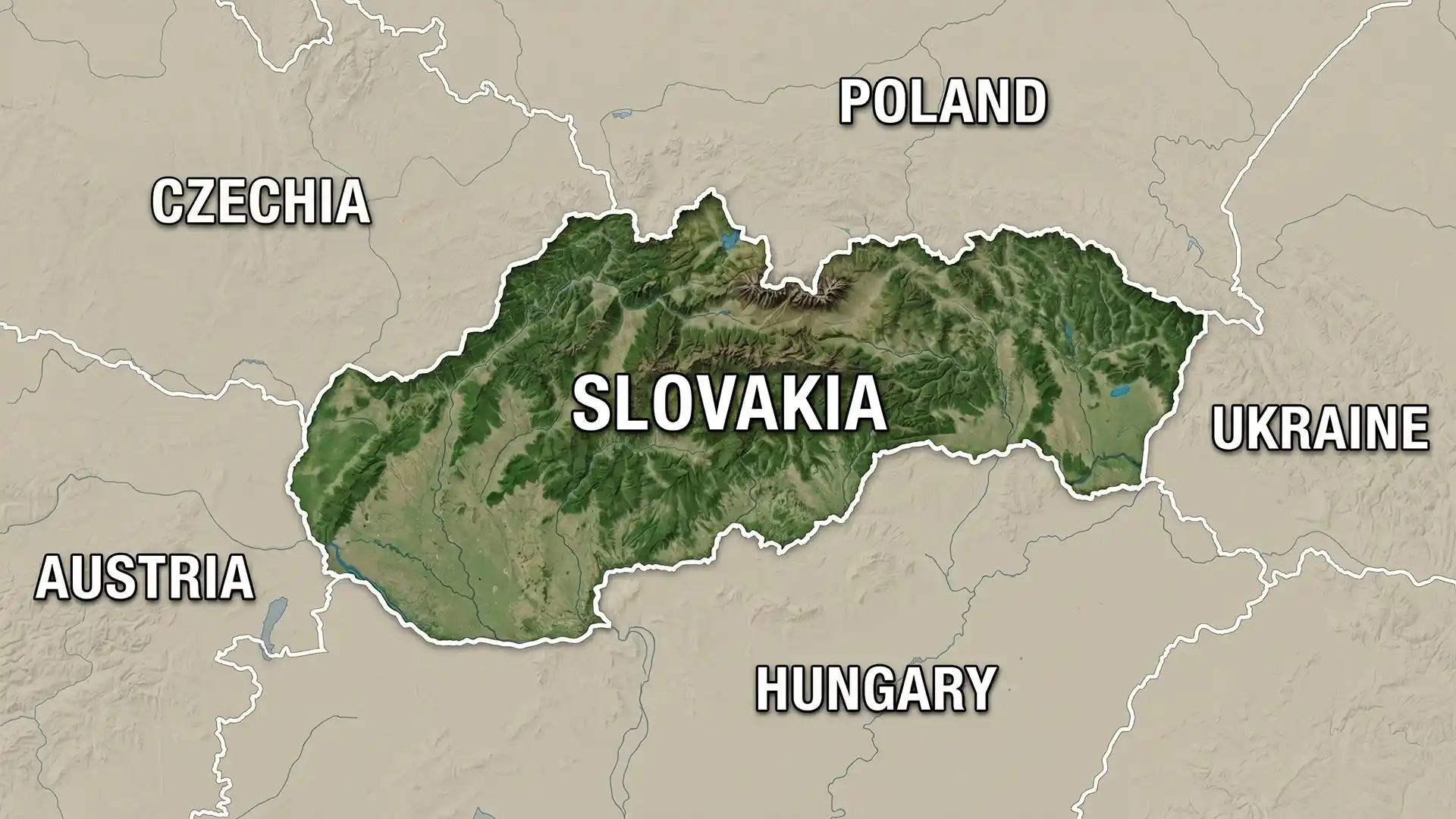
Why in news?
Prime Minister Narendra Modi is scheduled to visit Slovakia from 14 to 15 June 2026 after attending the G7 summit in Italy and meetings in France. This will be the first visit to Slovakia by an Indian prime minister since the country became independent in 1993. He will meet President Peter Pellegrini and Prime Minister Robert Fico and interact with business leaders in Bratislava.
Background
Slovakia is a landlocked country in Central Europe that emerged peacefully when Czechoslovakia split in 1993. It joined the European Union in 2004, the Schengen area in 2007 and adopted the euro in 2009. India recognized Slovakia on 1 January 1993 and established an embassy in Bratislava in 1995. Bilateral contacts include foreign office consultations and visits by India’s vice president in 2000 and Slovakia’s president in 1996. The two countries signed a defence cooperation agreement in 1995 and have worked together on space (launching Slovakia’s first satellite SKCube on India’s PSLV in 2017) and nuclear technology. Trade reached €1.28 billion in 2024, with India exporting vehicles, pharmaceuticals and textiles and importing machinery and auto components.
Key points of the visit
- Political engagement: Prime Minister Modi will meet Slovakia’s top leaders. The visit aims to deepen diplomatic ties, discuss security cooperation and support the India‑EU free trade negotiations.
- Economic agenda: Slovakia invites Indian investors in automotive, green hydrogen and digital sectors. Both sides may explore joint ventures and encourage small and medium enterprises to expand trade.
- Cultural outreach: About 7,700 Indians live in Slovakia, and the Indian embassy regularly organises yoga sessions and cultural events. The visit will showcase India’s soft power and strengthen people‑to‑people ties.
Conclusion
The upcoming trip underscores India’s intention to engage with smaller European partners. Strengthening relations with Slovakia could help India diversify its economic links and gain a stronger voice in European Union forums. The first prime ministerial visit in three decades is therefore symbolic as well as strategic.