

Why in news?
The Archaeological Survey of India recently hosted a workshop titled “Islands at the Crossroads of Maritime Networks” to refine the thematic framework of Project Mausam. Scholars, heritage professionals and representatives from Indian Ocean countries gathered in Delhi to discuss joint World Heritage nominations and strategies for preserving coastal cultures, bringing the initiative back into the limelight.
Background
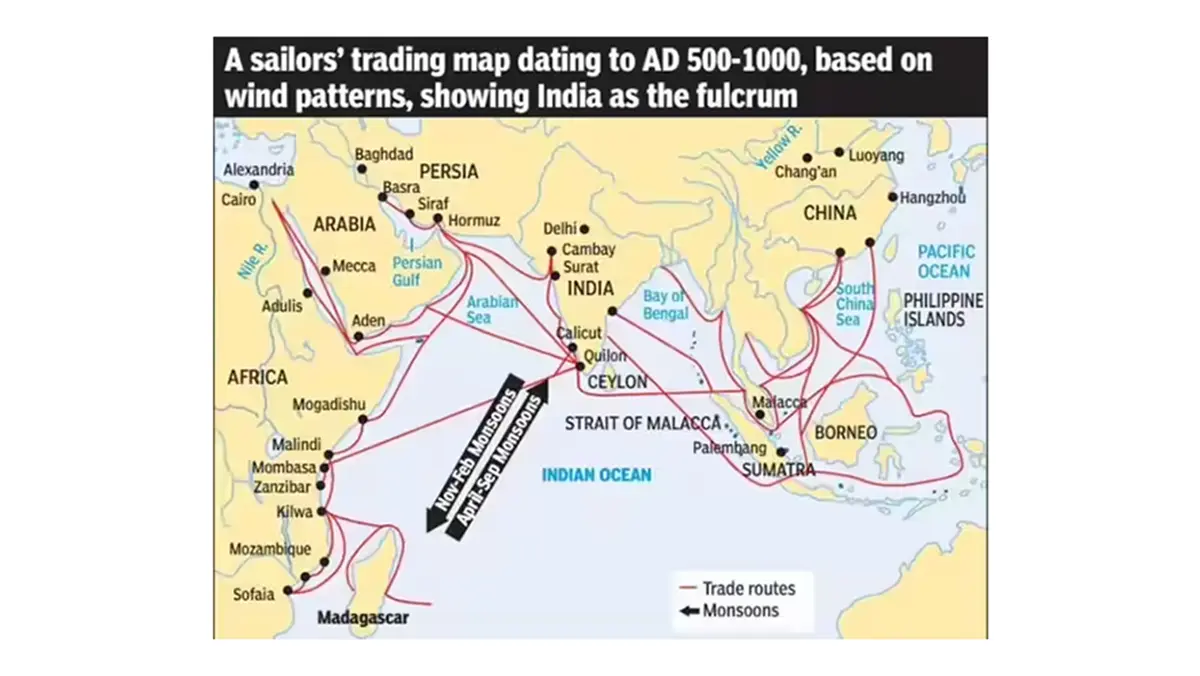
Launched in 2014 by the Ministry of Culture, Project Mausam aims to re‑establish India’s historic links with nations across the Indian Ocean. The project’s name evokes the seasonal monsoon winds that facilitated maritime travel and trade for centuries. Administered by the Archaeological Survey of India and supported by the Indira Gandhi National Centre for the Arts, Project Mausam seeks to map cultural exchanges along sea routes, promote research and documentation, and encourage collaborative conservation among participating countries.
Objectives
- Reconnecting maritime networks: Document shared histories of navigation, trade, religion and art across the Indian Ocean littoral and revive people‑to‑people contacts.
- Transnational World Heritage nominations: Identify and prepare joint nominations for UNESCO’s World Heritage List to highlight interconnected cultural sites and landscapes.
- Research and documentation: Conduct archaeological surveys, oral‑history projects and archival studies to create a comprehensive database of maritime heritage.
- Capacity building: Provide training and resources to local communities, museums and universities to conserve and interpret coastal heritage.
Key takeaways from the workshop
- Islands as hubs: Presentations underscored the role of island groups such as the Maldives, Seychelles and Lakshadweep as nodes of cultural exchange. Participants discussed the need to protect both tangible remains (ports, lighthouses, shipwrecks) and living traditions (boat‑building, festivals, music).
- Living heritage approach: Culture Minister Gajendra Singh Shekhawat emphasised that heritage should be treated as a living cultural environment rather than a static monument. Projects should involve local communities and acknowledge the continuing relevance of maritime skills and knowledge.
- Funding and collaboration: The workshop noted that approximately ₹30 lakh had been sanctioned for Project Mausam in the current financial year, with much of the funds already spent on research and coordination. Participants called for greater participation from Indian Ocean countries to share costs and expertise.
Significance
- Cultural diplomacy: By highlighting shared histories, Project Mausam fosters goodwill and mutual respect among countries that were historically connected through the monsoon trade routes.
- Heritage conservation: Joint documentation and nominations can attract international attention and funding for protecting fragile coastal sites threatened by climate change and development.
- Academic collaboration: The project encourages multidisciplinary research across history, archaeology, anthropology and climatology, enriching our understanding of the Indian Ocean world.
Conclusion
Project Mausam is an ambitious attempt to weave together the cultural histories of Indian Ocean societies. By treating maritime heritage as living and shared, the initiative can deepen regional cooperation and inspire new generations to appreciate the ocean’s role in connecting communities. Continued collaboration and adequate funding will be vital to turn research into conservation action.
Source: PIB