

Why in news?
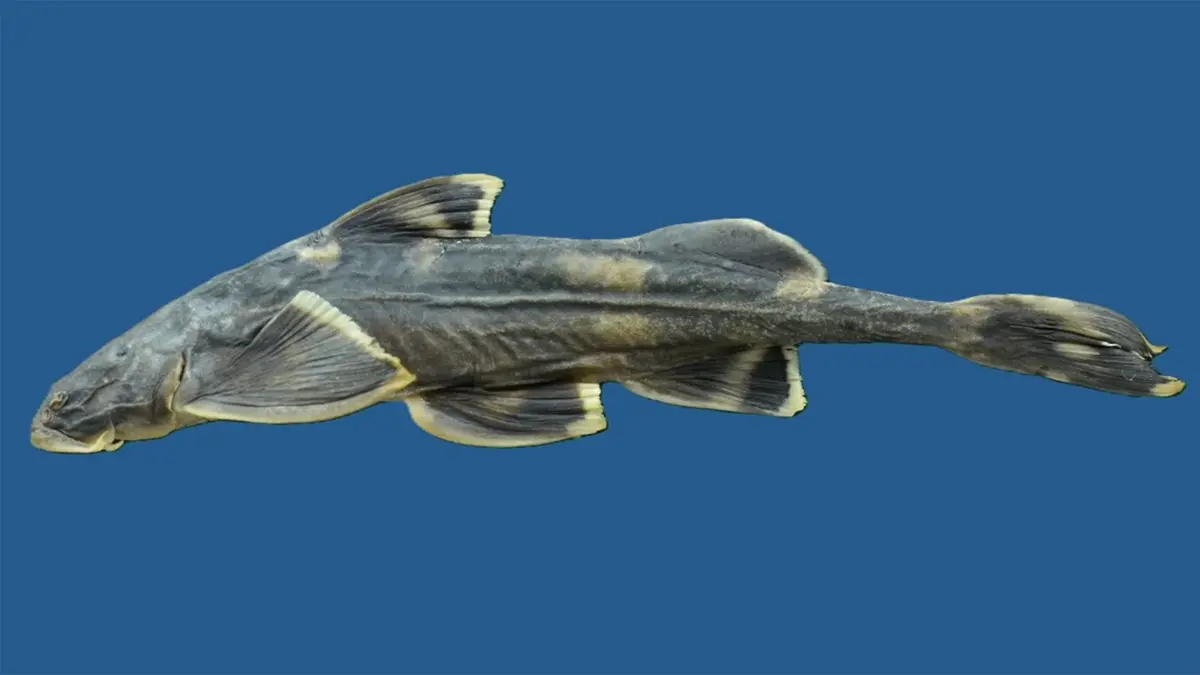
Scientists formally described a new catfish species from Nagaland's Likimro River. They named it Pseudecheneis likimroensis after its type locality. Its body is adapted to fast, rocky hill-stream conditions. The finding enlarges the known freshwater diversity of the Chindwin basin.
Background
Researchers collected the fish from the Likimro River in Kiphire district. The Likimro joins the Tizu, which enters Myanmar's Chindwin drainage. That river system eventually forms part of the Irrawaddy basin.
The team included researchers from Kohima Science College and the Zoological Survey of India. Their description appeared during May 2026 in the Journal of Ichthyology. A scientific description establishes a name through diagnostic evidence and designated specimens.
Local residents already knew the fish as Nupedro and by names resembling jetfighter or aeroplane. Scientific recognition did not create the animal or represent its first human observation. It established that the population differs consistently from every described relative.
Classification and stream adaptations
The species belongs to the family Sisoridae, whose members are Asian catfishes. Its genus, Pseudecheneis, contains fishes specialised for flowing mountain streams. Many live against stones where ordinary swimming becomes energetically costly.
A ridged adhesive apparatus lies on the underside of the chest. Transverse ridges and grooves create contact with a wet rock surface. The structure helps the fish resist displacement by powerful current.
The body is flattened below, while the paired fins provide further support. A streamlined shape lowers drag, and these traits allow feeding within otherwise difficult habitats.
How taxonomists separated the species
Taxonomists do not rely upon one colour pattern or photograph. They compare measurements, fin rays, teeth and skeletal structures, because several characters together provide the diagnosis.
The new fish has a comparatively deep body near the anal opening. Its lower tooth bands remain visible when the mouth closes, while the first dorsal-fin support carries a bony spur.
Researchers also recorded fourteen or fourteen-and-a-half branched pectoral-fin rays and sixteen caudal vertebrae. Additional ratios distinguish it from close relatives, and such combinations are more reliable than a popular nickname.
Reference specimens were deposited in recognised Indian collections, allowing future researchers to recheck the original diagnosis. They also support later work on genetics, distribution and conservation.
Biogeographic significance
The paper treated the fish as the sixth known Pseudecheneis species within the Chindwin–Irrawaddy drainage. That count concerns one genus within one river system, not every catfish species there.
Nagaland's headwaters cross political boundaries before reaching the sea. Their fauna can share evolutionary relationships with Myanmar's rivers, which administrative maps alone cannot explain.
Small hill streams often contain species with narrow ranges and specialised habitats. Water diversion, road sediment, mining and destructive fishing can alter them rapidly. Basic taxonomy must therefore precede sound conservation planning.
What remains unknown
The publication establishes identity but does not provide a national population estimate. Further surveys should cover neighbouring Indian and Myanmar tributaries, while seasonal sampling could clarify breeding and movement.
Genetic analysis may test relationships suggested by anatomy, while ecological studies can identify flow and substrate requirements. These data are necessary before researchers can assess extinction risk responsibly.
Community knowledge can guide surveys because local fishers recognise habitats and seasonal patterns. Collaboration should still respect consent, credit and local resource rights. Conservation works best when scientific and lived knowledge reinforce each other.
Conclusion
Pseudecheneis likimroensis reveals how much diversity remains undocumented within Northeast India's headwaters. Protecting that diversity requires taxonomy, catchment management and careful cross-border research.