

Why in news?
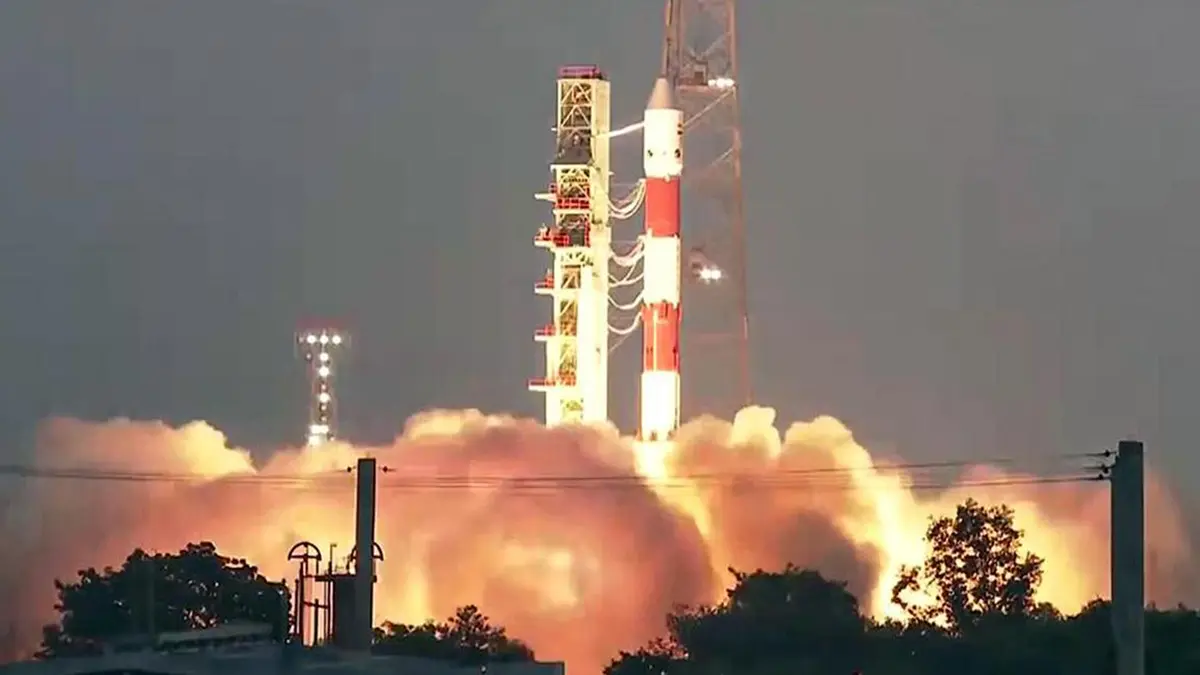
ISRO is preparing to launch the PSLV‑C62 mission on 12 January 2026. The flight will carry the hyperspectral Earth observation satellite EOS‑N1 (Anvesha) and 18 co‑passenger satellites, inaugurating India’s space launches for the year.
Background
The Polar Satellite Launch Vehicle (PSLV) is India’s workhorse launch vehicle, known for its reliability and ability to deploy multiple satellites in a single mission. PSLV‑C62 will be the 64th flight of the vehicle and the ninth dedicated commercial launch undertaken by NewSpace India Limited (NSIL), using the PSLV‑DL variant with two strap‑on boosters.
The mission is scheduled to lift off from the First Launch Pad at the Satish Dhawan Space Centre, Sriharikota, at 10:17 am IST. Integration of the vehicle and satellites was completed in early January, and pre‑launch checks were underway at the time of announcement.
Primary payload – EOS‑N1 (Anvesha)
- Hyperspectral imaging: EOS‑N1, also known as Anvesha, is an advanced Earth‑observation satellite built for strategic and civilian applications. Hyperspectral sensors capture dozens of narrow spectral bands, enabling users to distinguish materials, vegetation types and minerals with high precision.
- Applications: The satellite will support border surveillance, military reconnaissance, agricultural monitoring, mineral exploration and disaster management. Detailed specifications have not been publicly disclosed due to the sensitive nature of the mission.
Co‑passenger payloads
- AayulSAT: Developed by Bengaluru‑based startup OrbitAID Aerospace, AayulSAT will test technologies related to on‑orbit refuelling. The small satellite will validate fuel transfer interfaces and proximity operations, laying the groundwork for future satellite servicing.
- MOI‑1: A 14‑kg CubeSat built by TakeMe2Space and EON Space Labs, MOI‑1 features onboard artificial intelligence that processes images in orbit, transmitting only relevant data to Earth. This “edge computing” approach reduces bandwidth needs and speeds up data delivery.
- Kestrel Initial Demonstrator (KID): A 25‑kg re‑entry capsule from Spanish startup Orbital Paradigm, KID will detach from the rocket’s fourth stage and return to Earth, demonstrating low‑cost recovery of microgravity experiments.
- Orbital Temple: A 250‑gram “PocketQube” art project that will store names of departed loved ones and orbit Earth for about a decade, challenging notions of space as a sacred realm.
- Other satellites: Additional payloads include an Indo‑Mauritius Joint Satellite (IMJS), university experiments and small commercial satellites from the UAE, Spain and the United States, bringing the total to 19 satellites (one primary and 18 secondary).
Mission significance
- Technological advancement: By combining hyperspectral imaging, on‑orbit servicing experiments and edge computing, PSLV‑C62 showcases India’s ambition to integrate science, defence and commercial objectives within a single mission.
- Commercial rideshare: The mix of domestic and international payloads underlines PSLV’s role as a dependable rideshare platform, strengthening India’s space industry and attracting foreign customers.
- Future roadmap: Demonstrations like AayulSAT and MOI‑1 lay the foundation for reusable satellites, on‑orbit refuelling, and AI‑enabled space services, which are key to sustainable and efficient space operations.
Conclusion
PSLV‑C62 promises to be more than a routine launch. With a cutting‑edge Earth‑observation satellite and a diverse set of experimental payloads, the mission will advance India’s capabilities in surveillance, satellite servicing and data processing, while reinforcing the PSLV’s reputation as a versatile launch vehicle.
Source: MC