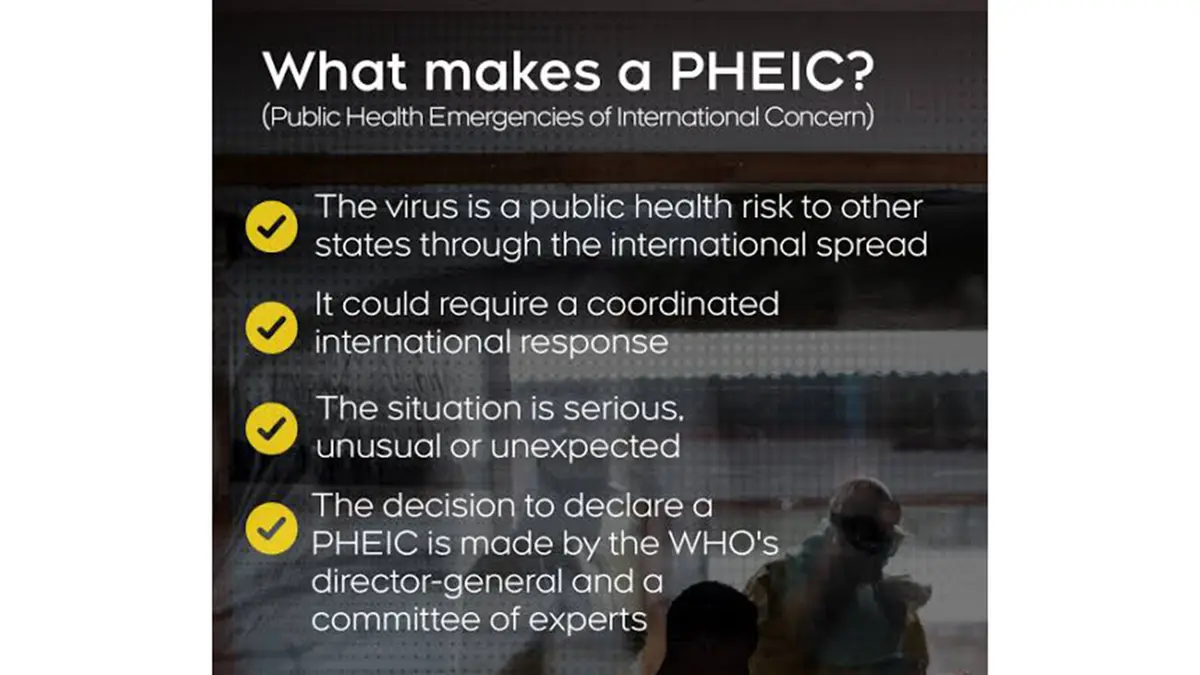
Why in News? The World Health Organization (WHO) declared the Ebola Bundibugyo outbreak in the Democratic Republic of Congo (DRC) and neighbouring Uganda a Public Health Emergency of International Concern (PHEIC). As of mid‑May 2026 the outbreak had dozens of confirmed cases and hundreds of suspected cases, with reports of cross‑border spread and a high fatality rate. The announcement signals the need for international cooperation to contain the virus, which currently has no approved vaccine.
Background
A Public Health Emergency of International Concern is the highest level of global health alert under the International Health Regulations (IHR 2005). It may be declared when an outbreak is serious, unusual or unexpected, poses a risk to other countries through international spread and requires immediate, coordinated action. Previous PHEIC declarations have been made for H1N1 influenza (2009), polio (2014–present), Ebola outbreaks in West Africa and the Democratic Republic of Congo, Zika (2016), COVID‑19 (2020–2023) and monkeypox (2022–2025).
Ebola Bundibugyo virus is one of the six known species of Ebola viruses. It was first identified in Uganda in 2007. Unlike the Ebola Zaire strain, there is currently no licensed vaccine or specific antiviral treatment for Bundibugyo virus. The virus causes a severe haemorrhagic fever with a high case‑fatality rate.
Ebola Bundibugyo Outbreak 2026
- Scale of the outbreak: By 16 May 2026, health authorities reported eight laboratory‑confirmed cases and more than 240 suspected cases in DRC, with at least 80 suspected deaths. Two confirmed cases were detected in Uganda. A week later, the case count rose to over 80 confirmed cases with more than 170 suspected deaths. These figures suggest substantial transmission and under‑reporting.
- Reasons for the PHEIC declaration: WHO described the event as an extraordinary outbreak that risked spreading internationally. Insecurity in eastern DRC and porous borders hindered containment efforts, and the lack of a vaccine limited medical countermeasures. Declaring a PHEIC mobilises global resources, funding and technical support.
- Response measures: Under the IHR, countries must promptly report cases, share laboratory data and implement early detection, isolation and contact tracing. WHO issued temporary recommendations, including strengthened community engagement, safe burials, infection‑prevention training and rapid deployment of expert teams. It advised against blanket travel or trade restrictions.
Public Health Emergency Mechanism
When a PHEIC is declared, the Emergency Committee recommends measures to prevent or reduce the international spread of disease. These may include targeted vaccination (when available), risk communication, support for affected health systems and coordination of research. Countries remain sovereign in adopting the advice but are encouraged to align actions to avoid unnecessary disruption. The mechanism underscores solidarity: an outbreak anywhere can threaten health everywhere.
Conclusion
The Bundibugyo Ebola outbreak shows how quickly diseases can cross borders. Declaring a PHEIC brings global attention and resources to an under‑resourced region. Continued surveillance, investment in diagnostics and therapeutics, and community‑level trust‑building are essential to prevent the virus from becoming a wider regional crisis. The event also highlights the importance of strengthening health systems and maintaining rapid‑response capacities as part of broader pandemic preparedness.
Sources: UN News report on the PHEIC.