
Why in news?
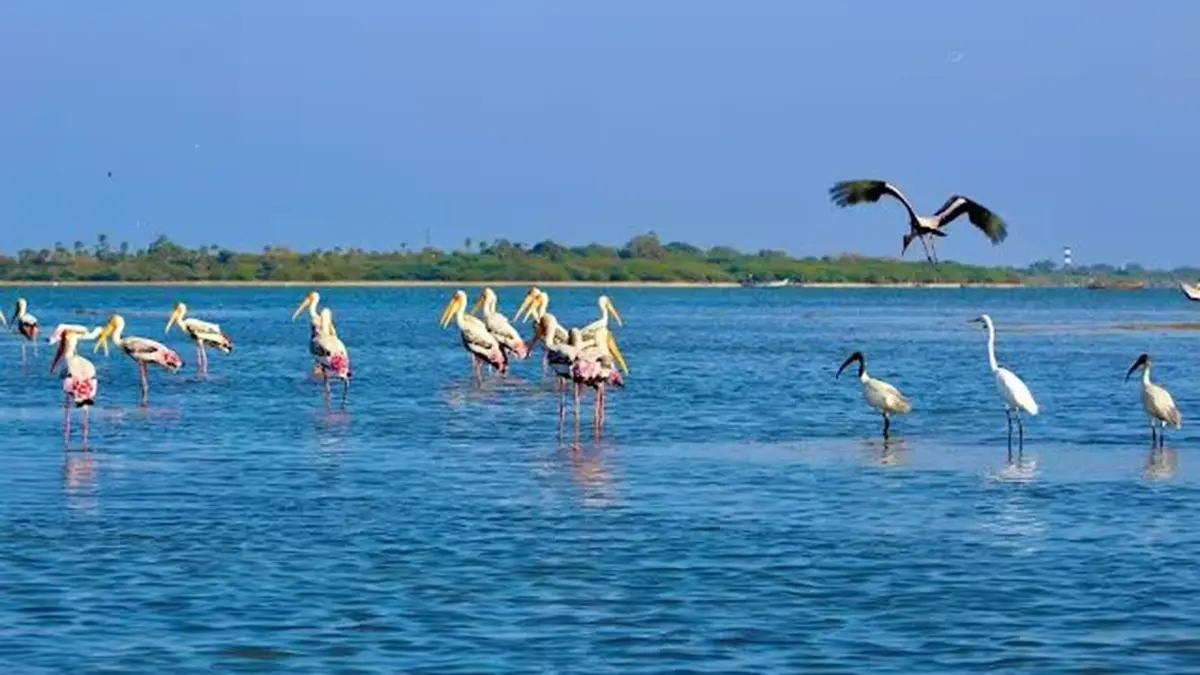
Environmentalists and bird watchers highlighted Pulicat Lake on 21 May 2026 as migratory birds returned in large numbers and local authorities discussed eco‑tourism initiatives. The renewed attention emphasised the need to protect this important lagoon on India’s southeast coast.
Background
Pulicat Lake is an extensive brackish lagoon situated on the border of Andhra Pradesh and Tamil Nadu. Covering nearly 960 square kilometres, it is India’s second‑largest brackish water lagoon after Chilika Lake in Odisha. The lagoon is separated from the Bay of Bengal by the barrier island of Sriharikota, which also houses the Satish Dhawan Space Centre. Two narrow channels at either end of Sriharikota allow sea water to enter and exit the lagoon.
Ecological importance
- Key biodiversity area: Pulicat Lake supports a mosaic of habitats—brackish lagoons, marshes and freshwater swamps. It is one of the most important wintering grounds on India’s east coast for migratory shorebirds.
- Avifauna: Large flocks of greater flamingos, lesser flamingos, spot‑billed pelicans, painted storks, grey herons and numerous species of ducks, teals, terns, gulls and waders congregate here. During peak seasons tens of thousands of waterfowl can be observed.
- Vegetation: The lagoon’s elevated mudflats are dominated by salt‑tolerant plants such as Arthrocnemum, Sesuvium and Suaeda species. Underwater areas support sea grasses and algae including Halophila and Enteromorpha.
- Wildlife: The surrounding areas are home to jungle cats, golden jackals, wild boars, monitor lizards and occasionally even leopards. The neighbouring Nelapattu Bird Sanctuary is linked to Pulicat through pelican movements.
Threats and conservation
- Overfishing, illegal prawn farming and industrial development along the lagoon’s shores have degraded habitats and depleted fish stocks.
- Siltation from upstream catchments and invasion by non‑native plants such as Prosopis chilensis threaten the hydrology and biodiversity of the lagoon.
- More than 50 villages surround the lake, and human activities sometimes conflict with conservation goals. Sustainable livelihoods and community participation are essential for long‑term protection.
Conclusion
Pulicat Lake is a haven for migratory birds and marine life, making it a site of national ecological significance. While it has not yet been designated as a Ramsar wetland, it qualifies as a Key Biodiversity Area. Protecting the lagoon requires balancing conservation with the needs of local communities and addressing threats like overfishing and encroachment.

