

Why in news?
Russian President Vladimir Putin visited Iturup in the Kuril chain. Japan protested his first visit to the disputed islands.
The visit and the dispute
Putin inspected civilian facilities on Iturup, which Japan calls Etorofu. The visit included a fish plant, hospital and school.
Russia controls the entire Kuril chain. Japan claims Etorofu, Kunashiri, Shikotan and the Habomai group as its Northern Territories.
Soviet forces took the southern islands near the end of the Second World War. The dispute has prevented a post-war peace treaty.
The 1956 Japan–Soviet Joint Declaration ended the formal state of war. It restored diplomatic relations but did not settle sovereignty.
Geography and strategic value
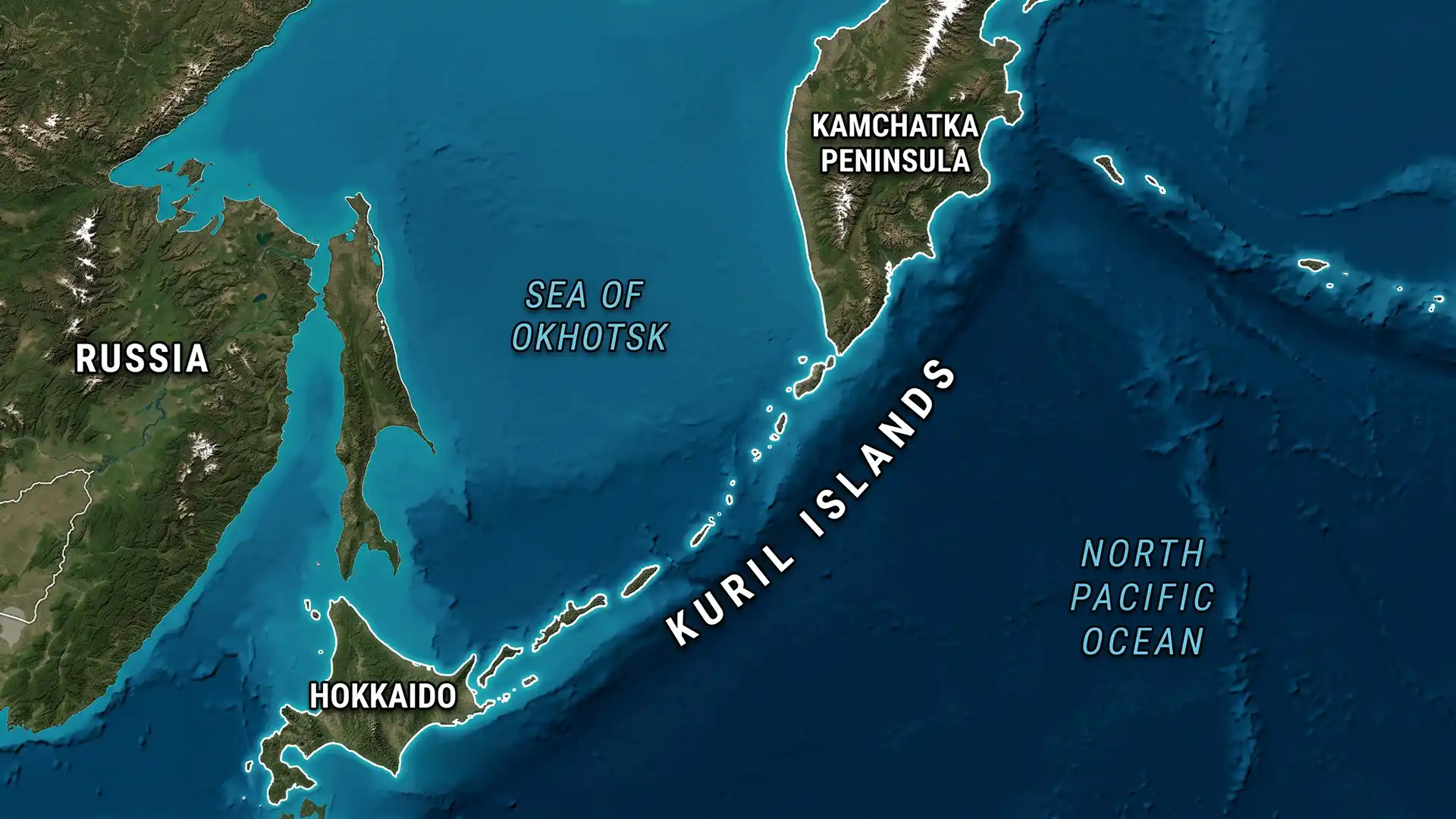
The volcanic island chain runs between Russia’s Kamchatka Peninsula and Japan’s Hokkaido. It separates the Sea of Okhotsk from the North Pacific.
This position gives the islands economic and military significance. Their waters support fisheries and provide access between two major seas.
Control of the southern chain also affects Russia’s approach to the Sea of Okhotsk. That sea hosts important naval operating areas.
Two official narratives
Russia treats the islands as sovereign territory acquired after the war. Japan rejects that position for the four southern island groups.
Political implications
A presidential visit reinforces administration without resolving the legal disagreement. It can therefore harden public positions in both countries.
Japan’s protest preserves its claim and signals that routine administration is contested. Russia presents local investment as normal domestic development.
Wider tensions also shape the dispute. Japan has joined sanctions on Russia following the invasion of Ukraine.
Negotiations require more than a map compromise. Fishing access, resident interests, security arrangements and historical memory all complicate settlement.
Military activity can make diplomacy harder. Yet communication remains necessary to manage fishing incidents and nearby air or naval movements.
Local infrastructure has a diplomatic meaning as well as a civilian purpose. Investment signals an expectation of continuing Russian administration.
Japan must balance its territorial position with regional security needs. Russia’s growing partnership with China adds another strategic complication.
Any settlement would need domestic political acceptance in both countries. Technical negotiations cannot succeed without that broader legitimacy.
Administration is not settlement
The visit demonstrated Russian control, while Japan’s protest kept its sovereignty claim active. Neither act changed the unresolved treaty position.
Conclusion
The Kuril dispute combines history, geography and security. Putin’s visit made those unresolved layers more visible.