
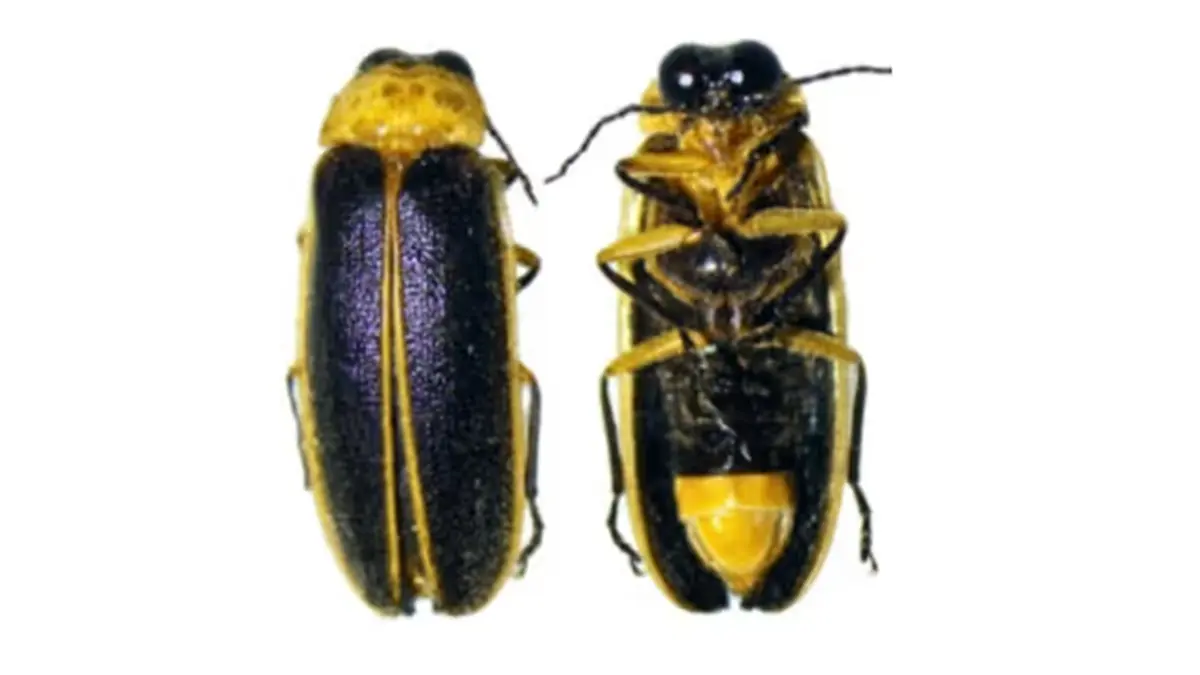
Why in news?
Researchers described a new firefly species from Meghalaya. They named it Pygoluciola mawsynram after Mawsynram. Surveys recorded it at only ten of twenty-nine sites. The discovery takes its genus to twenty-nine known species worldwide.
Background
A firefly is a beetle, not a true fly, and fireflies belong to the beetle family Lampyridae.
Many family members produce visible light through bioluminescence, and this means a living organism makes light through a chemical reaction.
Pygoluciola is one firefly genus, and a genus groups closely related species above the species level.
Where was the new species found?
Scientists found the species around Mawsynram in Meghalaya’s East Khasi Hills, and the landscape has grassland, scrub and semi-evergreen forest.
Mawsynram is widely recognised for exceptionally high long-term rainfall. Its wet conditions support streams, waterfalls, ferns and thick leaf litter.
Researchers found adult fireflies near water and dense vegetation, and such moist places may also protect their eggs and larvae.
Rainfall caution: Mawsynram is often called the wettest inhabited place by average rainfall. Records depend upon period and measurement method.
How was the species discovered?
- A team conducted ten days of field surveys during May 2024.
- The team examined twenty-nine sites across different local habitats.
- Specimens appeared at only ten sites, usually near streams or waterfalls.
- Researchers compared body structures with other members of the genus.
- They also used genetic evolutionary analysis to test its distinctness.
- The results supported a separate species and distinct evolutionary lineage.
Researchers came from Assam Don Bosco University and Debraj Roy College. The study appeared in the Asian Journal of Conservation Biology.
Body features placed the species within Group Five of its genus. Genetic analysis still showed a separate evolutionary lineage.
Group Five is a scientific grouping for comparison. It is not an official conservation category.
Why was it named after Mawsynram?
The scientific name records the discovery locality, and it also acknowledges Khasi community traditions connected with local nature conservation.
Place-based names can keep a species linked with its habitat. However, the name does not prove distribution outside Mawsynram.
How does a firefly make light?
Special cells inside the abdomen contain a substance called luciferin, and an enzyme called luciferase helps the reaction.
Oxygen and cellular energy complete the process, and the reaction releases light with very little heat.
Different species use distinct flash timing and patterns, and adults mainly use these signals to find suitable mates.
Light can also warn predators about unpleasant chemicals, and firefly larvae commonly glow, even when adults use flashing courtship signals.
What is its life cycle?
- Females place eggs in moist soil or protected vegetation.
- Larvae live around leaf litter and wet ground.
- Many larvae hunt snails, worms and other soft-bodied animals.
- The larva later forms a pupa before becoming an adult beetle.
- Adults generally focus on dispersal, signalling and reproduction.
Moisture is crucial during early life stages, and drying leaf litter can therefore harm a population before adults appear.
Why is the discovery important?
The study raised the genus count from twenty-eight to twenty-nine species worldwide. India now has five recorded species in this genus.
The researchers also referred to ninety-two known Indian firefly species. Nearly sixty per cent were described as endemic to India.
An endemic species naturally occurs within a limited region, and discovery counts can change whenever taxonomy or survey knowledge improves.
Prelims fact: Fireflies are Lampyridae beetles, not flies, and their light production is called bioluminescence.
Which threats affect fireflies?
- Artificial night lighting can hide courtship flashes.
- Pesticides can kill adults, larvae and their prey.
- Stream pollution can damage moist breeding habitats.
- Forest clearing removes shade and leaf litter.
- Drainage can dry the soil needed by early stages.
Protection should cover darkness, clean water and vegetation together, and saving only the adult display site would be insufficient.
Conclusion
The Mawsynram firefly links taxonomy with habitat conservation, and protecting dark, wet forest edges can safeguard its complete life cycle.