

Why in news?
Researchers from Banaras Hindu University and IIT Dhanbad announced discovering rare sunflower‑shaped pyrite crystals in the lignite mines of Gujarat. The unusual mineral formations caught attention because they reveal clues about the ancient environment in which the coal formed and the challenges of using sulphur‑rich lignite as a fuel.
Background
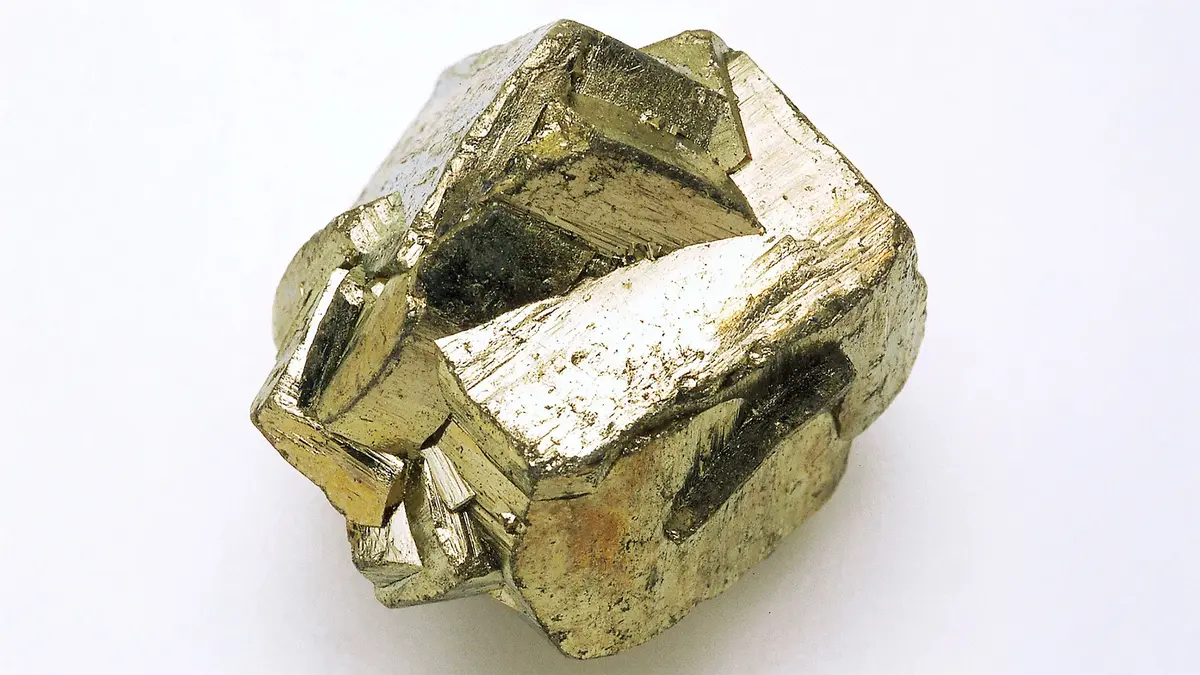
Pyrite, often called “fool’s gold,” is an iron sulphide mineral that commonly forms small spherical clusters known as framboids. In the lignite seams of Gujarat, scientists found that many pyrite grains were framboidal but some had recrystallised into concentric sunflower structures. Each sunflower has a core of framboids surrounded by a ring of larger, flat crystals. This pattern indicates a transition from hydrogen‑sulphide rich conditions in the peat‑forming marsh to later changes in chemistry as the deposit matured.
Implications
- Environmental conditions: The coal in Gujarat formed around 40 million years ago in an oxygen‑poor swamp influenced by the sea. The presence of pyrite sunflowers shows that sulphur levels fluctuated over time, allowing framboids to recrystallise.
- Coal quality: Lignite with abundant pyrite is difficult to clean. When burnt, sulphur in pyrite produces sulphur dioxide, which can lead to acid rain. The fine‑grained pyrite also increases the risk of spontaneous combustion during storage.
- Scientific value: Studying these structures helps geologists understand diagenetic processes in coal and the depositional history of the region. It also highlights the link between mineralogy and environmental impacts of fossil fuels.
Conclusion
The discovery of sunflower‑shaped pyrite in Gujarat’s lignite adds a fascinating chapter to the geology of India’s coal deposits. Beyond their aesthetic appeal, these minerals remind us that the quality of fossil fuels depends on ancient environmental conditions and that burning sulphur‑rich coal requires careful management to reduce pollution.