
Why in news?
India’s External Affairs Minister S. Jaishankar visited Doha in early July 2026. He met Qatar’s Prime Minister and Foreign Minister Mohammed bin Abdulrahman Al‑Thani. The leaders reviewed energy cooperation, trade, investment and the welfare of the large Indian diaspora in Qatar. They also discussed regional issues and connectivity in West Asia.
Country profile
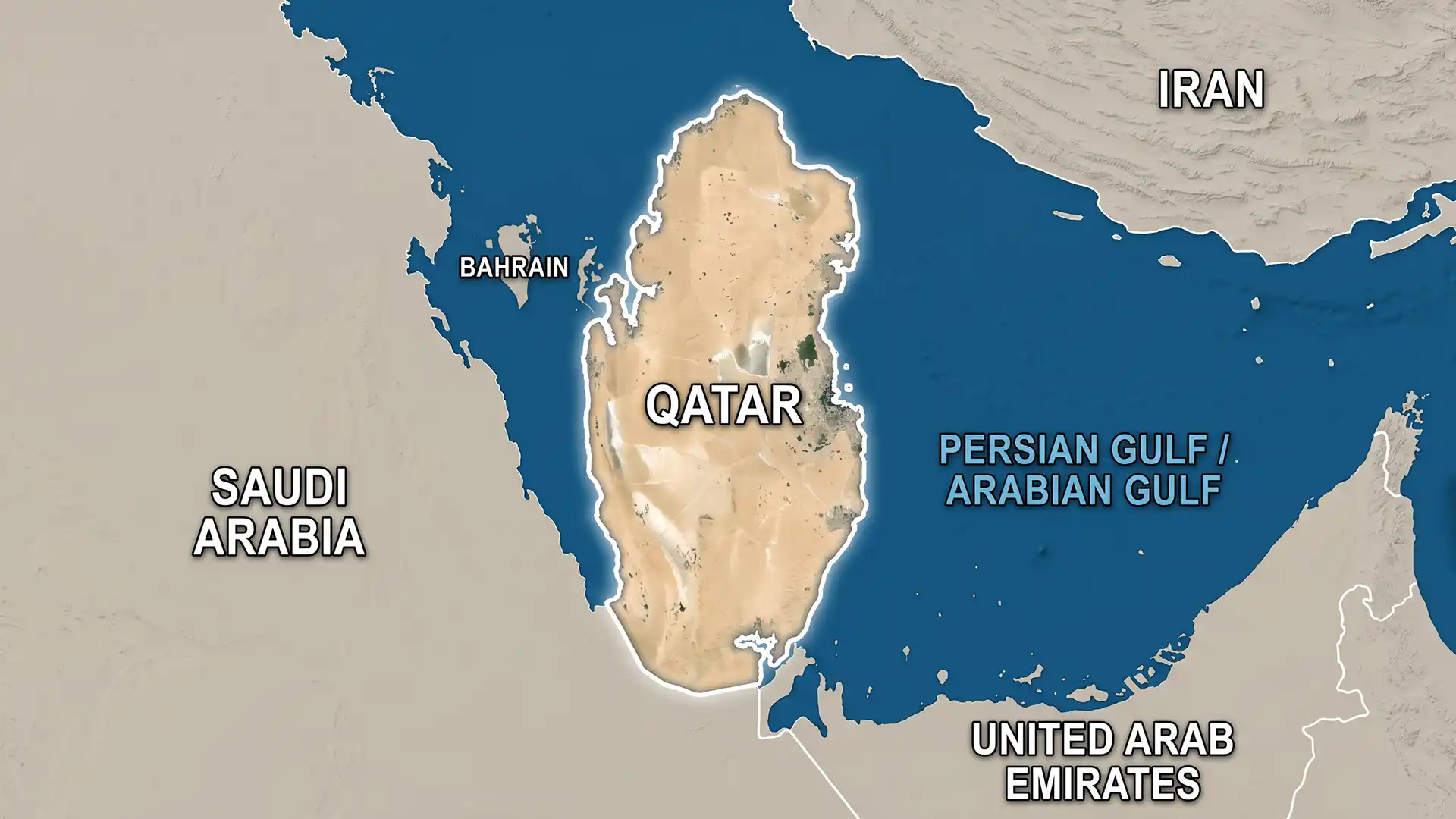
Qatar is a small peninsula projecting into the Persian Gulf from the Arabian Peninsula. It covers roughly 11,610 square kilometres and shares an 87‑kilometre land border with Saudi Arabia. The terrain is mostly flat desert, with the highest point reaching about 103 metres above sea level. Qatar has a hot desert climate, with scorching summers and mild winters. Major cities include the capital Doha, Al Rayyan, Al Wakrah and Al Khor.
Political and economic context
- Government: Qatar is a constitutional monarchy ruled by the Al‑Thani family. Emir Sheikh Tamim bin Hamad Al‑Thani has been in power since 2013.
- Population: The country has around three million residents, but only about three lakh are Qatari citizens. The rest are expatriate workers, including a large Indian community.
- Economy: Qatar possesses the world’s third‑largest proven natural gas reserves. Its wealth has enabled high per capita income and investments in infrastructure, education and sports. Qatar hosted the 2022 FIFA World Cup.
- Foreign policy: The country often acts as a mediator in regional conflicts and maintains ties with diverse partners, including the United States, Iran and Turkey.
India–Qatar relations
- Energy cooperation: Qatar is one of India’s main suppliers of liquefied natural gas (LNG). Long‑term contracts ensure steady energy supplies.
- Indian diaspora: Around seven lakh Indians live and work in Qatar, contributing to its economy. Welfare of these workers was a key topic during Jaishankar’s visit.
- Trade and investment: Bilateral trade exceeds USD 15 billion and covers energy, petrochemicals, infrastructure and services. Indian firms have invested in Qatar’s infrastructure projects, while Qatari investors participate in Indian real estate and technology ventures.
- Connectivity and security: Both countries cooperate on security in the Indian Ocean and West Asia. Qatar’s strategic location provides opportunities for maritime and air connectivity.
Conclusion
Qatar’s economic power and strategic location make it an important partner for India. Jaishankar’s visit underlines the need to strengthen energy ties and protect the large Indian workforce. Ongoing dialogue will ensure that both countries benefit from cooperation in trade, security and regional stability.