

Why in news?
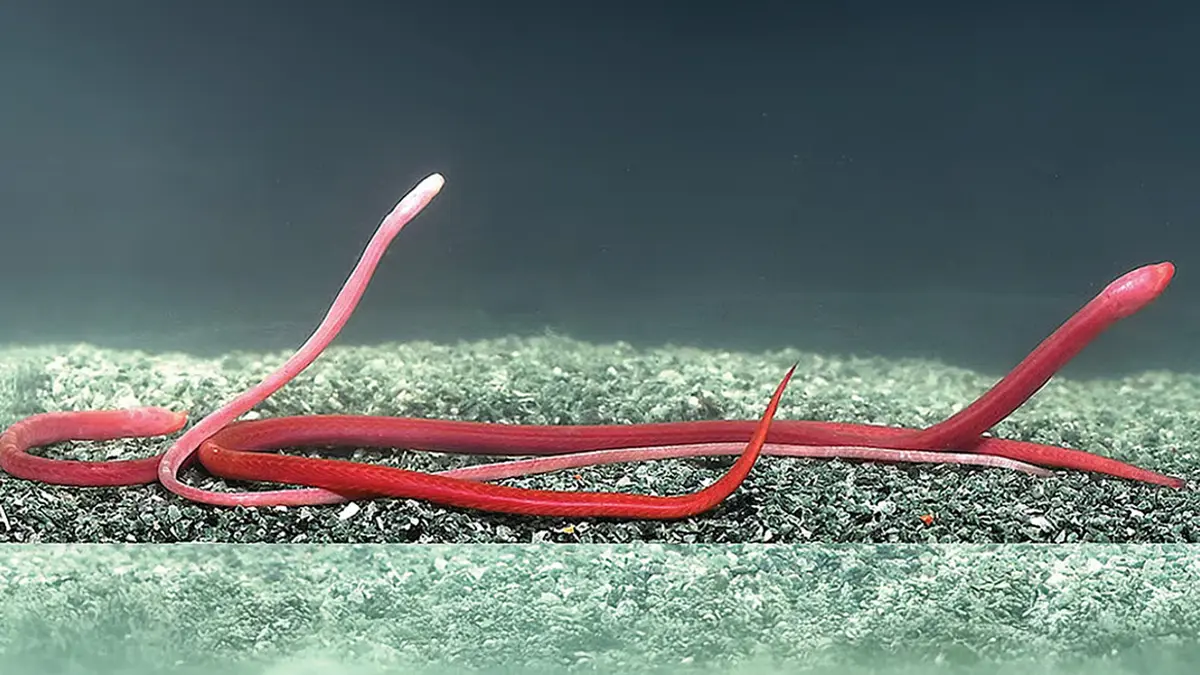
Scientists described a new subterranean fish species from Assam. They named the blood-red animal Rakthamichthys anchi. Specimens came from dug wells in Goalpara district. The formal description appeared on 30 July 2026.
Background
Residents encountered the unusual fish while drawing water from village wells. Scientific examination later showed that it differed from all named relatives. Researchers placed it within Rakthamichthys, an Indian genus of subterranean swamp eels.
The description appeared in Zootaxa; the paper records the locality only as a small Goalpara village. Avoiding excessive precision can help protect fragile groundwater habitats from disturbance.
The species name comes from the Garo word an·chi, meaning blood. Its striking colour reflects dense blood vessels visible beneath pale, translucent skin. It does not come from ordinary red body pigment.
Life beneath the water table
The species is phreatobitic, meaning it lives within the saturated groundwater zone. This environment lacks sunlight, vegetation and normal surface-water rhythms. Food is scarce, while oxygen and water chemistry may vary sharply.
Subterranean fishes commonly lose features that provide little advantage in darkness. These changes can include reduced eyes, weak pigmentation and altered sensory systems. Their slender bodies also assist movement through small spaces within sediment and rock.
Rakthamichthys anchi lacks several external traits found in surface fishes. Researchers identified it through anatomy, vertebral counts, skull features and genetic evidence. Its barcode sequence differed substantially from related Western Ghats species.
Why the discovery matters
The same village landscape has yielded another unusual subterranean fish, Gitchak nakana. These discoveries indicate a complex aquifer ecosystem beneath Assam's alluvial plains. Much of that biodiversity remains difficult to sample scientifically.
Groundwater species often occupy tiny ranges; one contaminated aquifer can therefore threaten an entire known population. Their hidden habitats also receive less conservation attention than rivers, forests or wetlands.
- Pesticides and sewage may enter aquifers through soil or poorly sealed wells.
- Excessive pumping can reduce water levels and disconnect underground habitats.
- Construction and quarrying may alter groundwater flow or sediment structure.
- Collecting rare specimens can damage a population before its size is understood.
What the finding does not establish
A new scientific name does not mean the organism evolved recently. The fish existed unnoticed for years; “new species” means newly described by science.
The discovery also does not reveal its total population or complete distribution. Dug wells provide accidental windows into a larger aquifer. Surveys need local cooperation and methods that avoid contaminating drinking water.
How scientists establish a new species
Researchers compare proposed species with museum specimens, examining bones, sensory pores and vertebral structures. Consistent anatomical differences separate recognised relatives, while genetic sequences provide independent evidence.
A formal description names a type specimen and records diagnostic traits, locality, authorship and naming reasons. Other specialists can then test the evidence, distinguishing scientific description from a striking informal sighting.
Groundwater sampling presents ethical problems because wells are both habitats and essential community water sources. Researchers must avoid contamination and excessive collection, while local knowledge can identify seasonal sightings safely.
Conservation cannot focus upon one fish because extraction, sanitation and land use affect the entire underground community. Water-quality monitoring would protect residents and biodiversity, strengthening local support for this little-known species.
Conclusion
Rakthamichthys anchi expands knowledge of India's concealed groundwater fauna. Protecting its aquifer requires careful water management, pollution control and discreet scientific monitoring.