

Why in news?
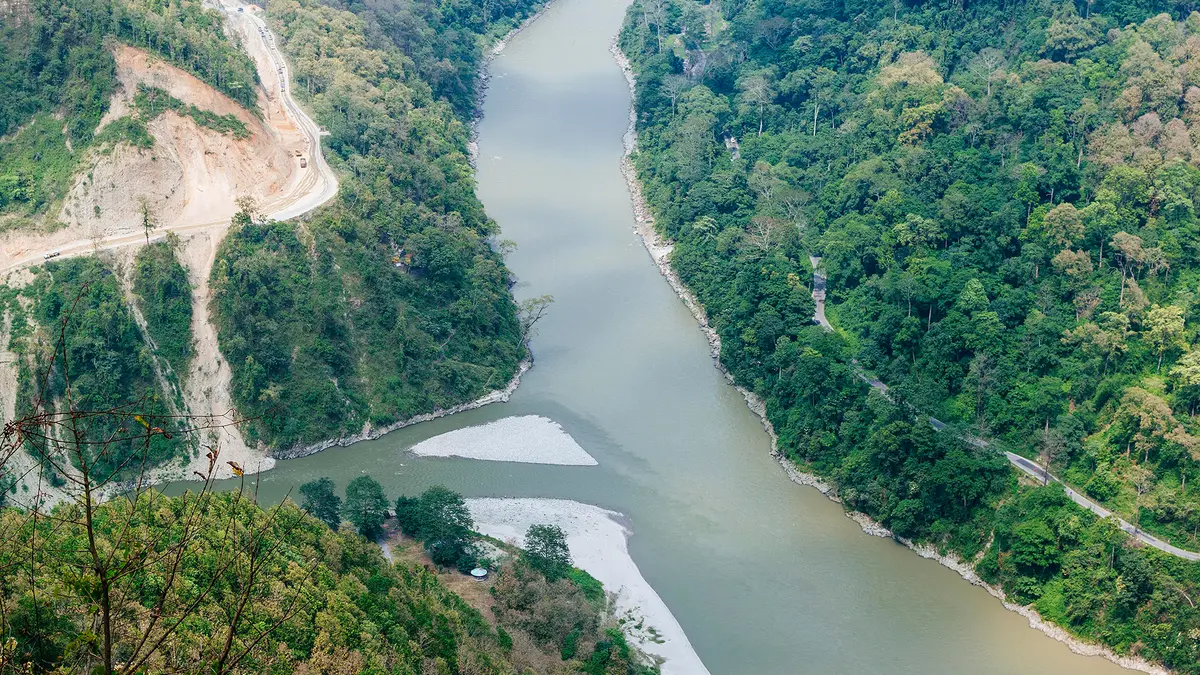
The Sikkim Anglers' Association has announced a three-day festival beside the Rangeet River near Jorethang, beginning on 25 September. According to the organisers' account carried by the Press Trust of India, the programme combines catch-and-release fishing with community activities and river cleaning. Rangeet, also written Rangit, is an important tributary of the Teesta in the eastern Himalayas. Its river corridor connects communities in Sikkim and neighbouring West Bengal. The festival seeks to make conservation part of local tourism and livelihoods, rather than treating the river only as a fishing venue. These are the organisers' aims; the announcement does not establish improved fish populations or lasting ecological benefits.
Placing the river in its larger drainage system
The Rangeet drains mountain country in western Sikkim before joining the Teesta near the Melli–Triveni area. The Sikkim government's geographical account connects its headwaters with the Rathong glacier system. Its catchment includes several tributary streams, so the lower river carries water gathered across a wider landscape. A catchment is the land from which rainfall and meltwater drain towards a common river. Understanding that area is more useful than treating the channel as an isolated line.
State water-monitoring stations trace the river through Legship, Reshi and Jorethang towards Triveni. The lower river corridor lies along the Sikkim–West Bengal interface. From the confluence, the Teesta continues through northern West Bengal and into Bangladesh, where it joins the Brahmaputra system. Consequently, activities beside the Rangeet have a downstream context. Water, sediment and pollutants move through connected channels even when administrative responsibilities change at a boundary.
The surrounding mountain landscape also matters. Sikkim lies between Nepal to the west, Bhutan to the east and Tibet, China, to the north. West Bengal lies to its south. The Rangeet catchment occupies the state's western and southern mountain country, not all these international borders. Steep slopes and narrow valleys help explain its energetic flow. These physical conditions shape settlement, transport, river recreation and the difficulty of managing sudden changes in water level.
A living river, not just a supply of water
Rainfall, snowmelt and glacier-fed tributaries contribute at different times. A perennial river continues flowing through the year, but that does not make its flow constant. Seasonal rain can sharply change discharge, sediment movement and access to riverbanks. Discharge means the volume of water passing a point over time. Fish habitat depends on that moving water, along with temperature, oxygen, shelter and the continuity of suitable places for feeding and reproduction.
Hydropower adds another use of the same system. NHPC Limited, formerly National Hydroelectric Power Corporation Limited, operates the Rangit power station. It has an installed capacity of 60 megawatts, arranged as three 20-megawatt units. Commissioned in 2000, it is described by the operator as a run-of-river scheme with pondage. Pondage provides limited storage for managing generation over shorter periods. Installed capacity describes the station's rated power, not the electricity it necessarily generates every hour or the condition of the entire river.
This distinction is relevant to conservation. A river can support electricity generation, fishing, tourism and everyday water needs at the same time. Their compatibility depends on how flow and habitat are maintained, not simply on labelling an activity sustainable. The number of visitors or the capacity of a power station cannot substitute for information about water quality, seasonal conditions and fish populations.
What catch-and-release can and cannot do
The festival's fishing competition is intended to return caught mahseer to the river. Returning a fish avoids its deliberate removal for food or sale, but release alone does not guarantee survival. Hook injuries, prolonged handling, air exposure and unsuitable water conditions can cause harm. Guidance from the United States National Park Service emphasises quick handling, suitable equipment and attention to water temperature and flow. Those principles explain the biological issue; local rules and species needs must guide their application.
For that reason, catch-and-release is a method, not an automatic conservation result. Organisers need to consider how fish are caught, handled and released, alongside whether fishing pressure is appropriate. The relevant evidence would include survival, habitat condition and changes in local fish populations over time. A successful event can build interest in those questions, but cannot answer them merely by counting fish returned to the water.
Connecting community benefits with continuing stewardship
The announced programme includes a community clean-up and activities beyond angling. These can bring residents and visitors into closer contact with the river. Local tourism may also create an economic reason to protect a valued landscape. That relationship is not automatic: camping, waste and crowded access points can themselves create pressure. Practical arrangements for sanitation, waste removal and bank protection therefore belong alongside promotion of the event.
The state's monitoring network provides a more durable route to understanding river health. Repeated measurements at upstream and downstream locations can reveal patterns that a single visit misses. Combining those records with local observations can help identify where problems occur and whether remedial action works. Community participation and technical monitoring serve different purposes, but strengthen each other when they are connected over time.
Conclusion
The Rangeet festival offers an opportunity to connect recreation with a better understanding of a shared Himalayan river. Its lasting value will depend on what continues after the gathering: responsible fishing, cleaner banks, reliable monitoring and cooperation across the river corridor. The drainage connection with the Teesta makes that wider responsibility clear. Protecting a river means sustaining its ecological functions while managing the different activities that depend on it.