
Why in news?
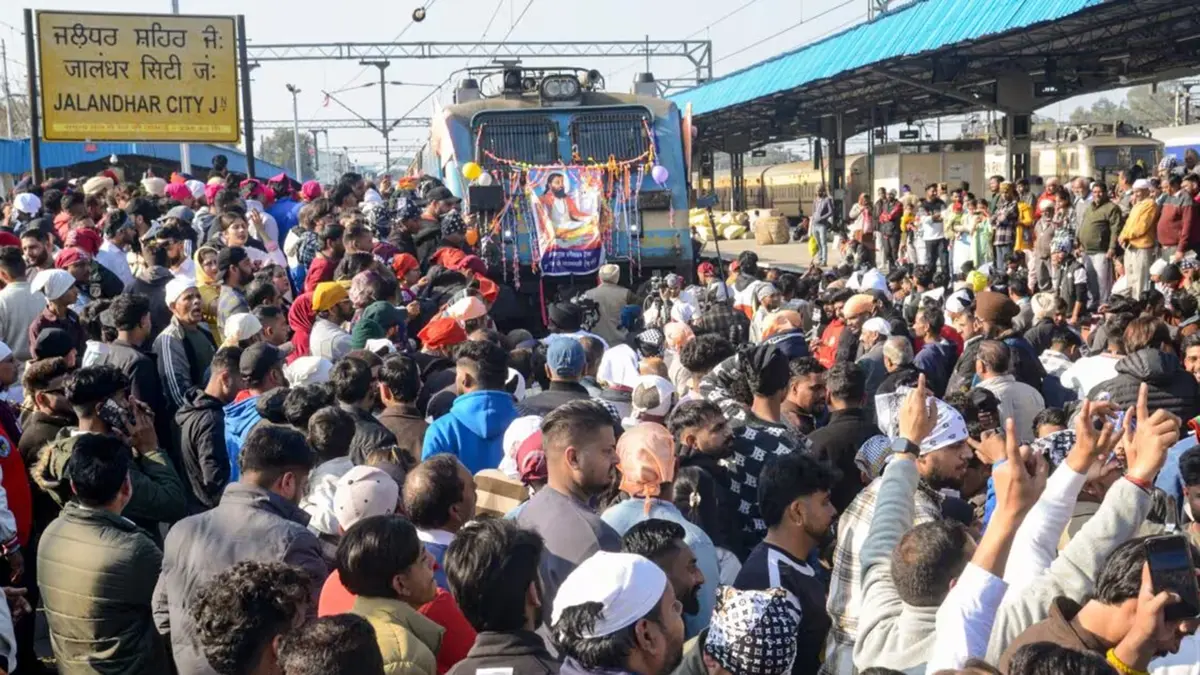
Thousands of Ravidassias gathered at Phagwara in Punjab. Their organisations sought a separate religion category in India’s Census. The demand has remained prominent since a formal declaration during 2010. It raises questions about faith, identity and official enumeration.
Background
Ravidassias are followers of Guru Ravidas, a major poet-saint of the Bhakti movement.
Guru Ravidas lived around the fifteenth and sixteenth centuries, and his exact birth and death years remain disputed.
He opposed caste discrimination and stressed human equality, and his verses imagined a society without fear, suffering or exclusion.
This ideal society was called Begampura, which means a city without sorrow. It remains central to Ravidassia thought.
Several compositions attributed to Guru Ravidas appear in the Guru Granth Sahib. His influence also extends across different religious traditions.
Important caution: Ravidassia identity is not uniform. Some followers identify as Sikh, while others identify as Hindu or independent.
Where is the community concentrated?
Ravidassias live across India and abroad, and their strongest political presence is found in Punjab’s Doaba region.
Doaba lies between the Beas and Sutlej rivers, and it includes Jalandhar, Hoshiarpur, Kapurthala and Shaheed Bhagat Singh Nagar.
Many community members belong to Scheduled Castes, and Punjab recorded India’s highest Scheduled Caste population share in the 2011 Census.
That share was about 31.9 per cent. However, the Census did not count every Ravidassia under one separate religious category.
Therefore, estimates of the community’s total population differ, and social identity and Census classification are not always identical.
How did a distinct religious movement develop?
- Guru Ravidas’s teachings inspired devotional communities across northern India.
- Dera Sachkhand Ballan emerged near Jalandhar during the early twentieth century.
- Baba Sant Pipal Das founded the dera as an important spiritual centre.
- The dera later developed followers in Punjab and the overseas Punjabi community.
- A deadly attack in Vienna during May 2009 transformed the movement.
- Sant Ramanand died, while Sant Niranjan Das and other worshippers suffered injuries.
- The killing triggered strong protests in Punjab and deepened demands for independence.
- During 2010, dera-linked leaders formally announced a separate Ravidassia religion.
The movement adopted distinct religious symbols and practices. It also promoted the Amrit Bani Guru Ravidass Ji as scripture.
This book contains devotional compositions attributed to Guru Ravidas, and published accounts differ about the exact number of hymns.
A dera is a religious centre organised around a spiritual teacher or lineage.
Seer Govardhanpur in Varanasi is another major centre. Followers regard it as Guru Ravidas’s birthplace and visit during his birth anniversary.
Punjab’s 2022 Assembly election was postponed by six days, and the change helped devotees complete their annual Varanasi pilgrimage.
What happened at the July 2026 gathering?
The Akhil Bharatiya Ravidassia Dharam Sangathan organised the gathering at Phagwara, and Sant Niranjan Das also attended the event.
The organisation sent representations to India’s President, Prime Minister and Union Home Minister. It requested a separate Ravidassia Census option.
Supporters argued that independent enumeration would show their actual population, and they also linked recognition with dignity and institutional representation.
How does the Census record religion?
India’s population Census asks every person to state their religion. The enumerator must record the answer given by that person.
Large religious communities receive separate published tables, and smaller responses may appear under “Other Religions and Persuasions.”
A community may possess its own institutions without receiving a separate Census code. Social recognition and statistical coding are different processes.
The Ravidassia demand seeks a clearly named category, and no such all-India category has yet received final official approval.
Prelims point: A demand for separate enumeration does not itself create a new official religion category.
Why does separate enumeration matter?
- It can provide a clearer estimate of the community’s population.
- Accurate numbers can inform research and public policy discussions.
- A named category may strengthen a community’s sense of recognition.
- It can also affect debates about political and institutional representation.
- However, one label may conceal important differences within the community.
What constitutional ideas are relevant?
Article 25 protects freedom of conscience and the right to profess, practise and propagate religion.
This freedom remains subject to public order, morality, health and other Fundamental Rights.
Articles 26 to 28 contain further protections concerning religious affairs, taxation and instruction. Census classification is a separate administrative matter.
Conclusion
The demand reflects a long search for dignity and independent identity. Any Census decision must respect both accuracy and internal diversity.