

Why in news?
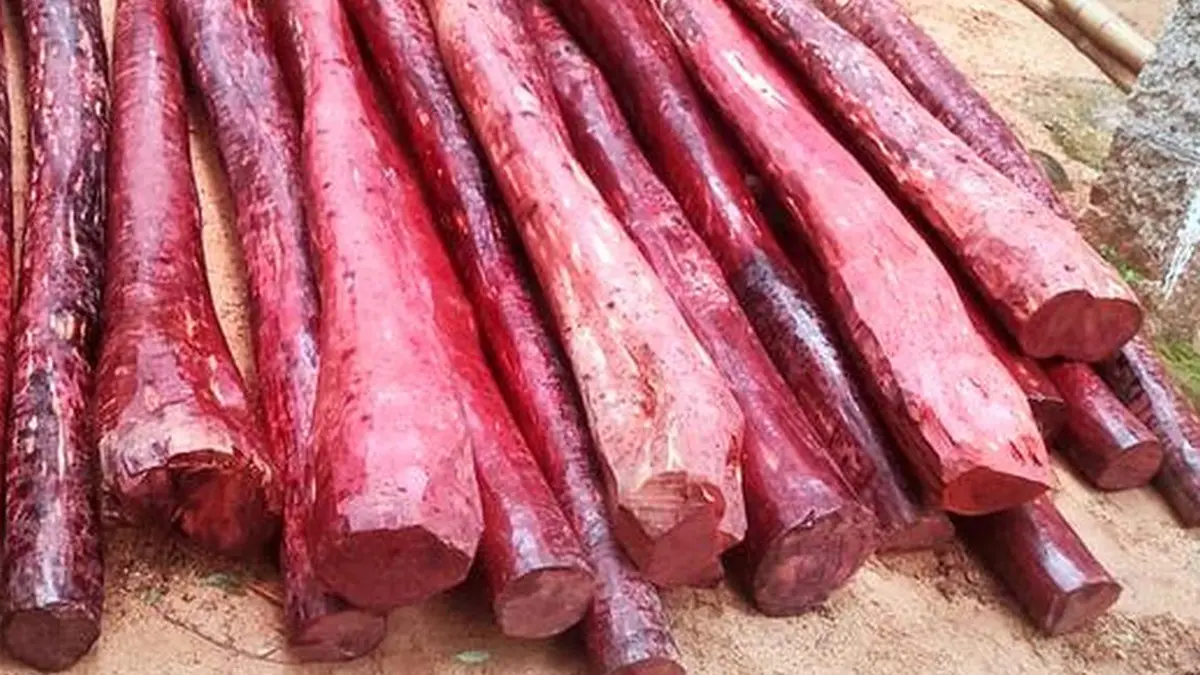
A report in February 2026 highlighted a rise in smuggling of red sanders logs along roads leading to the Tirumala Venkateswara Temple in Andhra Pradesh. Smugglers exploit the heavy pilgrim traffic to transport the protected timber hidden in vehicles. Security agencies are stepping up checks to curb the illegal trade.
Background
Red sanders (Pterocarpus santalinus) is a slow‑growing deciduous tree endemic to the rocky hill forests of the southern Eastern Ghats. Its deep red wood is prized for luxury furniture, musical instruments and traditional medicines. Because of its high value, red sanders has been extensively logged and smuggled, leading to its classification as Endangered by the IUCN and its listing in Appendix II of the Convention on International Trade in Endangered Species (CITES). Harvesting and trade are banned in India without special permits.
Causes of the smuggling surge
- Pilgrim cover: The Tirumala temple attracts millions of visitors each year. Smugglers mix illicit timber into vehicles transporting pilgrims and goods, banking on light scrutiny due to the religious significance of the route.
- Lucrative overseas demand: Red sanders fetches high prices in East Asian markets, particularly China and Japan. Organised networks purchase timber from local cutters and arrange transport through multiple states to ports.
- Insufficient enforcement: Forest authorities and police face challenges in monitoring remote forests and busy roads. Limited manpower and corruption can allow smuggling to go undetected.
Implications and responses
- Ecological impact: Over‑harvesting reduces the population of red sanders trees and disrupts forest ecosystems. The species grows slowly and takes decades to mature, making recovery difficult.
- Legal consequences: Transporting or possessing red sanders without permission is punishable under Indian forest laws. Recent seizures have led to arrests and confiscation of vehicles.
- Enhanced vigilance: Authorities plan to increase checkpoints, use surveillance cameras and deploy forest patrols to deter smugglers. Awareness campaigns urge pilgrims not to allow strangers to load goods into their vehicles.
Conclusion
Red sanders smuggling along the Tirumala route underscores the challenges of protecting high‑value forest species. Stronger enforcement, community vigilance and international cooperation are needed to safeguard this precious tree from illegal exploitation.
Source: Down To Earth