
Why in news?
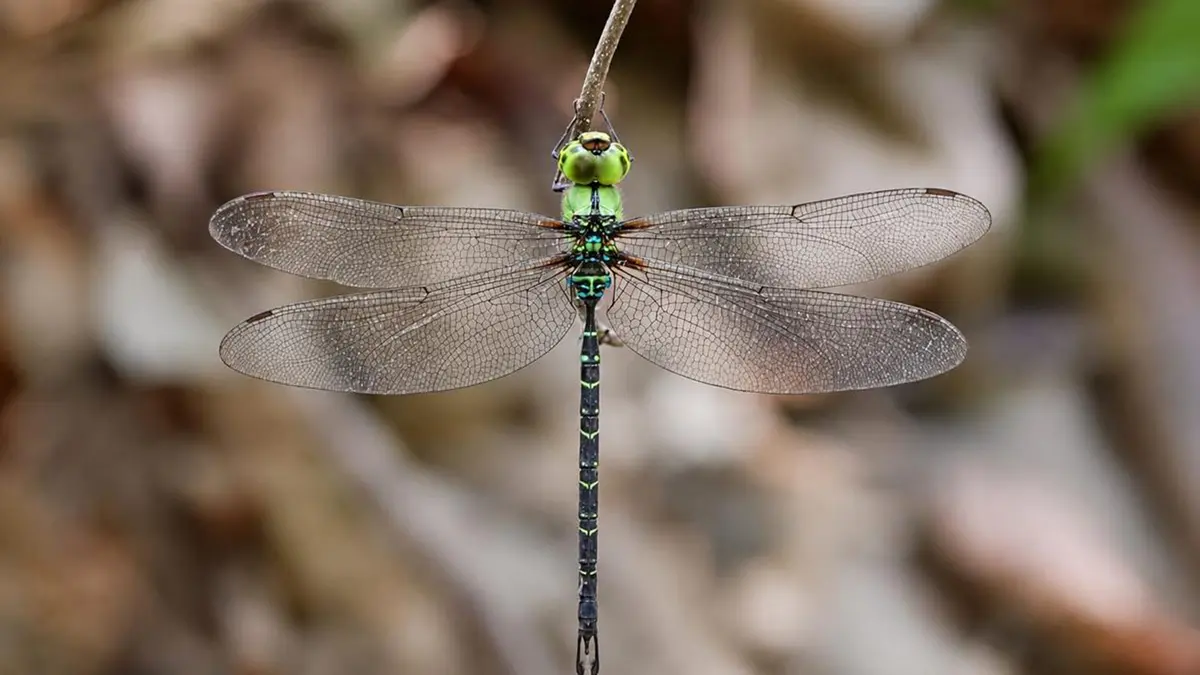
A rare dragonfly species known as the Long‑Tailed Duskhawker (Gynacantha khasiaca) was recently sighted in the Namdapha National Park and Tiger Reserve in Arunachal Pradesh after more than 110 years. The rediscovery underscores the ecological importance of the Eastern Himalayan forests and has attracted attention from conservationists.
Background
The species was first described by British entomologist Robert McLachlan in 1896 based on specimens from the Khasi Hills of Meghalaya. After the early 20th century there were no confirmed records until October 2024 when citizen scientists photographed a male along the Miao–Vijoynagar road near Deban in Namdapha National Park. Also called the Long‑Tailed Duskhawker, this dragonfly belongs to the family Aeshnidae. It is considered crepuscular, flying mainly at dusk, and serves as a predator of mosquitoes and other insects.
Identification and morphology
- Size and shape: A large dragonfly with a slender abdomen measuring about 47–51 mm. The abdomen tapers to a long “tail”, which gives the species its common name.
- Colouration: The thorax is bright green with two dark stripes on each side, while the wings are transparent (hyaline) with a faint amber tint at the base. The wing edge bears a dark brown patch called the pterostigma.
- Anal appendages: The black anal appendages are key for identification. The lower appendages are about two‑thirds as long as the upper ones.
- Maturity differences: Mature males have pale blue to olive‑green eyes and a light green face with a T‑shaped black mark. Immature individuals are generally brown and have paler eyes and thorax. The species exhibits colour changes as it ages.
Habitat and ecology
- Geographic range: G. khasiaca is distributed in parts of Southeast Asia, including India, Bangladesh, Bhutan and Sri Lanka. Within India it has been recorded in states such as Assam, Meghalaya, Uttarakhand, Maharashtra, West Bengal and Arunachal Pradesh.
- Preferred habitat: The dragonfly inhabits forest edges, dense vegetation and shady areas near rivers, marshes and pools. It is crepuscular, most active at dusk, and plays a role in controlling mosquito populations.
- Indicator species: Dragonflies are considered good indicators of freshwater ecosystem health because their larvae live in clean water. The presence of G. khasiaca reflects the intact nature of Namdapha’s forests and wetlands.
- Conservation status: The International Union for Conservation of Nature (IUCN) lists the species as Data Deficient because little is known about its population size and distribution. Threats include habitat destruction, pollution and urbanisation.
About Namdapha National Park
Namdapha National Park and Tiger Reserve is situated in the Changlang district of Arunachal Pradesh near the border with Myanmar. Covering about 1,985 sq km, it is India’s northernmost lowland rainforest and hosts a wide range of ecosystems from tropical evergreen forests to alpine meadows. The Noa‑Dihing River flows through the park, which was declared a tiger reserve in 1983. Namdapha is famous for being the only protected area in the world where four large cat species – the Tiger, Leopard, Snow Leopard and Clouded Leopard – coexist. The park supports over 1,200 species of animals, including Hoolock gibbons, elephants and rare birds like the White‑winged Wood Duck.
Conclusion
The rediscovery of the Long‑Tailed Duskhawker after a century highlights the hidden diversity of India’s northeastern forests and emphasises the need for continued monitoring and conservation of wetlands and rainforests. Protecting habitats such as Namdapha ensures the survival of lesser‑known species that play vital ecological roles.