Why in news?
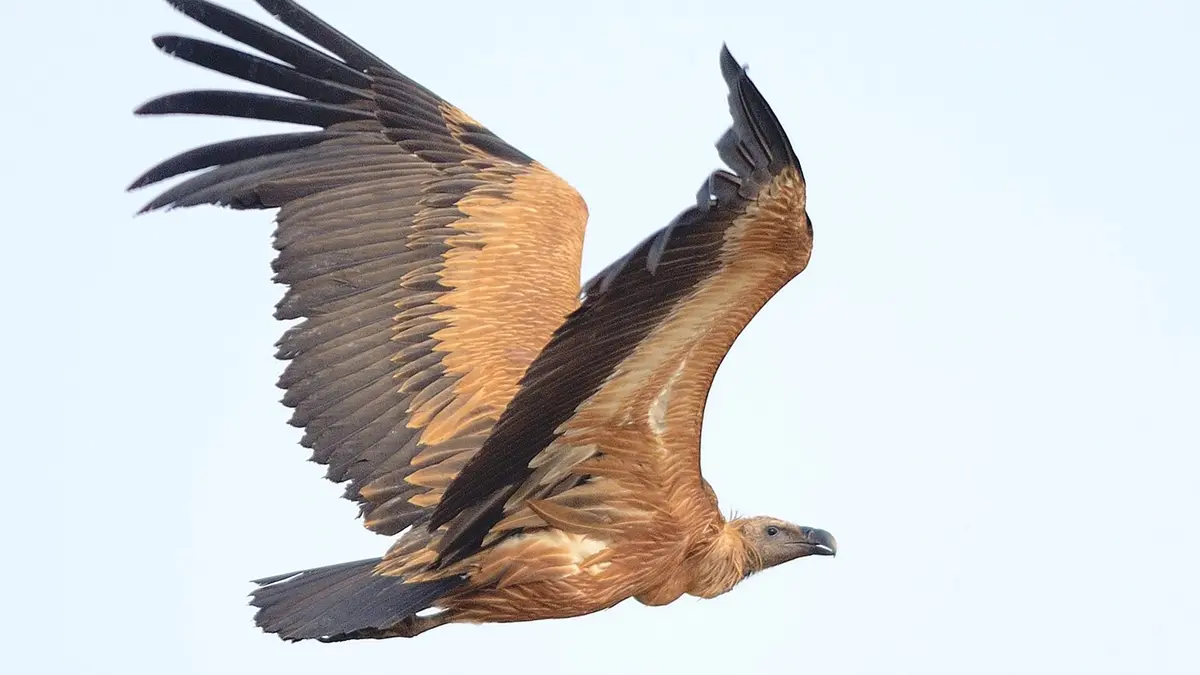
The Bombay Natural History Society (BNHS) recently released a group of long‑billed vultures, also called Indian vultures, into Melghat Tiger Reserve in Maharashtra. Fifteen birds bred at the Pinjore conservation centre were fitted with satellite tags and slowly reintroduced into the wild. Two of the vultures later flew more than 1,000 kilometres to Bhopal, showing the species’ ability to cover long distances.
Background
The Indian vulture (Gyps indicus) is an Old World vulture in the family Accipitridae. Once abundant across India, Pakistan and Nepal, its population crashed by more than 97 % in the 1990s and early 2000s. The main cause was the use of the veterinary drug diclofenac, which poisoned vultures that fed on livestock carcasses. With only about 30,000 mature individuals remaining, the species is now listed as critically endangered. Captive‑breeding and reintroduction programmes are therefore essential for its recovery.
Identification and behaviour
- Appearance: The long‑billed vulture is a medium‑sized scavenger with broad wings and a bulky body. Its plumage is pale grey‑brown with darker flight feathers. The head and neck are mostly bare to prevent feathers from becoming soiled while feeding on carrion. Females are slightly smaller than males.
- Habits: These vultures are social and usually feed in groups. They are non‑migratory but may travel up to 100 kilometres each day in search of carcasses. They build nests on cliffs or tall trees and lay a single egg per year, making population recovery slow.
- Ecological role: As nature’s clean‑up crew, vultures remove animal carcasses that might otherwise harbour disease. By preventing rotting meat from accumulating, they help control feral dog populations and reduce the risk of rabies and other illnesses.
Melghat Tiger Reserve
Melghat Tiger Reserve lies in the Satpura ranges of central India. Established in 1974, it was among the first nine tiger reserves under Project Tiger. The reserve covers about 2,768 square kilometres in Maharashtra’s Amravati district. The landscape is marked by steep valleys and plateaus and is drained by the Tapti River and its tributaries. Forests are dominated by teak along with species such as ain, haldu and bamboo. The reserve shelters tigers, leopards, gaur, sloth bears, sambar, nilgai, chital and the critically endangered forest owlet.
Significance
The successful release demonstrates the progress of India’s vulture conservation efforts. Establishing a viable vulture population in Melghat will help restore ecological balance and raise awareness about the dangers of certain veterinary drugs. It also underlines the importance of maintaining safe food sources and undisturbed habitats for scavenging birds.