

Why in news?
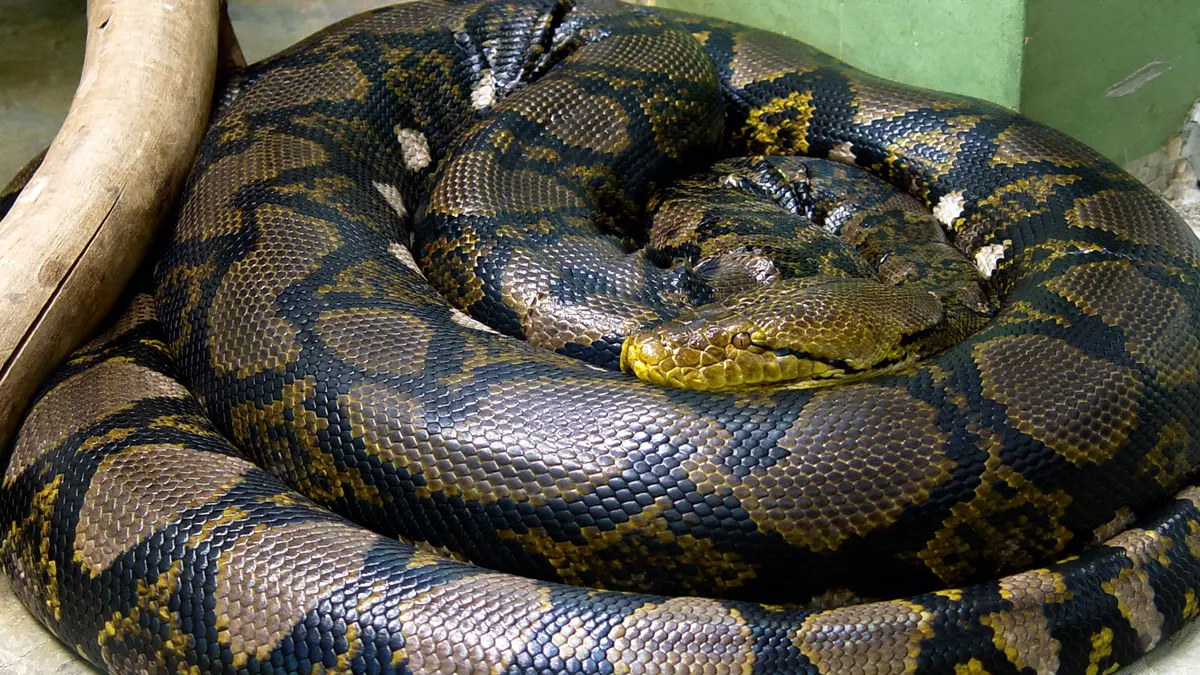
A giant female reticulated python nicknamed “Ibu Baron” was discovered in Sulawesi, Indonesia. Measuring 7.22 metres in length, she has been recognised by Guinness World Records as the longest measured snake on the planet.
Background
Reticulated pythons (Malayopython reticulatus) are native to South and Southeast Asia. They are the longest snake species and the third heaviest after the green anaconda and Burmese python. The species name “reticulatus” refers to its net‑like pattern, which provides camouflage in forest habitats. These pythons are non‑venomous constrictors and excellent swimmers; they inhabit rainforests, rivers and even small islands.
Characteristics
- Size: Adults typically range from 1.5 m to over 6 m in length, with exceptional specimens reaching more than 7 m.
- Weight: Large individuals can weigh up to 75 kg, though most are smaller.
- Pattern and senses: The snake’s skin has a complex lattice pattern that acts as disruptive camouflage. Heat‑sensing pits in the scales help detect warm‑blooded prey.
- Behaviour: Reticulated pythons are solitary, nocturnal ambush predators. They wait for prey to come near, then strike quickly and constrict it. Females lay eggs and coil around them, shivering to keep them warm.
- Habitat and distribution: The species is found in forests, rivers and wetlands across India’s Northeast, Indonesia, the Philippines and other parts of Southeast Asia. It is listed as “Least Concern” on the IUCN Red List but faces threats from habitat loss and exploitation.
Record‑breaking snake
- The female nicknamed Ibu Baron was discovered in Maros County, Sulawesi, in late 2025. Conservationist Budi Purwanto acquired and protected the snake when news of its capture emerged.
- Measured at 7.22 m (23 ft 8 in), she occupies the width of a standard football goal and could be longer when fully relaxed under anaesthesia.
- The Guinness World Records recognition highlights the need for protection of large snakes, which are sometimes hunted for their skin or killed out of fear. Reticulated pythons occasionally prey on livestock and, in rare cases, humans, underscoring the importance of managing human–wildlife interactions.
Significance
- Biodiversity awareness: Such discoveries draw attention to Asia’s rich but threatened wildlife.
- Conservation need: Protecting habitats and reducing illegal wildlife trade will help ensure the survival of these impressive reptiles.
- Respectful coexistence: Understanding the behaviour of reticulated pythons helps communities avoid conflict and appreciate their ecological role.
Source: Down To Earth