

Why in news?
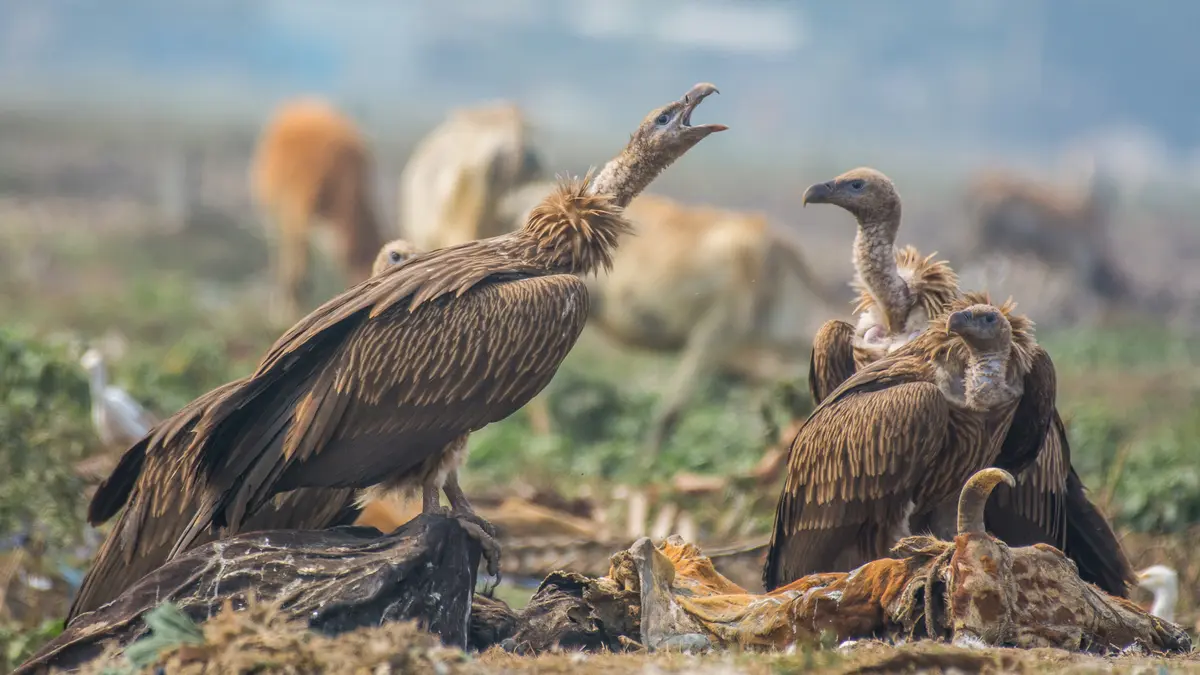
For the first time in nearly a decade, a wild Himalayan Griffon vulture has been spotted in Maharashtra’s Melghat Tiger Reserve. Conservationists believe the bird was drawn by reintroduced vultures released by the Bombay Natural History Society (BNHS), signalling success in ongoing vulture conservation programmes.
Background
The Himalayan Griffon is a large vulture native to the Himalayas and central Asia. Vulture populations across India crashed in the 1990s and 2000s due to the veterinary drug diclofenac and other non‑steroidal anti‑inflammatory drugs (NSAIDs), which cause kidney failure in scavenging birds. Conservation groups like BNHS have been breeding vultures in captivity and releasing them into protected areas to restore populations.
Details of the sighting
- Soft release programme: BNHS has released over 30 long‑billed and white‑rumped vultures equipped with GPS transmitters in Melghat, Pench and Tadoba reserves. These birds are acclimatized in large aviaries before release.
- Attraction of wild vultures: The presence of rewilded birds likely drew the Himalayan Griffon from nearby areas. The newcomer interacted with the released vultures, indicating that suitable habitat and food are available.
- Monitoring success: GPS data show that rewilded vultures are travelling widely and learning to find carcasses. The arrival of a wild Griffon suggests that the ecosystem is improving for scavengers.
Conservation context
- Drug ban: India banned veterinary diclofenac in 2006, but other NSAIDs such as aceclofenac and ketoprofen remain threats. Conservationists push for stricter regulation of all harmful drugs.
- Captive breeding centres: Facilities in Haryana, West Bengal, Assam and Maharashtra raise vultures and aim to release hundreds over coming years.
- Public awareness: Education campaigns encourage farmers and veterinarians to use vulture‑safe drugs, helping ensure the birds’ long‑term survival.
Conclusion
The sighting of a wild Himalayan Griffon in Melghat underscores the success of vulture conservation efforts in India. Continued vigilance against harmful drugs, sustained breeding programmes and habitat protection can restore these majestic scavengers to their rightful place in our ecosystems.
Source: DH