
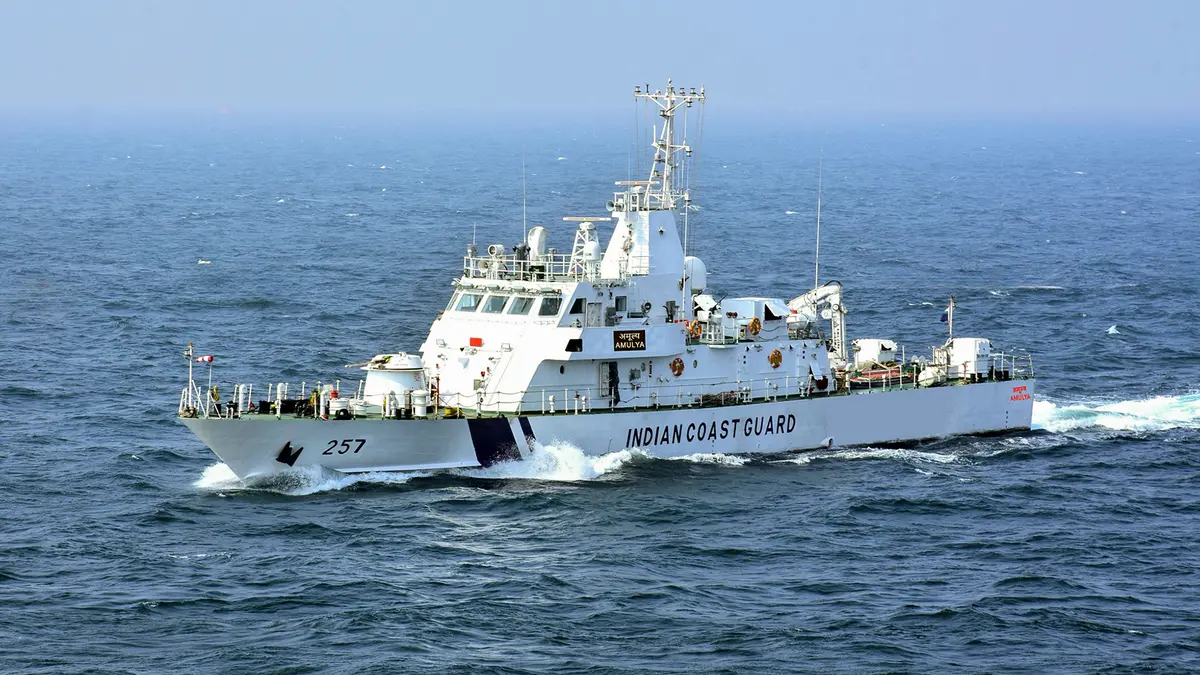
Why in news?
The United States Navy has announced that the 30th Rim of the Pacific (RIMPAC) exercise will take place from 24 June to 31 July 2026 in and around the Hawaiian Islands. The biennial drill will involve about 31 nations, 40 surface ships, 5 submarines, more than 140 aircraft and around 25,000 personnel. Its theme for 2026 is “Partners: Integrated and Prepared.”
Background
RIMPAC is the world’s largest international maritime exercise. It began in 1971 and is held every two years. It is hosted by the Commander of the U.S. Pacific Fleet and led by the Commander of the U.S. Third Fleet. The purpose is to strengthen maritime partnerships, improve interoperability and promote free and open seas. Over the decades RIMPAC has grown in scale and now includes navies, coast guards and marine forces from the Indo‑Pacific and beyond.
Main features of RIMPAC 2026
- Large participation: Thirty‑one nations will send ships, submarines, aircraft and land forces. The exercise will include amphibious landings, gunnery practice, anti‑submarine warfare, air defence and disaster‑relief drills.
- Leadership roles: The U.S. Navy will lead the exercise. The Chilean Navy will serve as deputy commander, while the Japan Maritime Self‑Defense Force will act as vice commander. The Republic of Korea Navy will command the maritime component and the Royal Canadian Air Force will command the air component.
- Integrated training: Forces will practice cooperation in real‑world scenarios such as humanitarian assistance, maritime security, unmanned systems, mine clearance and joint operations. The drills help partners understand each other’s procedures and build trust.
- Historical context: RIMPAC started with only a few participants. In 2016 and 2018 India sent naval ships and aircraft. The 2026 edition marks the 30th iteration, reflecting its enduring importance.
Why it matters
In a region with diverse security challenges, RIMPAC fosters cooperation among maritime forces. The participation of both large and small navies underscores the emphasis on inclusivity. Joint training improves readiness for crises such as natural disasters or piracy. For India and other Asian countries the exercise is a venue to enhance maritime capabilities and to work with allies and partners.
Conclusion
RIMPAC 2026 will showcase multinational cooperation on the high seas. The wide participation and varied drills should strengthen trust and interoperability among partner navies. A free and secure Indo‑Pacific requires continued collaboration, and RIMPAC plays an important role in that effort.
Sources: U.S. Pacific Fleet · Seapower Magazine
Kisan Sarathi – India’s integrated digital agro‑advisory platform
Why in news?
The government has highlighted the success of Kisan Sarathi, India’s largest digital agro‑advisory platform, as part of its push for smart agriculture. The platform connects farmers with scientists in real time. Recent updates have expanded access through mobile apps and village kiosks. The initiative plays a vital role in empowering farmers and was praised in several reports.
Background
Kisan Sarathi was launched on 16 July 2021 by the Ministries of Agriculture and Electronics & Information Technology. The aim was to deliver timely, local‑language advice directly to farmers. Farmers often lacked access to agronomic information and government schemes. The platform uses the Interactive Information Dissemination System (IIDS) to bridge this gap. It is jointly implemented by the Indian Council of Agricultural Research (ICAR), the Institute for Agricultural Statistics and Informatics (IASRI), the Digital India Corporation and the Ministry of Electronics & IT.
How Kisan Sarathi works
- Large network: The platform links more than 730 Krishi Vigyan Kendras (KVKs), over 100 ICAR institutes and about 65 agricultural universities. Farmers can connect with experts near their farms.
- Multiple access points: Farmers may access advice through a call centre (Kisan Call Centre), Common Service Centres, a web portal, mobile apps, video consultations and WhatsApp. This ensures reach even in remote areas.
- Personalised advisories: Extension workers and scientists provide crop‑specific recommendations, pest alerts, weather forecasts and information about schemes. Messages are delivered in regional languages.
- Benefits: Farmers receive timely information, leading to better yields and resource use. KVKs and ICAR institutes get feedback from the field to improve research. Policymakers can analyse aggregated data to identify gaps and design schemes.
Importance
Digital extension platforms can transform Indian agriculture. Kisan Sarathi helps smallholders reduce crop losses, improve productivity and understand market opportunities. By integrating government schemes with scientific advice the platform supports the goal of doubling farmers’ incomes. It also promotes transparency and accountability in the delivery of services.
Conclusion
Kisan Sarathi shows how technology and local knowledge can work together. By connecting farmers with experts through multiple channels, the platform empowers rural communities to make informed decisions. Continuous upgrades and community participation will ensure that more farmers benefit from this digital revolution.
Sources: MI