

Why in news?
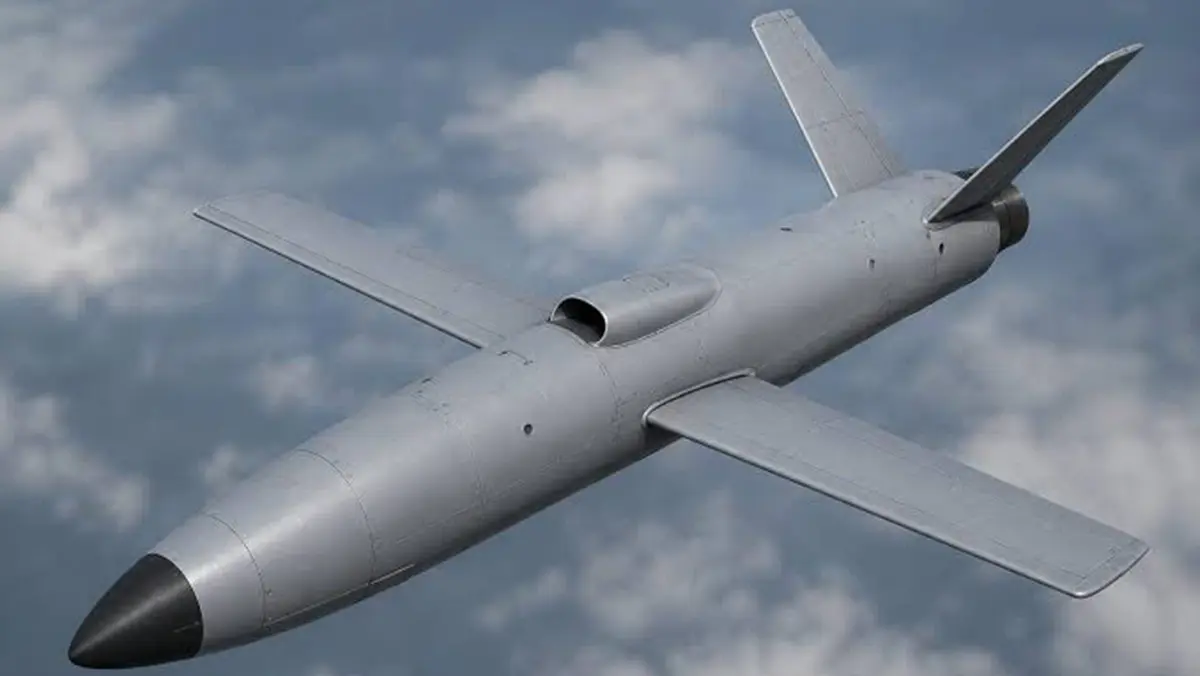
New images suggested a ground launcher for Russia's S8000 Banderol. The weapon had earlier appeared beneath an Orion unmanned aircraft. Ukrainian intelligence published component details during May 2025. Important performance and deployment claims remain independently unverified.
Background
Ukraine reported the S8000 Banderol after examining Russian weapons and recovered components. Its Defence Intelligence agency published a detailed assessment on 12 May 2025, attributing development to Russia's Kronstadt group.
The assessment described the Orion unmanned aerial vehicle as the primary carrier. It also said adaptation for the Mi-28N attack helicopter was under consideration. During July 2026, Russian footage appeared to show an Orion carrying one missile.
Later photographs showed a missile-shaped object on a catapult-style ground launcher, suggesting a possible surface-launched configuration. They did not establish routine deployment, combat use or serial production.
Reported design and performance
Ukrainian intelligence described Banderol as a compact air-launched cruise missile. It reported a range up to 500 kilometres and a cruising speed near 500 kilometres per hour. The agency listed a warhead capacity up to 150 kilograms.
Other reports described a roughly five-metre weapon with a small turbojet engine. Those dimensions and higher speed estimates remain assessments, not certified manufacturer data. No transparent flight-test record confirms the complete performance envelope.
A cruise missile uses sustained engine power and aerodynamic lift, while guidance steers it towards a programmed target. Its flight profile differs from a ballistic missile's largely unpowered arc.
Reports sometimes confuse total warhead mass with explosive filling. One referenced fragmentation warhead weighs about 114 kilograms, while its explosive component is nearer 50 kilograms. These figures describe different measurements.
Commercial components and sanctions
Ukraine's inventory listed foreign-designed parts, including a Chinese small turbojet, radio equipment and navigation components. It also identified microelectronics associated with several international manufacturers.
Commercial components can move through distributors, intermediaries or copied supply chains. Their presence does not establish that a manufacturer knowingly supplied a weapon. Serial-number investigation and export records are needed for legal conclusions.
Small civilian electronics may offer sufficient accuracy or control at lower cost. This approach can shorten development time and complicate sanctions enforcement. It also creates vulnerabilities because commercial parts may vary in quality and availability.
What is known and what remains uncertain
- Ukraine published detailed component findings and attributed the missile to Kronstadt.
- Russian imagery appeared to show integration with an Orion unmanned aircraft.
- Ground-launch photographs suggest experimentation, not proven operational deployment.
- Range, accuracy, production volume and unit cost lack independent public verification.
Operational implications
An aircraft-launched missile can attack from beyond some short-range defences. A ground launcher would broaden basing options and reduce dependence upon aircraft. Actual military value still depends upon accuracy, payload, reliability and production scale.
Calling the system inexpensive is also relative. A commercial engine may cost less than a military turbine, but no verified unit price exists. Launch platforms, navigation and manufacturing add substantial costs.
The design illustrates growing overlap between drones, cruise missiles and commercial technology. That trend places pressure on air defence and export controls. It does not prove that one system has transformed the wider conflict.
Conclusion
Banderol appears to be an evolving compact strike system with imported components. Claims about its deployment and performance require disciplined attribution and further evidence.