

Why in news?
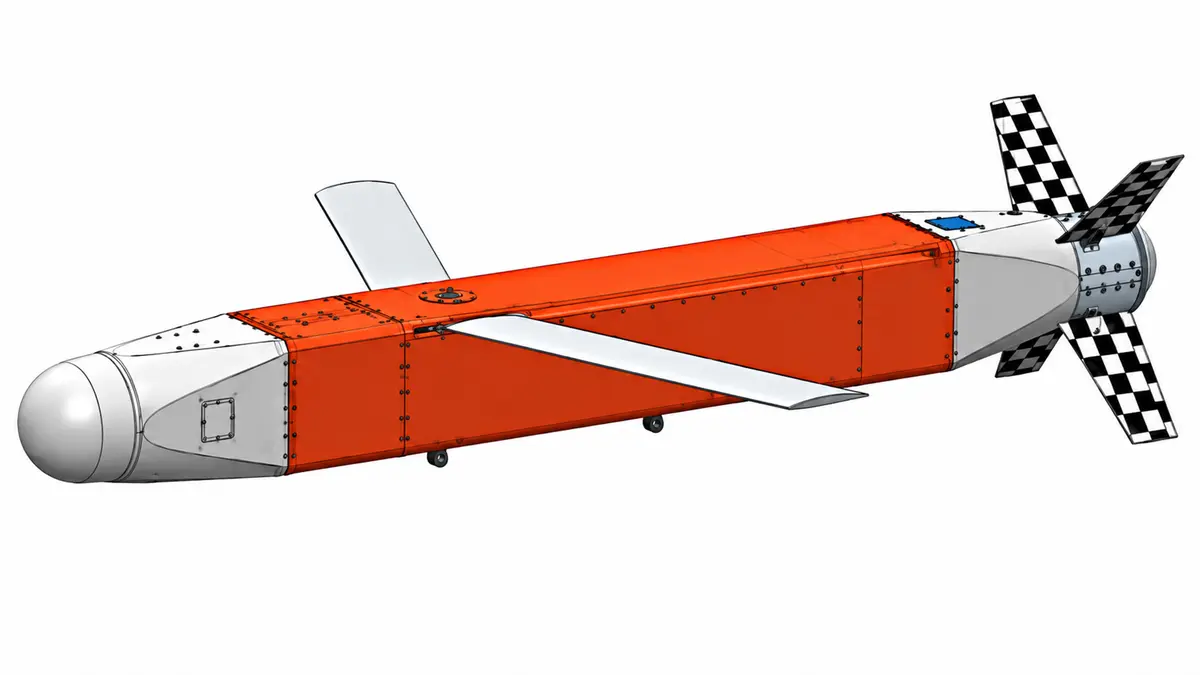
The Ministry of Defence signed a ₹810.79-crore contract on 23 September for 160 Satellite Smart Anti Airfield Weapons and associated equipment. Bharat Dynamics Limited will supply the weapons to the Indian Air Force. Developed by the Defence Research and Development Organisation, the system is an aircraft-released precision weapon for attacking selected ground infrastructure. Its ability to glide towards a target allows the aircraft to release it from a distance. The contract advances an indigenous design towards a larger supply programme, but it is not an announcement that all weapons are operational. Deliveries are scheduled from 2027–28 to 2028–29, and the contract covers support equipment as well as the weapons themselves.
The role: a ground-attack weapon, not an air-defence missile
The name refers to airfields as targets, not to aircraft being intercepted in flight. A Smart Anti Airfield Weapon, abbreviated SAAW, belongs to the air-to-ground category. Its intended target set includes runways and related infrastructure, according to official descriptions. This differs from an air-to-air missile, which is designed to engage another aircraft. Understanding the target and launch platform prevents the word “airfield” from being mistaken for a defensive shield around an airport.
The Defence Research and Development Organisation, or DRDO, develops defence technologies. Bharat Dynamics Limited, or BDL, is the manufacturing supplier under this contract. The Indian Air Force, or IAF, is the customer and intended operator. These are separate responsibilities. A successful laboratory design must still be manufactured consistently, integrated with aircraft and supported through its service life. The procurement therefore connects a research programme with industrial production and eventual operational use.
How a glide weapon differs from a powered missile
An aircraft carries a glide weapon to the conditions needed for release. After separation, aerodynamic surfaces help it travel towards the designated location. It uses the height and motion provided by the aircraft rather than relying on sustained propulsion like a cruise missile. This gives the release conditions an important role in achievable distance. The manufacturer's public specification describes a range of roughly 90–100 kilometres, explicitly dependent on those conditions.
Stand-off range means separation between the release point and the target. It can reduce the aircraft's need to approach some defended locations closely. It does not make the aircraft invisible or guarantee safety against every air-defence system. Nor does a quoted maximum range describe every possible release. The relevant distinction is between a capability demonstrated or specified under particular conditions and an unconditional operational outcome.
The official product profile places SAAW in the 125-kilogram class and gives a length of about 1.85 metres. These figures help explain why an aircraft can carry it as a relatively compact precision store. They do not establish the explosive mass, which is different from total weapon mass. The September contract concerns the satellite-guided variant. Specifications for other versions or guidance combinations should not automatically be assigned to every weapon ordered under it.
What satellite navigation contributes
Satellite navigation helps a receiver estimate its position using timed radio signals from satellites whose positions are known. The Global Positioning System, or GPS, is one example of such a navigation system. A receiver calculates where it is; a satellite does not need to photograph the target to provide that service. This basic distinction explains why “satellite-guided” should not be read as meaning an operator watches and steers each weapon through a live satellite image.
Navigation information and a weapon's control system perform related but different jobs. Position estimates help determine whether the flight path is departing from the intended route. The control system responds to that information. At a general level, accuracy therefore depends on the whole system, not simply on the presence of a satellite receiver. Public satellite-navigation guidance identifies signal conditions, receiver design and obstruction as factors affecting positioning performance. Those principles do not disclose this weapon's complete guidance architecture.
Development, aircraft integration and the new order
An official January 2021 account describes a SAAW flight trial from a Hawk-I aircraft off the Odisha coast. It identified DRDO's Research Centre Imarat in Hyderabad as the developer and noted earlier trials from Jaguar aircraft. That record shows an established development history before the current purchase. It does not mean the 2021 test article and every later production configuration are identical. Testing, production approval, delivery and operational availability remain distinct stages.
The September announcement identifies Jaguar, Hawk and Su-30MKI aircraft as compatible platforms. Aircraft integration involves more than physically carrying a store. The release arrangement and relevant aircraft systems must work together safely. Consequently, listing a compatible aircraft does not establish that every squadron already has the weapon, trained crews and serviceable stocks. The delivery schedule is the clearest public guide to the stage reached by this particular order.
The ministry places the purchase under the Buy Indian–Indigenously Designed, Developed and Manufactured category and reports 60% indigenous content. That percentage should not be rewritten as complete domestic self-sufficiency. Local design, component sourcing, manufacturing and maintenance describe different parts of a supply chain. The order can strengthen Indian production capability while still involving imported inputs. Claims about wider independence require evidence about those inputs and the ability to sustain production.
What the contract figure does—and does not—show
The ₹810.79-crore value includes associated equipment. Dividing the total by 160 would therefore produce an average bundle cost, not a verified unit price for one weapon. Equipment, support and other contract elements can materially affect such a calculation. Similarly, announcing a quantity does not reveal how quickly the entire inventory becomes deployable. Acceptance checks, deliveries and service arrangements determine how a procurement commitment becomes usable military capability.
Conclusion
The order is a concrete manufacturing commitment for an indigenous precision-attack system, with deliveries still ahead. Its significance lies in bringing a tested design into a defined supply programme for the air force. The next substantive milestones are production, acceptance and delivery on the announced schedule. Range, accuracy and indigenous-content figures remain meaningful only when read with their stated conditions and scope.