
Why in news?
On 29 May 2026 India ceremonially sent the sacred relics of the Buddha’s celebrated disciples Sariputra and Maudgalyayana from the Sanchi Stupa to Ulaanbaatar, Mongolia. The relics were displayed at Delhi’s National Museum before being flown abroad, highlighting India’s cultural ties with other Buddhist countries. The gesture aims to promote Buddhism’s shared heritage and strengthen people‑to‑people connections.
Background
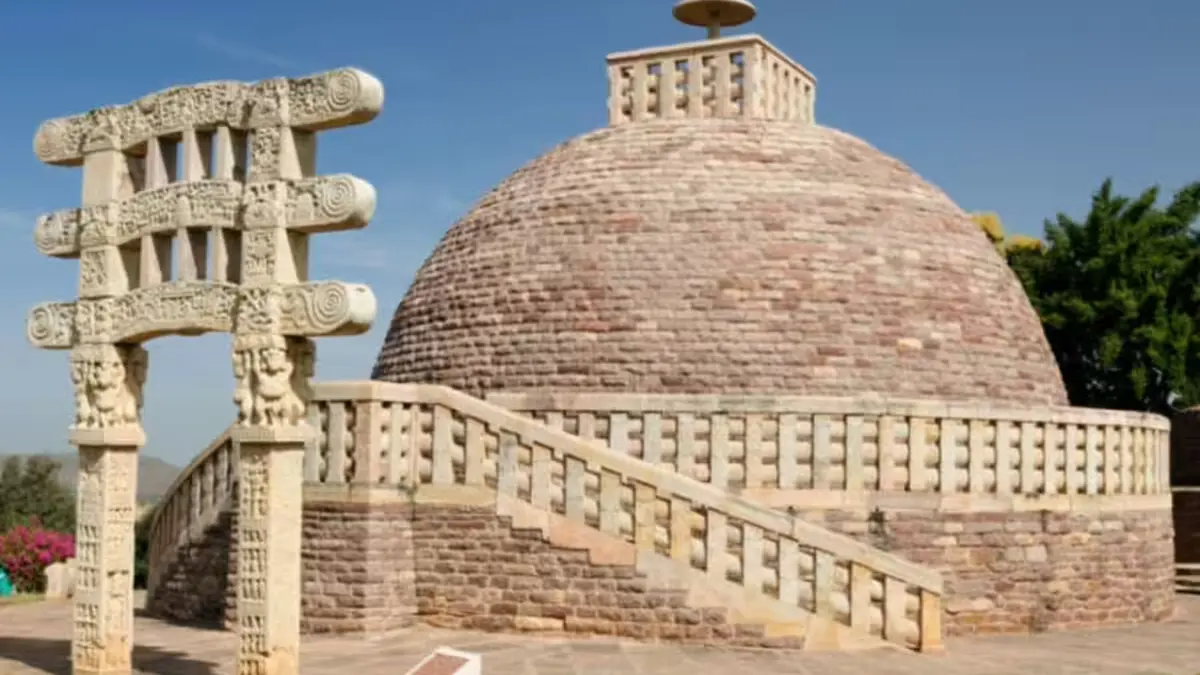
The Great Stupa at Sanchi in Madhya Pradesh is one of the oldest surviving Buddhist monuments in the world. According to ancient chronicles, Emperor Ashoka in the 3rd century BCE erected a simple brick mound at Sanchi to enshrine relics of Sariputra and Maudgalyayana—two chief disciples of the Buddha. During the 2nd century BCE the Sunga dynasty enlarged the stupa and encased it in stone. Elaborate stone gateways (toranas) and a balustrade were added in the 1st century BCE. Subsequent rulers from the Satavahana and Gupta periods built additional stupas, temples and viharas at Sanchi, turning the hilltop into a major monastic centre between the 3rd century BCE and the 12th century CE. The main stupa’s large hemispherical dome symbolises the universe; a triple umbrella (chhatra) atop it represents the Buddha’s spiritual sovereignty. Carvings on the gateways depict scenes from the Jataka tales and the Buddha’s life.
Significance of the relics
- Historical continuity: The relics testify to the continuity of Buddhist traditions from ancient India to modern times. Their transfer to Mongolia recalls the spread of Buddhism along trade routes and acknowledges Mongolian reverence for the Buddha’s disciples.
- Cultural diplomacy: India regularly shares sacred relics with Buddhist nations to foster goodwill. Displaying the relics abroad promotes tourism and awareness of Sanchi’s heritage.
- UNESCO world heritage site: Sanchi’s monuments are inscribed as a UNESCO World Heritage Site. Preserving and publicising the relics underscores the global value of this archaeological complex.
Conclusion
The departure of Sariputra and Maudgalyayana’s relics from Sanchi for Mongolia is more than a ceremonial exchange—it demonstrates how ancient monuments can continue to nurture international relationships. By sharing its Buddhist treasures India honours its own cultural legacy while strengthening spiritual bonds with other nations.