

Why in news?
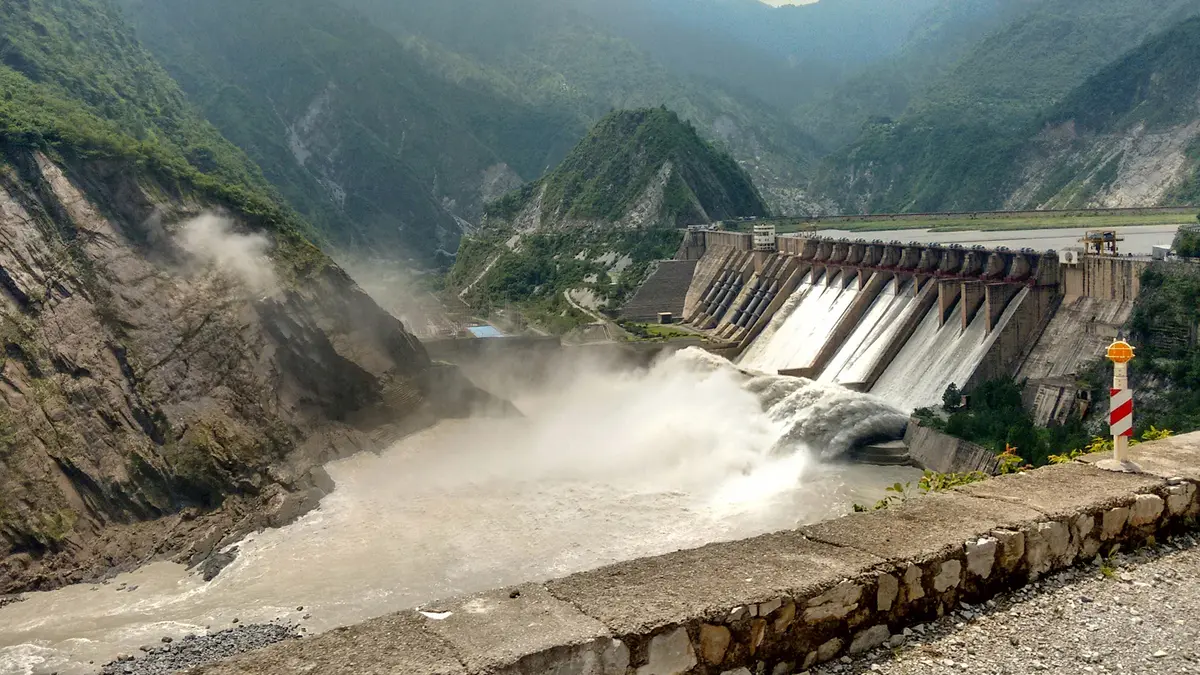
Jammu & Kashmir and the National Hydroelectric Power Corporation (NHPC) have recently launched efforts to desilt the reservoir of the Salal hydroelectric plant on the Chenab river. Decades of siltation have reduced the storage capacity and efficiency of the 690 MW run‑of‑the‑river power station. Officials plan to remove sediment build‑up and upgrade equipment to restore full generation capacity and ensure reliable power supply to the northern grid.
Background
The Salal hydropower project is India’s first major hydroelectric undertaking on the Chenab River under the Indus Waters Treaty. Located near Reasi in Jammu & Kashmir, the scheme was planned in the 1960s, construction began in 1970, and the first units were commissioned in 1987. It is a run‑of‑the‑river project with a concrete gravity dam about 130 metres high and six 115 MW Francis turbine units, giving a total installed capacity of 690 MW. The plant was developed by NHPC and supplies electricity to Jammu & Kashmir and several northern states.
Key features
- Run‑of‑the‑river design: The project does not store large volumes of water but uses the natural flow of the Chenab to drive turbines. Excess flow during the monsoon is discharged through spillways.
- Dam and powerhouse: A 130 m high concrete gravity dam creates a small reservoir. Six turbines in the powerhouse each generate 115 MW. The design energy of the plant is around 3,082 million units per year.
- Beneficiaries: Jammu & Kashmir receives about 12.5 % of the generated power free of cost as per agreement, while the remainder is supplied to states such as Haryana, Punjab, Rajasthan, Delhi, Himachal Pradesh and Uttar Pradesh through the northern grid.
- Indus Waters Treaty compliance: Salal was the first hydro project India constructed on the Chenab after the 1960 treaty with Pakistan. Its run‑of‑the‑river nature and specified spillway height ensure compliance with treaty provisions.
Significance
Salal helps meet base‑load electricity demand in Jammu & Kashmir and the northern states, providing a clean alternative to fossil fuels. The project also demonstrates India’s ability to develop hydropower within the framework of the Indus Waters Treaty. Proper maintenance, including periodic desiltation, is essential to preserve generation capacity and ensure long‑term energy security.
Sources: The Hindu