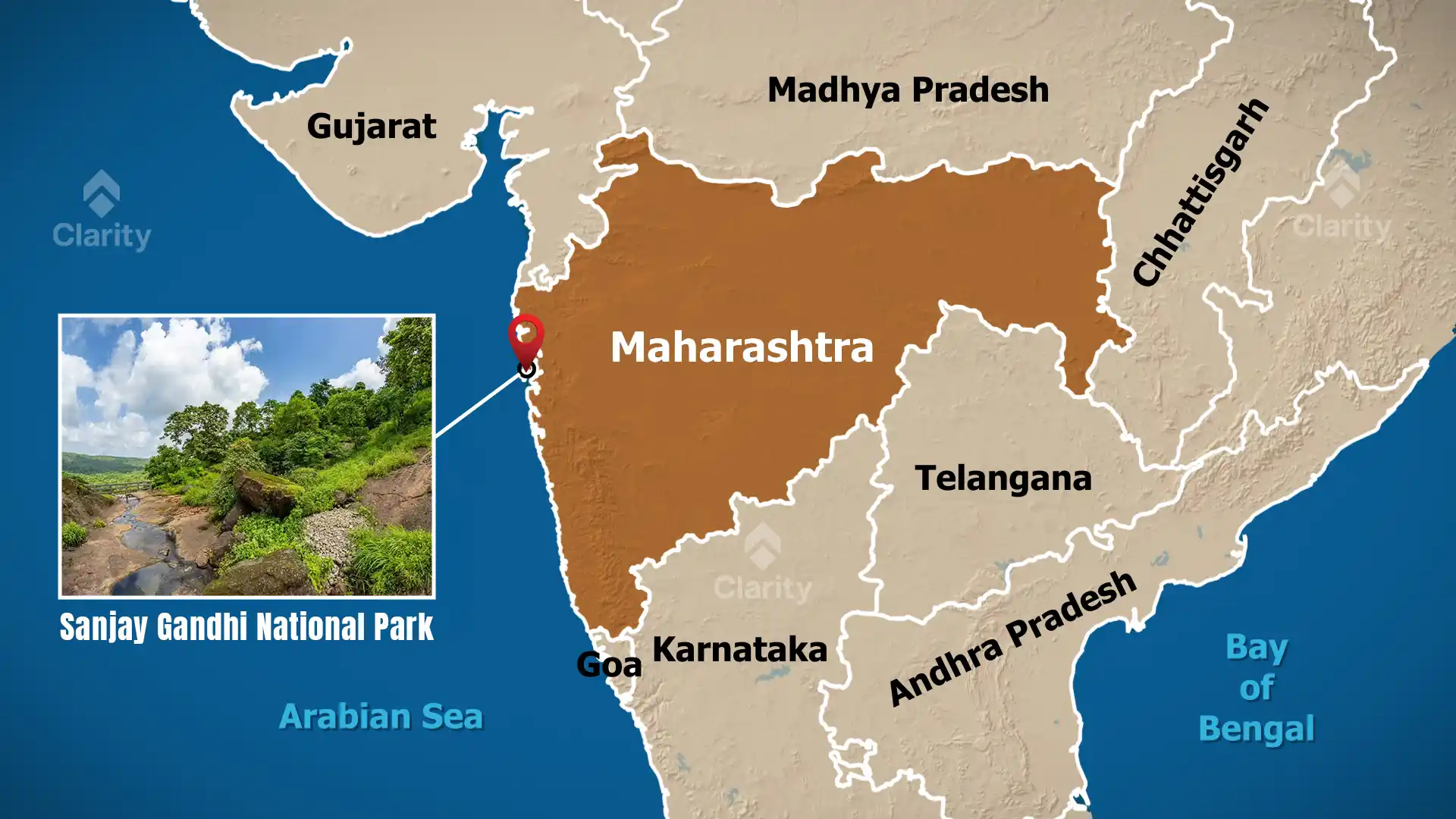
Why in news?
The Maharashtra forest department put on hold a proposal to increase the morning walker pass fee at Sanjay Gandhi National Park from ₹348 per year to ₹10,000. After public backlash, authorities decided to reconsider the hike.
Background
Sanjay Gandhi National Park lies on the northern edge of Mumbai and is home to diverse flora and fauna. It provides a green lung for the city’s residents and contains archaeological sites like the Kanheri caves.
- Geography: the park covers about 103.84 sq km and includes two artificial lakes, Vihar and Tulsi, built during British rule to supply drinking water to Mumbai. The area receives heavy rainfall and is part of the Western Ghats ecosystem.
- Flora and fauna: forests comprise teak, shisham, karvi and bamboo. The park shelters leopards, chital, sambar, four‑horned antelope, langurs, wild boar, crocodiles in the lakes and more than 250 bird species.
- History: the landscape has been protected since at least the 1st century BCE. It was originally called Krishnagiri National Park and was expanded in 1969; later it became Borivali National Park and was re‑dedicated as Sanjay Gandhi National Park in 1981.
- Local importance: thousands of Mumbai residents use the park for daily morning walks and recreation. The proposed fee hike would have priced out many regular visitors.
By reversing the fee hike, authorities recognised the park’s role in providing affordable green space to city dwellers. However, they may still explore new fee structures to balance conservation and public access.
Sources: IE
Continue reading on the App
Save this article, highlight key points, and take quizzes.