

Why in news?
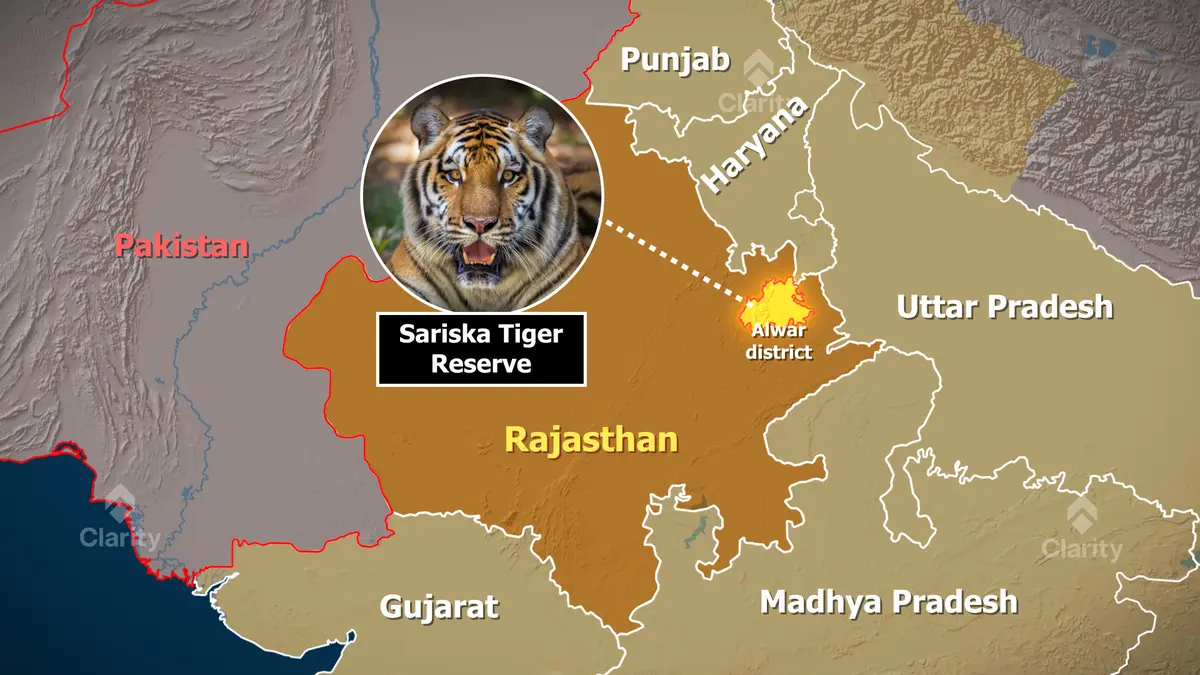
Conservationists have reported a healthy population of tigers in Rajasthan’s Sariska Tiger Reserve. The reserve became famous for the world’s first tiger relocation project. Its success is inspiring other protected areas. Visitors are returning as sightings increase.
Background
Sariska lies in the Aravalli hills of Alwar district, about 110 km from Jaipur. The area was notified as a wildlife reserve in 1955, declared a wildlife sanctuary in 1958 and included as India’s 11th tiger reserve in 1979 under Project Tiger. Poaching wiped out all tigers by 2004. To restore the population, authorities relocated one male and one female tiger from Ranthambore in 2008 – the first such relocation in the world.
Features of the reserve
- Area: Sariska covers about 1,203 km² with a core area of 881 km² and a buffer zone of 322 km².
- Habitat: The landscape comprises dry deciduous forests, scrub thorn and rocky hills. Common tree species include Dhok, Arjun and Tendu.
- Fauna: Besides tigers, the reserve hosts leopards, hyenas, jackals, sambar, chital, nilgai and a rich variety of birds. Ancient temples and forts scattered across the forest add to its cultural value.
- Tourism: The reserve has become a popular wildlife tourism destination. Visitors can watch tigers in the wild and explore ruins such as the Kankwari Fort. Eco‑tourism provides livelihoods to local communities.
Recent developments and significance
Thanks to careful monitoring and relocation, Sariska’s tiger population has recovered to around 53 individuals. The success demonstrates that reintroducing apex predators is possible when poaching is controlled and habitats are restored. Lessons from Sariska have guided similar efforts in Panna and other reserves. The reserve also showcases the importance of community involvement and sustainable tourism.
Conclusion
Sariska’s journey from extinction to revival underlines the resilience of nature and the power of conservation. Continued vigilance against poaching and habitat degradation will be essential to maintain and grow the tiger population. The reserve remains a beacon of hope for wildlife recovery in India.
Sources: NOA