
Why in news?
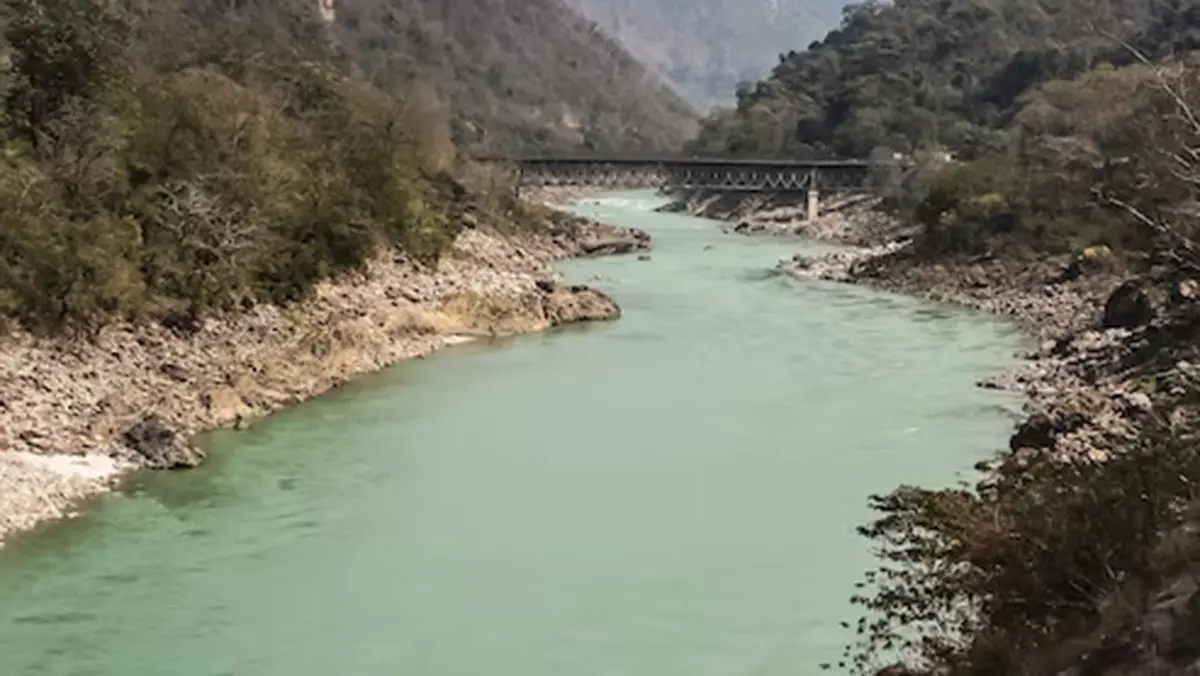
The National Green Tribunal sought a report on waste disposal beside the Saryu River. An inspection found scattered municipal waste near Sera Ghat in Almora district. Inspectors did not find direct sewage discharge at the visited location. Almora authorities must report corrective action within three months.
Background
The Saryu in this case is a Himalayan river of Uttarakhand’s Kumaon region. It is also written as Sarju or Sarayu.
The river rises near Sarmul in Bageshwar district, and it flows through Kapkot and reaches Bageshwar town.
At Bageshwar, the Gomti River joins it, and the confluence gives the town major religious and geographical importance.
The Saryu then flows towards Pancheshwar, and there, it joins the Kali River along the India–Nepal boundary.
The Kali is called the Sharda farther downstream, and the Sharda eventually meets the Ghaghara River in the plains.
Is this the same Saryu as Ayodhya’s river?
The lower Ghaghara near Ayodhya is popularly called Sarayu or Saryu. The Kumaon Saryu is an upstream tributary within that larger river system.
Therefore, the names refer to connected drainage, but not one continuous official name. This distinction avoids a common geographical confusion.
Remember the sequence: Kumaon Saryu joins Kali; Kali becomes Sharda; Sharda joins Ghaghara. The Ghaghara near Ayodhya is popularly called Sarayu.
What is the National Green Tribunal?
Parliament created the National Green Tribunal (NGT) under the National Green Tribunal Act, 2010. It began functioning on 18 October 2010.
The tribunal provides specialised and speedy decisions in environmental cases, and its members include judicial and environmental experts.
- It hears civil disputes involving substantial environmental questions.
- It can order environmental restoration and compensation for damage.
- It applies sustainable development, the precautionary principle and the polluter-pays principle.
- It follows natural justice rather than strict civil-court procedure.
Its principal bench is in New Delhi, and zonal benches provide access in other parts of India.
What triggered the latest direction?
The Uttarakhand Pollution Control Board inspected Sera Ghat on 27 February 2026, and the location touches Almora and Pithoragarh districts.
- The Pithoragarh side had a shed for collected solid waste.
- The Almora side lacked a proper waste-collection arrangement, and inspectors found municipal waste scattered beside the river.
- They counted nearby homes, shops and other small establishments.
- They found septic tanks and soak pits for local wastewater.
- No direct sewage outfall was observed during that inspection.
The tribunal reviewed this report on 7 July 2026, and it directed the Almora District Magistrate to explain remedial steps.
Present legal position: Seeking a status report is a procedural direction. It is not a final finding that named officials committed an offence.
What did the water test show?
A downstream sample met the Central Pollution Control Board’s Designated Best Use Class B criteria.
Class B means water is suitable for organised outdoor bathing. It does not mean the water is safe for direct drinking.
The pH scale shows whether water is acidic or alkaline. A value of seven is neutral.
- Total coliform must not exceed 500, measured as the most probable number per 100 millilitres.
- The pH value must remain between 6.5 and 8.5, and dissolved oxygen must reach 5 milligrams per litre.
- Five-day biochemical oxygen demand must not exceed 3 milligrams per litre.
Total coliform indicates possible contamination from soil, waste or faecal sources. It is a warning indicator, not one specific disease organism.
Biochemical oxygen demand measures oxygen used while microbes decompose organic matter, and a higher value usually indicates greater organic pollution.
Why does solid waste matter without direct sewage?
- Rain can wash plastics and mixed waste into the river.
- Decomposing waste can release polluted liquid called leachate.
- Animals may scatter waste over a wider riverbank area, and plastics can break into persistent microplastic particles.
- Waste accumulation can worsen rapidly during tourist or festival periods.
A single acceptable water sample cannot prove permanent river safety. Water quality changes with rainfall, river flow and waste volume.
What should local authorities do?
- Provide covered collection points on both riverbanks, and arrange regular transport to an authorised processing facility.
- Separate wet, dry and hazardous household waste, and prevent dumping through signs, monitoring and proportionate penalties.
- Inspect septic systems and nearby commercial establishments regularly, and repeat water testing during different seasons and flow conditions.
Conclusion
The Saryu case concerns visible solid-waste gaps, despite an acceptable downstream sample. Class B water remains unsuitable for direct drinking, and continuous collection, monitoring and transparent reporting are therefore essential.