

Why in news?
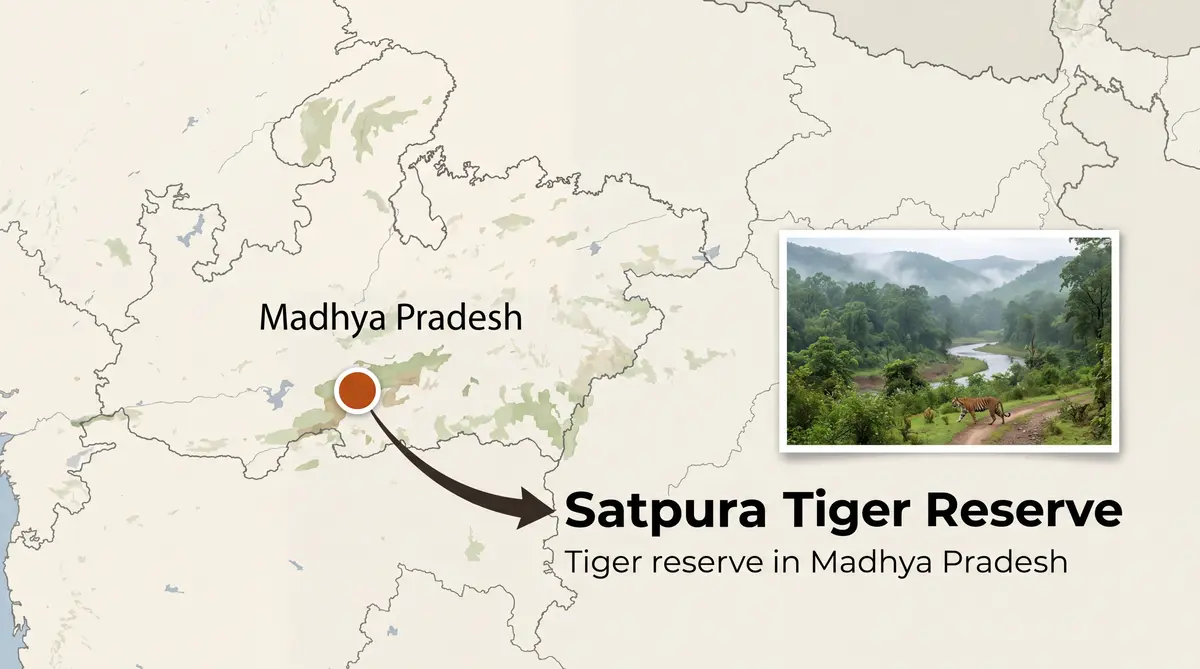
The Satpura Tiger Reserve in Madhya Pradesh has been highlighted in March 2026 for its successful conservation programmes and unique blend of biodiversity, archaeology and ecotourism. Authorities issued new guidelines to balance tourism with wildlife protection, prompting renewed interest in the reserve’s features.
Background
Satpura Tiger Reserve is part of the central Indian highlands ecosystem and spans 2,133.3 sq km across the Satpura ranges in Narmadapuram district. Formed in 1999 by integrating Satpura National Park, Bori Wildlife Sanctuary and Pachmarhi Wildlife Sanctuary, it includes a core of 1,339 sq km and a 794 sq km buffer. The terrain consists of sandstone peaks, deep gorges, ravines and perennial rivers like the Denwa and Sonbhadra. Satpura means “seven hills,” referring to the undulating ridges that form a watershed between the Narmada and Tapti rivers.
Ecological and cultural importance
- Rich biodiversity: The reserve hosts 52 mammal species, over 300 bird species and 31 reptile species. Tigers, leopards, sloth bears, gaur, sambar deer, cheetal, nilgai, four‑horned antelope, blackbuck and wild dogs roam its forests. It also supports unique fauna like the Indian giant squirrel and sensitive species such as the white‑rumped vulture.
- Diverse habitats: A mosaic of sal and mixed deciduous forests on sandstone, teak forests on basalt, and grasslands created by village relocations provide varied niches. Riverine corridors and wetlands support otters, crocodiles and fish.
- Archaeological treasures: More than 50 rock shelters contain ancient paintings dating back 1,500–10,000 years. Religious sites such as Mahadeo caves and the hill station of Pachmarhi attract pilgrims and tourists.
- Conservation significance: The reserve forms part of a 10,000 sq km tiger‑bearing landscape with connecting corridors to Melghat, Pench and Bandhavgarh. It has successfully relocated villages to create inviolate habitat and is reintroducing the swamp deer (barasingha) into its grasslands.
Visitor guidelines and significance
Authorities have recently emphasised low‑impact tourism: limiting vehicle numbers, using trained guides, banning plastic and encouraging walking safaris and canoeing to minimise disturbance. The Satpura model demonstrates how wildlife conservation, local livelihoods and heritage tourism can coexist when carefully managed. Continued community involvement and scientific management are vital to sustaining its wildlife riches.