

Why in news?
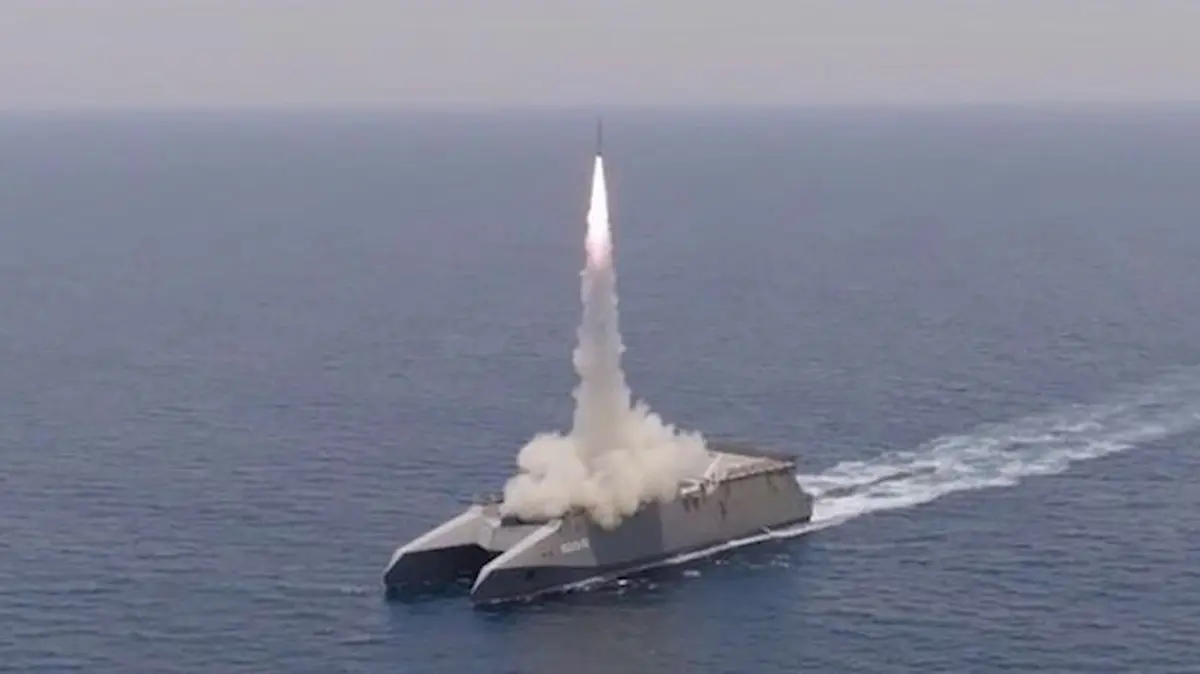
Iran’s Islamic Revolutionary Guard Corps Navy recently test‑fired the Sayyad‑3G missile from a warship. The test, conducted during naval drills in the Strait of Hormuz, demonstrated a new sea‑based air‑defence capability that can protect Iranian vessels from long‑range aerial threats.
Background
Iran’s Sayyad family of missiles has evolved from earlier Chinese and Russian designs. The land‑based Sayyad‑3, unveiled in the 2010s, can engage targets at 150–200 km and forms part of Iran’s integrated air‑defence network. To extend this capability to the navy, engineers adapted the missile for vertical launch from ships, giving rise to the Sayyad‑3G (“G” for “Ghadr” or “naval”).
Key features of Sayyad‑3G
- Medium‑to‑long range: The missile reportedly has a maximum engagement range of about 150 km, allowing a ship to establish a defensive “bubble” beyond the horizon.
- Vertical Launch System (VLS): Launching from vertical cells gives 360‑degree coverage and allows rapid multi‑target engagement. The system can be integrated into corvette‑sized vessels, a notable advance for Iran’s relatively small navy.
- Derived from Sayyad‑3: The naval variant uses the same dual‑pulse solid rocket motor as the land‑based missile. A second pulse ignites in the terminal phase, maintaining speed and manoeuvrability against evasive targets.
- Integrated guidance: The missile can be guided by the ship’s radar or operate autonomously using its own seeker, enabling both networked and independent engagements.
- Targets: Designed to intercept fighter jets, maritime patrol aircraft, unmanned aerial vehicles and cruise missiles, it helps protect Iranian vessels operating in contested waters.
Significance
- Deploying a long‑range air‑defence missile on relatively small ships enhances Iran’s ability to deter potential adversaries in the Persian Gulf and Gulf of Oman.
- The system is part of Iran’s broader effort to indigenise advanced weapons and reduce dependence on foreign suppliers.
- Its range and vertical‑launch capability put it in the same class as early variants of U.S. Standard Missile‑2 and Russia’s S‑300F, though details of its performance remain partly undisclosed.
Conclusion
The Sayyad‑3G test showcases Iran’s progress in naval air defence. By adapting a land‑based missile for ship‑borne use, Iran aims to create a protective umbrella for its fleet. Future drills and independent assessments will reveal more about its reliability and effectiveness.
Source: Oneindia