

Why in news?
Tamil Nadu has been running a major drive to remove the invasive tree Senna spectabilis from its forests by March 2026. The plan covers large areas of reserve forests and is part of a broader policy to control alien species.
Background
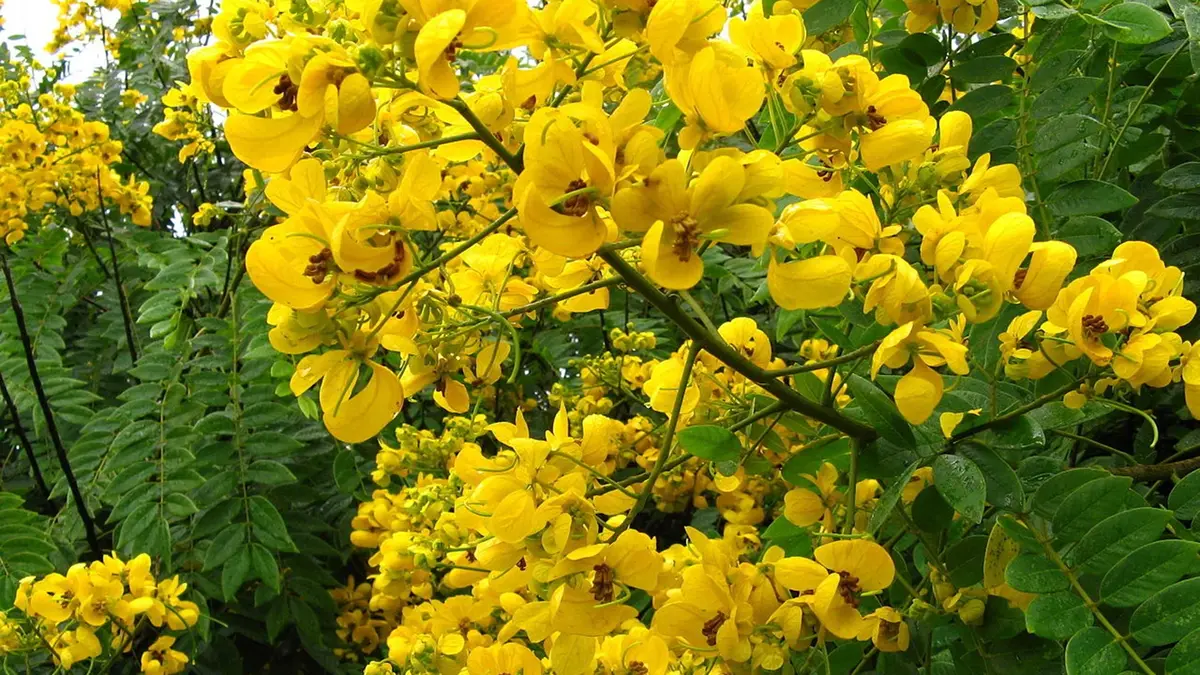
Senna spectabilis is a fast‑growing deciduous tree native to tropical America. It was introduced to India as an ornamental plant but has spread across the Western Ghats and other moist forests. The tree grows up to 20 metres tall and produces thousands of seeds. It forms dense stands that suppress native shrubs and grasses, reduce fodder availability and increase fire risk. Although listed as “Least Concern” by the IUCN, it is harmful in areas where it is not native. Invasive species like Senna cost economies millions through lost biodiversity and ecosystem services.
Eradication plan
- Area targeted: Tamil Nadu identified about 2,446 hectares affected by the species, mainly in the Nilgiris and adjoining Western Ghats districts. Clearance has been carried out in phases, including over 1,900 hectares in the Mudumalai Tiger Reserve.
- Methods: Workers cut down or debark mature trees, uproot saplings and remove seedlings mechanically. Large trunks dry out after 18 months and can then be converted into pulp. Regular monitoring prevents regrowth.
- Broader policy: The initiative is part of the Tamil Nadu Policy on Invasive Plants and Ecological Restoration (TN PIPER). It also targets other invasives such as lantana and Prosopis juliflora.
- Community role: Local communities are trained to recognise invasive species and help in manual removal. Removing invasives creates employment and raises awareness about biodiversity.
Conclusion
Controlling Senna spectabilis protects native forests, improves fodder for wildlife and reduces fire hazards. Long‑term success will depend on restoration with native species and sustained community involvement.