

Why in news?
A pair of Shaheen falcons was recently observed nesting in an under‑construction high‑rise building in Kochi, Kerala. This rare sighting demonstrates the adaptability of the species, which usually nests on cliffs and rocky ledges.
Background
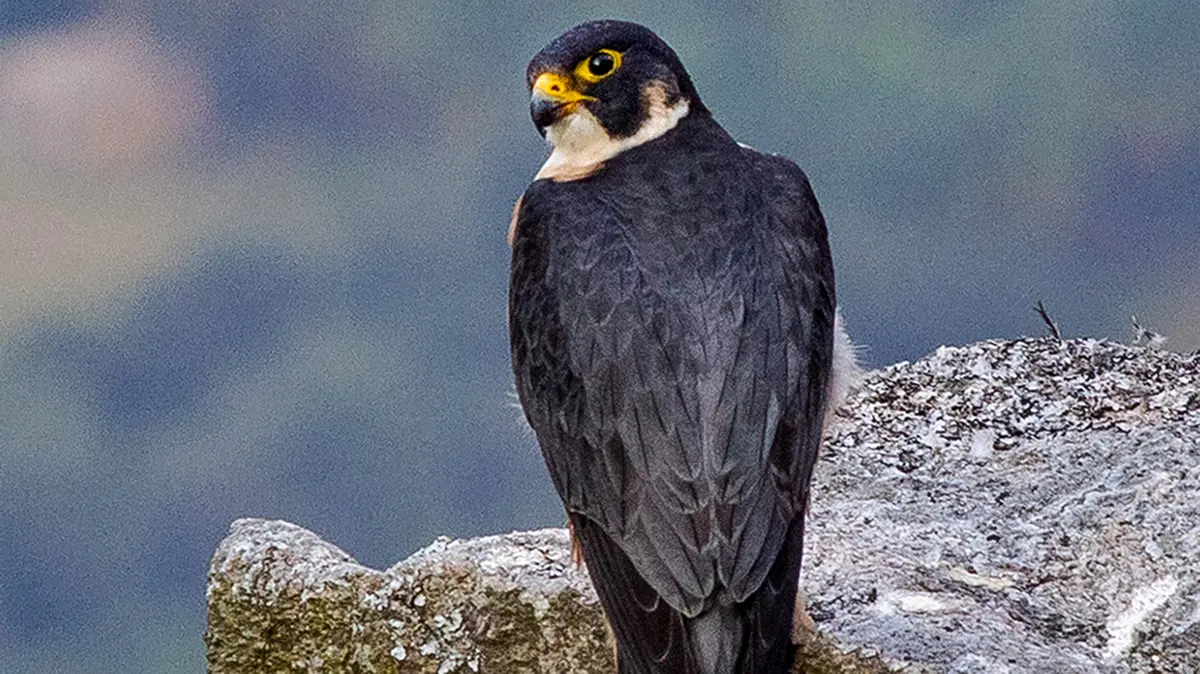
The Shaheen falcon (Falco peregrinus peregrinator), also called the black shaheen or Indian peregrine, is a non‑migratory subspecies of the peregrine falcon found mainly in the Indian subcontinent. The word shaheen comes from Persian, meaning “majestic” or “falcon.” The species is revered in South Asia for its speed and hunting prowess.
Appearance and habits
- Physical features: Shaheen falcons have dark upperparts, rufous underparts with fine dark streaks and a distinctive black face mask that contrasts with a pale throat. Females are larger than males, a common trait among birds of prey.
- Distribution: They occur across South Asia – from Pakistan through India to Bangladesh, Myanmar, Sri Lanka and parts of China. In India, they inhabit rocky hills, cliffs and mountain outcrops and have also been recorded in the Andaman and Nicobar Islands.
- Diet and hunting: Primarily carnivorous, they feed on small to medium‑sized birds and occasionally small mammals, reptiles or insects. Their hunting dive, known as a “stoop,” can exceed 300 km/h, making them one of the fastest animals on Earth.
- Nesting behaviour: Shaheen falcons are monogamous and breed between December and April. They usually nest on cliff ledges but have adapted to human structures such as high‑rise buildings and transmission towers when natural sites are scarce. The recent nesting in Kochi reflects this adaptability.
Conclusion
The Kochi sighting underscores the resilience of the Shaheen falcon and highlights the importance of preserving urban habitats for raptors. Observers are encouraged to minimise disturbances near nests to support successful breeding and to raise awareness about conserving these magnificent birds.
Source: The Hindu