

Why in news?
China recently rejected India’s objections to its infrastructure activities in the Shaksgam Valley, asserting that the valley belongs to China. India reiterated that the area is an integral part of the former princely state of Jammu and Kashmir and protested any change in its status.
Background
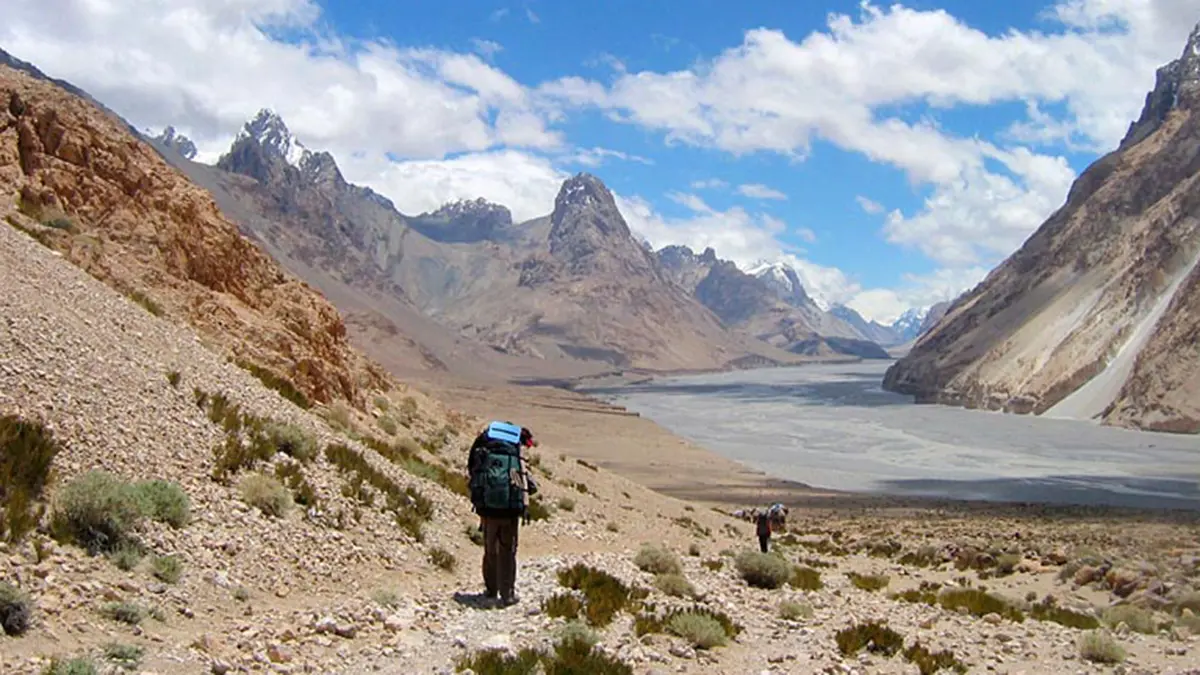
The Shaksgam Valley—also known as the Trans‑Karakoram Tract—is a high‑altitude, sparsely populated region north of the Siachen Glacier. It borders China’s Xinjiang province to the north and Pakistan‑occupied Gilgit‑Baltistan to the south and west. Although it forms part of the territory claimed by India, Pakistan controlled the area after the 1947 conflict and, in 1963, signed a boundary agreement with China under which it ceded about 5,180 sq km of the valley to Beijing. India has never recognised this agreement, describing Pakistan as an occupying power without the authority to transfer land.
Legal dispute
- India’s position: India maintains that Shaksgam is part of the union territory of Ladakh. It considers the 1963 China‑Pakistan boundary agreement illegal and invalid because Pakistan has no sovereignty over the area. Accepting the cession would, India argues, undermine its claim to the entire region of Jammu and Kashmir.
- China and Pakistan’s stance: Both countries treat the 1963 agreement as a sovereign decision delimiting their frontier. China administers the valley as part of Xinjiang and supports infrastructure projects there under the China‑Pakistan Economic Corridor.
Strategic importance
- Proximity to Siachen and Ladakh: The valley lies close to the Siachen Glacier, where Indian and Pakistani troops face off, and near India’s Ladakh region. Chinese activity in Shaksgam adds a third actor to an already sensitive area.
- China‑Pakistan link: Control of the valley provides China and Pakistan with contiguous territory, enabling the movement of goods and forces between Xinjiang and Gilgit‑Baltistan. This forms part of the broader China‑Pakistan Economic Corridor.
- Military logistics: Infrastructure such as roads and outposts could improve China’s ability to move troops and equipment near India’s northern borders.
- Legal precedent: India fears that acquiescing to Chinese control of Shaksgam would weaken its overall claim over Pakistan‑occupied Kashmir.
Recent developments
In January 2026, China defended its construction activities in Shaksgam, stating that they were legitimate as the territory “belongs to China”. India’s Ministry of External Affairs responded that it does not recognise the 1963 agreement and will take all necessary measures to safeguard its interests. The dispute has prompted renewed diplomatic exchanges and heightened attention to the valley’s strategic significance.
Conclusion
The Shaksgam Valley dispute highlights the complex territorial issues arising from the unresolved status of Jammu and Kashmir. As China and Pakistan deepen cooperation in the region, India insists on its legal claim and views any unilateral infrastructure development as provocative. The issue underscores the need for dialogue and respect for existing bilateral understandings.
Source: IE