
Why in news?
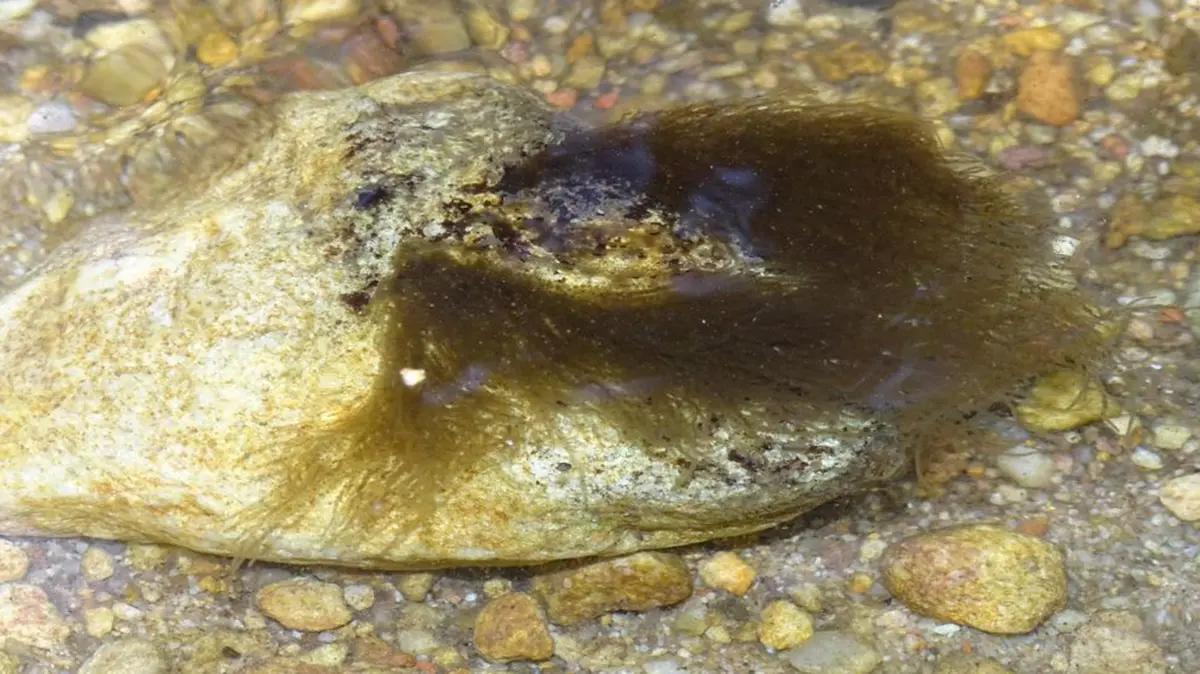
Scientists described a new freshwater red alga and named it Sheathia meghalayensis after Meghalaya. Only one very small population is presently known. Its discoverers have proposed the highest threatened category for it.
Background
Algae are simple organisms that usually make food through photosynthesis, and they occur in seas, rivers, lakes and damp habitats.
Red algae form the division Rhodophyta, and most red algae are marine, while relatively few live in freshwater.
Freshwater red algae often need cool, flowing and well-oxygenated water, and they can therefore reveal changes in sensitive stream habitats.
Where was the new species found?
Scientists found the alga near Crinoline Waterfalls in Meghalaya’s East Khasi Hills, and the locality lies near Shillong.
It grew upon submerged rocks inside a cool stream, and the site is about 1,600 metres above sea level.
The discovery followed a 2024 field survey, and researchers recorded five freshwater red-algal species during that work.
Who described it?
Elaya Perumal and Palanisamy conducted the taxonomic study while working with the Botanical Survey of India.
They published the formal description in the journal Current Science, and a formal description establishes the species through scientific evidence.
The process compares visible structures with related species, and it also records the locality, habitat and defining characteristics.
Why is the name important?
The genus Sheathia contains freshwater red algae with bead-like growth forms, and the species name honours Meghalaya, its known home.
This is the first formal record of the genus Sheathia from Meghalaya. Two related species were previously reported from Assam.
- Sheathia indonepalensis was known from Assam and neighbouring regions.
- Sheathia assamica was described from Assam.
- The new finding expands the genus’s known range within north-eastern India.
Why is it considered highly threatened?
The researchers found the species at only one location, and they estimated its occupied area at about four square kilometres.
They also estimated fewer than 100 mature individuals, and such a tiny population can disappear after one severe disturbance.
Nearby tourism, upstream household activity and habitat disturbance may reduce water quality, and physical trampling can also damage submerged growth.
The authors therefore proposed listing it as Critically Endangered. This category describes an extremely high extinction risk in the wild.
Status clarification: The researchers proposed the category using available evidence. It is not yet a formal global Red List assessment.
Why does the discovery matter?
- It reveals poorly documented freshwater diversity in Meghalaya.
- It shows that small hill streams can contain unique species.
- It provides another indicator for monitoring stream health.
- It strengthens the case for surveying waterfalls before development.
- It can support future studies on red-algal evolution and distribution.
Red algae can contain useful biological compounds, but no medicinal property has yet been established for this particular species.
What protection is needed?
- Authorities should prevent waste and untreated wastewater from entering the stream.
- Visitor movement near sensitive rocks should be carefully managed.
- Scientists should survey similar streams across Meghalaya.
- Living material can be conserved through controlled cultivation and germplasm banks.
- Regular monitoring should record population and water-quality changes.
Conclusion
Sheathia meghalayensis shows how a tiny stream can hold unique biodiversity. Protecting its habitat is urgent because one local disturbance could erase the known population.