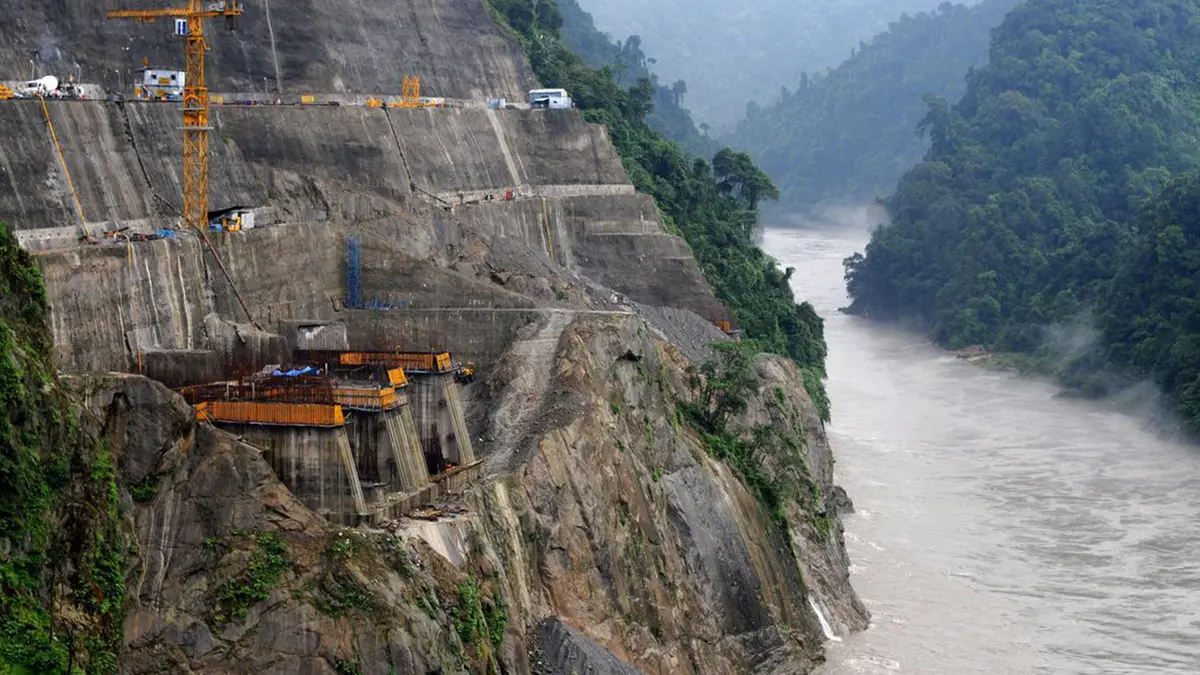
Why in news?
The debate over the proposed Siang Upper Multipurpose Project in Arunachal Pradesh has resurfaced after civil society groups and indigenous communities raised concerns about its environmental and social impacts. The project is also seen as part of India’s strategy against China’s upstream dam building on the Yarlung Tsangpo (the upper Brahmaputra).
Background
The Siang River flows from Tibet into Arunachal Pradesh and becomes the Brahmaputra in Assam. In the early 2000s, plans emerged to build several large hydroelectric dams on the river. The Siang Upper Multipurpose Project aims to combine two earlier proposals into a single 11,000 MW project near Geku village. It is expected to store 9 billion m3 of water, generate electricity, mitigate floods and erosion downstream, and provide free power to the state. Supporters argue that it would counter China’s hydropower projects upstream.
Key issues
- Indigenous rights. The area is home to Adi and Galo tribes who depend on the river and forests for their livelihoods. Local groups claim that consultation has been inadequate and worry about displacement and loss of cultural sites.
- Biodiversity. The Siang valley is a biodiversity hotspot with forests, rare species and high seismic sensitivity. Large dams could submerge forests and change river flows, affecting fish and wildlife.
- Strategic considerations. India views the project as a countermeasure to China’s plans to divert the Yarlung Tsangpo. A large reservoir on the Indian side could help regulate flows and assert downstream rights.
- Economic benefits and costs. The project promises substantial hydroelectric power and flood control. Critics point to cost overruns, long gestation periods and the risks of building mega‑dams in earthquake‑prone areas.
Significance
The SUMP debate illustrates the complex trade‑offs between energy security, ecological preservation and indigenous rights. While hydropower is a clean source of electricity, the sheer scale of this project demands careful assessment. Inclusive consultations and transparent environmental impact studies are essential before moving forward.
Source: India Today