
Why in news?
Sickle cell disease is a hereditary blood disorder that remains a public‑health challenge in India, especially among tribal populations. Government programmes aim to eliminate the disease by 2047 through mass screening and improved treatment. Understanding the disease, its symptoms and available therapies is essential for effective management.
Background
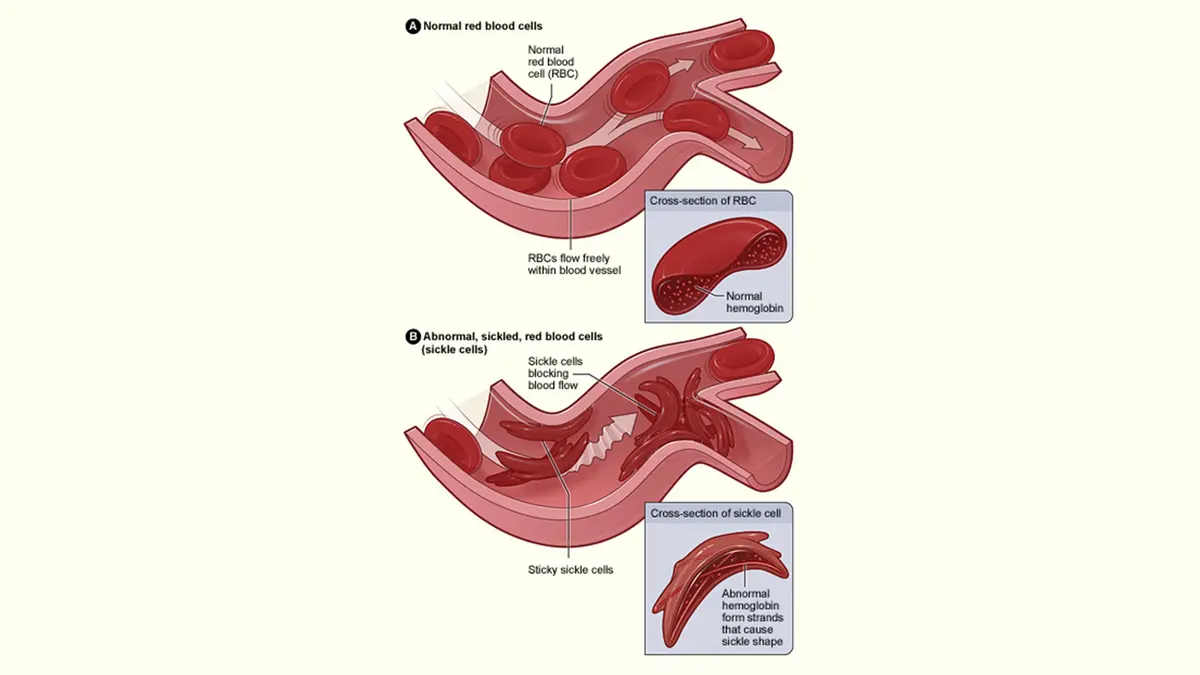
Sickle cell disease (SCD) is a group of inherited disorders affecting haemoglobin, the protein that carries oxygen in red blood cells. Healthy red cells are round and flexible. In SCD an abnormal haemoglobin causes cells to become hard, sticky and C‑shaped “sickles”. These cells die early, leading to anaemia, and they can block small blood vessels, causing pain and organ damage. The most severe form is sickle cell anaemia (HbSS), in which a child inherits two sickle genes.
Signs, complications and inheritance
- Pain episodes: Blocked blood flow causes sudden pain crises in the chest, joints and abdomen. These episodes can last hours or days.
- Infections and stroke: People with SCD are more prone to infections, acute chest syndrome and stroke. Children should receive vaccinations and prompt treatment for fevers.
- Genetic pattern: SCD follows an autosomal recessive inheritance. A person must inherit one sickle gene from each parent to develop the disease. Carriers (with one sickle gene) usually remain healthy but can pass the gene to offspring.
Management and treatment options
- Medicines: Hydroxyurea is an oral drug that reduces the sickling of red blood cells and decreases pain crises. Regular folic acid supplements help the body make new blood cells.
- Blood transfusions: These are used to treat severe anaemia and prevent stroke. Patients receiving frequent transfusions should be monitored for iron overload.
- Pain management: Over‑the‑counter medicines and prescription pain relievers help control episodes. Drinking plenty of fluids and avoiding extreme temperatures can reduce attacks.
- Curative therapies: A blood and bone marrow transplant from a matched donor can cure SCD but carries risks. Gene therapy aims to correct the faulty gene and offers hope for the future.
- Prevention: Carrier screening and genetic counselling allow couples to understand their risk of having a child with SCD. Early diagnosis through newborn screening enables prompt care.
Conclusion
Sickle cell disease causes lifelong health problems but can be managed with regular care. Awareness, early diagnosis and adherence to treatment reduce complications. Advances in gene therapy and transplantation offer hope, yet public health programmes focusing on screening and education remain the most effective tools for controlling the disease in India.