

Why in news?
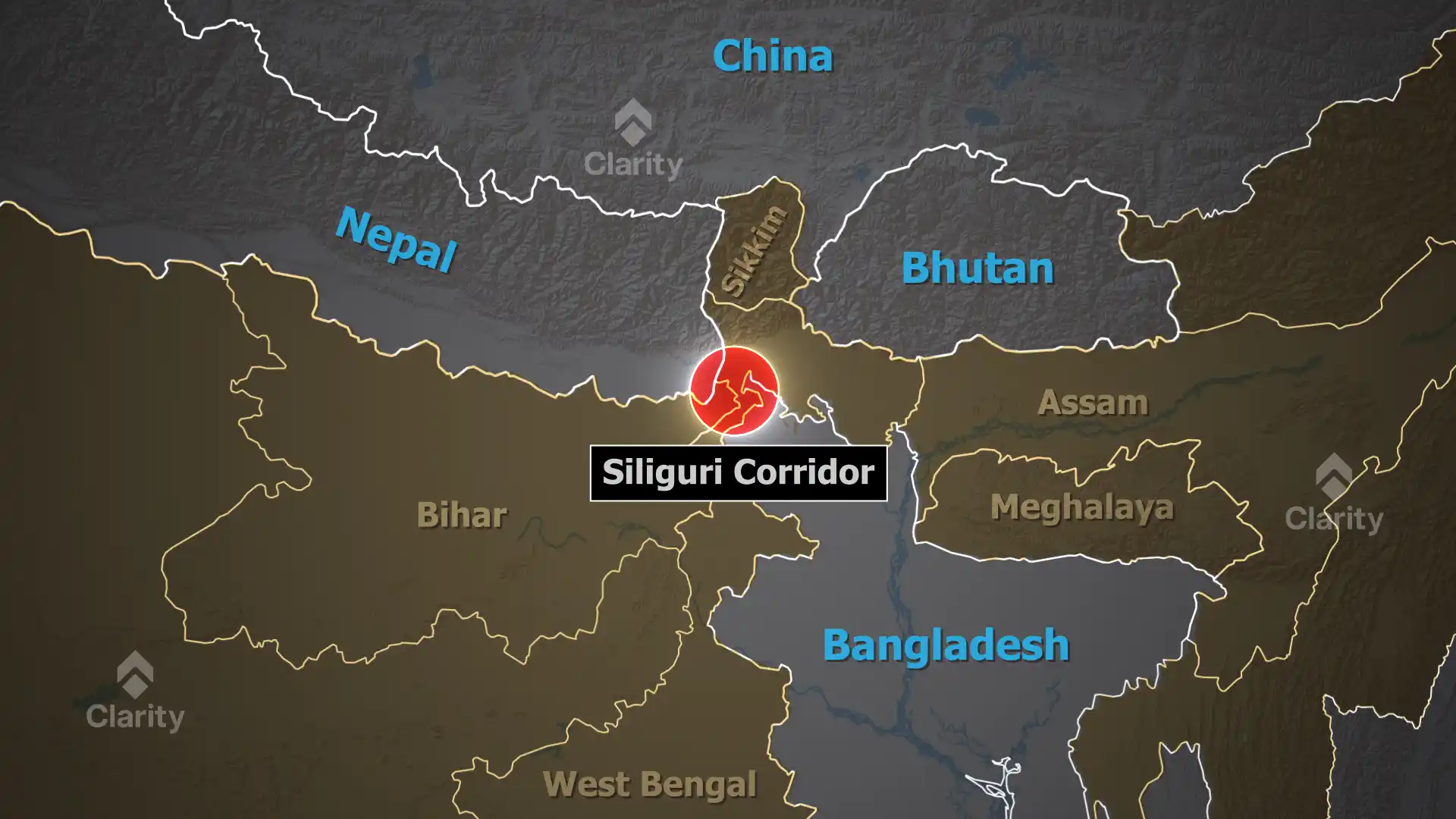
Responding to increasing military activity by China near the Tibet–Sikkim border, India has begun constructing three new army garrisons at Bamuni in Assam, Kishanganj in Bihar and Chopra in West Bengal. These bases will strengthen the defence of the narrow Siliguri Corridor, also known as the Chicken’s Neck, which links the Indian mainland to the north‑eastern states.
Background
The Siliguri Corridor is a ribbon of land in northern West Bengal that connects the rest of India with eight north‑eastern states. At its narrowest point near Siliguri town, it is only about 17 km wide. Bangladesh lies to its south, Nepal to its west, Bhutan to its north and China’s Chumbi Valley to its east. Because of its strategic location, the corridor is vital for moving troops, supplies and trade to the north‑east. During the 1962 war, India recognised the vulnerability of this passage to invasion or blockade.
Key points about the corridor
- Strategic lifeline: All major highways and railway lines to Assam, Sikkim and the rest of the north‑east pass through this corridor. It also hosts oil and gas pipelines and telecommunication cables.
- Military significance: The proximity of Chinese forces in Tibet and Bhutanese territory makes the area a potential flashpoint. New garrisons will enhance surveillance, intelligence and rapid response capability.
- Economic importance: The corridor supports cross‑border trade with Bhutan, Bangladesh and Nepal. Developing infrastructure here boosts connectivity and development in the landlocked north‑east.
- Challenges: Narrow geography makes the corridor susceptible to natural disasters and traffic congestion. Ensuring continuous connectivity requires resilient infrastructure and diplomatic engagement with neighbouring countries.
Conclusion
By fortifying the Siliguri Corridor, India aims to deter aggression and guarantee uninterrupted access to its north‑eastern states. However, long‑term security will also depend on dialogue with neighbours and investments in alternate routes such as inland waterways and airlift capacity.
Source: The Hindu · Observer Research Foundation