

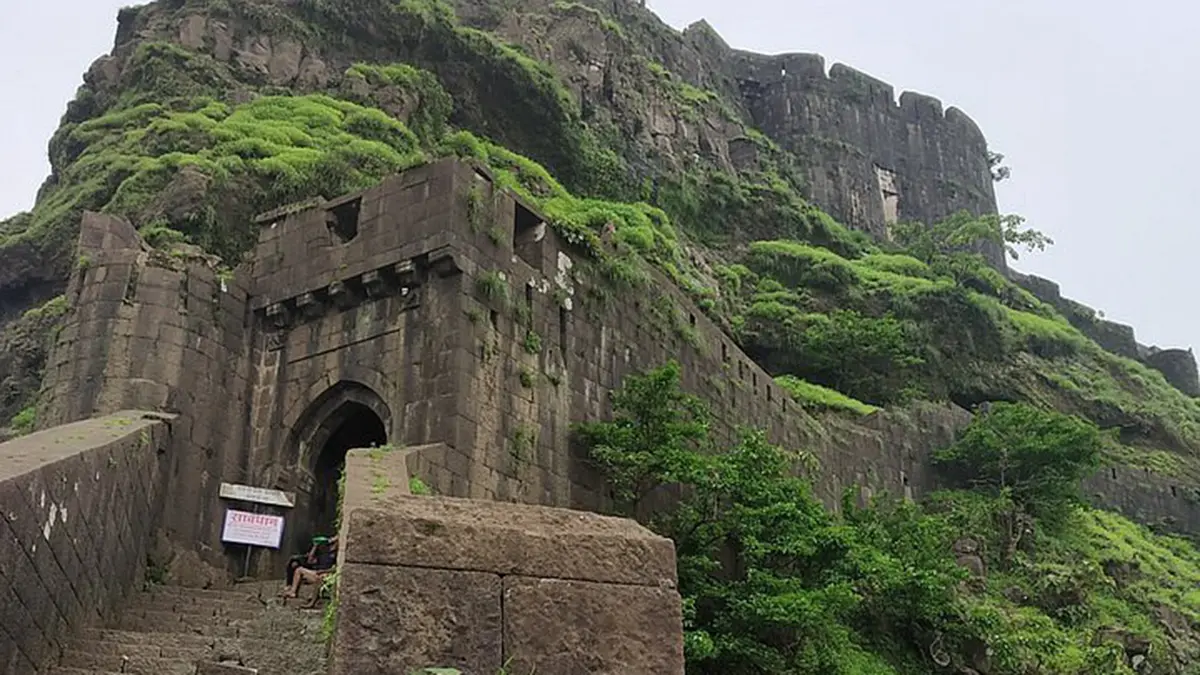
Why in news?
A tourist group visiting Maharashtra’s Sinhagad Fort was attacked by a swarm of bees in early March 2026, injuring about 25 people. Forest officials temporarily closed the fort to visitors and investigated what provoked the bees.
Background
Sinhagad (“Lion’s Fort”) is a hill fortress situated roughly 30 km southwest of Pune. The fort dates back to at least the 14th century. Originally known as Kondhana, it may have been built by a local ruler named Nag Naik and later came under the control of the Tughluq dynasty in 1328. In the mid‑17th century, Chhatrapati Shivaji seized the fort from the Adilshahi Sultanate. After briefly returning it under the 1665 Treaty of Purandar, Shivaji recaptured Sinhagad in a daring night assault led by his trusted commander Tanaji Malusare in 1670. The fort remained in Maratha hands until the British East India Company stormed it in 1817.
Perched on a steep plateau with sheer cliffs, Sinhagad commands views of the surrounding countryside. It has two main gateways – the Pune gate and the Kalyan gate – and several bastions, water cisterns and temples. Today it is a popular trekking destination and heritage site. The unexpected bee attack highlights the need for careful management of visitors and the natural ecosystems around historical monuments.
Key points and significance
- Trekker safety: Officials plan to put up warning signs and educate visitors about avoiding loud noises and disturbing beehives.
- Historical importance: The fort symbolises Maratha resilience; the battle of 1670, in which Tanaji sacrificed his life, is a celebrated episode in Maharashtra’s history.
- Tourism and conservation: Balancing tourism with preservation of flora and fauna is essential to protect both visitors and biodiversity.
- Regional heritage: Sinhagad, along with nearby forts like Rajgad and Torna, forms part of a defensive chain that once guarded the approaches to Pune.
Sources: The Indian Express – Sinhagad Fort bee attack, Wikipedia – History of Sinhagad Fort