

Why in news?
Five captive-bred slender-billed vultures entered the wild in Assam on 7 August 2026. Five white-rumped vultures were released with them; the birds left a soft-release facility in Biswanath after about three months. This period allowed gradual acclimatisation.
The Bombay Natural History Society called it the first captive-bred slender-billed vulture release anywhere; the birds carried visible identification marks.
Solar satellite transmitters were fitted to the slender-billed vultures; these devices support post-release monitoring.
The species and the scale of its decline
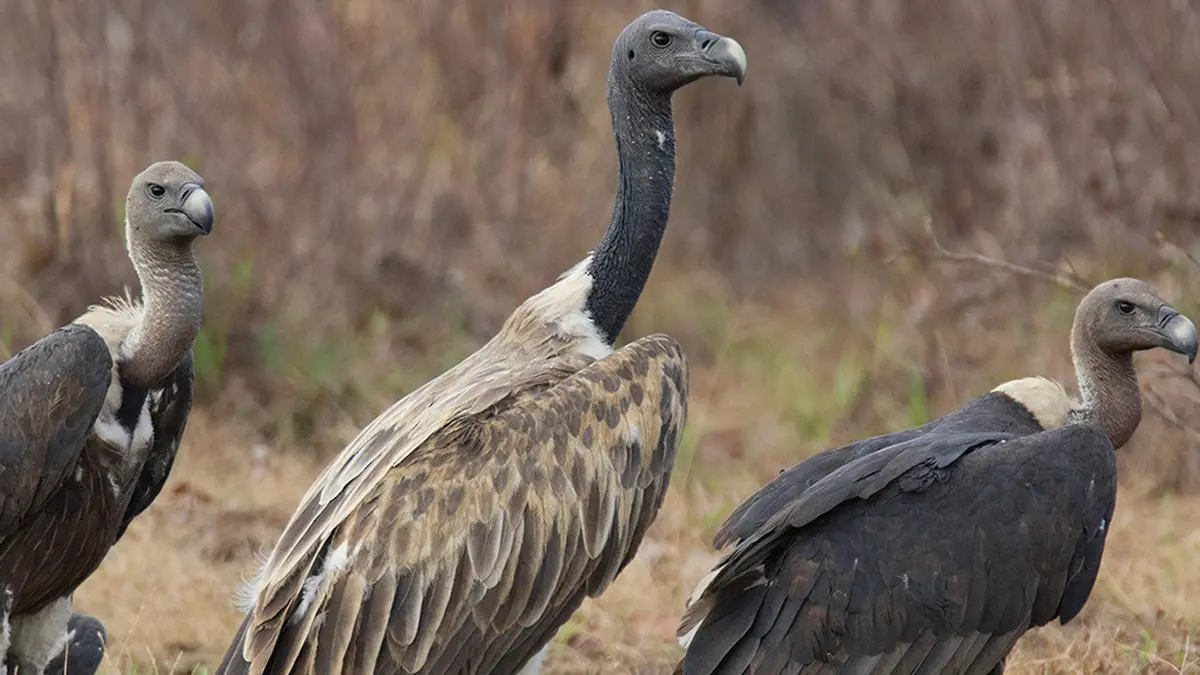
The slender-billed vulture, Gyps tenuirostris, is a large South and South-East Asian scavenger; it has a thin, dark bill. Its head and neck are mostly bare. Broad wings support extended soaring while it searches for carrion.
BirdLife International is the Red List authority for birds; it treats the species as Critically Endangered.
Its estimate is fewer than 1,000 mature birds globally. Assam holds the species’ main surviving Indian concentration.
This makes every breeding cluster and release landscape important. Losses in one area may affect a large share of survivors. A 2025 Wildlife Institute of India report covered surveys from 2023–25; it recorded only 20 active nests.
The nests occurred at 12 sites, all in Upper Assam; the report conservatively inferred about 40 breeding adults.
Several historically known breeding sites had disappeared or declined; the estimate is not a complete Indian census.
It represents breeding birds at surveyed and recorded sites. Non-breeding individuals may occur elsewhere. Veterinary diclofenac principally drove the wider Asian vulture crisis. Treated cattle can retain the drug in their tissues.
Vultures feeding on those carcasses may suffer fatal kidney failure; their slow breeding makes recovery difficult.
Even a small contaminated share can drive steep decline. India prohibited veterinary diclofenac in 2006.
Other unsafe veterinary drugs and illegal human formulations remain concerns. Deliberate poison baits create another serious risk. Food scarcity, collisions, electrocution and loss of nest trees can also harm populations. Regulation must work beyond paper.
Pharmacies, veterinarians and farms all shape drug exposure. Effective enforcement must reach each level.
How the Assam conservation programme works
The Vulture Conservation Breeding Centre at Rani was established in 2007; it lies near Guwahati. The Assam Forest Department and Bombay Natural History Society are programme partners. The centre achieved its first successful breeding in 2012.
It has since raised slender-billed and white-rumped vultures in managed care; this creates an insurance population.
Some captive-bred birds may eventually strengthen wild populations; release requires suitable birds and a safer landscape.
The five slender-billed vultures moved from Rani in March 2026; their destination was the Jatayu Soft Release Centre in Biswanath. The centre lies near the wider Kaziranga landscape; a soft-release aviary exposes birds gradually to local conditions.
They can observe terrain and wild vultures; they also adapt to weather and feeding conditions before release.
Health screening and ringing support identification. Telemetry tracks survival, movement and social integration.
The data may also reveal causes of death. Numbered blue rings and back tags make the birds visible. Solar transmitters provide longer-term location data for the slender-billed vultures; teams must interpret transmitter silence cautiously.
A landmark release is not yet a population recovery
The operation shows that captive breeding and release are possible for the species; it does not yet show recovery. Released birds must survive, find safe food and join wild groups. Long-term success also requires breeding and raised young.
Drug-related deaths must remain low. Ten birds are valuable, but they cannot compensate for an unsafe landscape.
Why vultures matter to ecosystems and public health
Vultures locate and consume carcasses quickly; their highly acidic digestive systems destroy many pathogens. Rapid carrion removal limits access by feral dogs and other scavengers; this can reduce some ecological and health risks.
After vulture decline, carcasses remained longer in some landscapes. Alternative scavengers also expanded.
This ecological service does not make vultures mere sanitation workers; they are long-lived wild animals within complex ecosystems.
The required Assam landscape extends beyond protected areas. Livestock carcasses come from villages, dairy farms and veterinary facilities. Nesting and roosting trees may stand on community or private land. Conservation must therefore involve many landholders.
Veterinarians need training, while authorities must enforce toxic-drug controls. Carcass testing can measure remaining exposure.
Rapid death investigations can identify new threats. Tall nest trees and safer power lines also matter.
Vulture Safe Zones coordinate these actions across actual foraging areas. Administrative boundaries alone cannot define the landscape. Poison bait deserves special attention; some carcasses are laced with pesticide to kill suspected livestock predators.
One bait can kill many vultures gathering to feed; livestock compensation and herder awareness can reduce this practice.
Safe pesticide control is also necessary. Teams should remove poisoned carcasses rapidly.
Telemetry may reveal a cluster of stationary birds; this can trigger a response before more scavengers arrive.
What post-release success should look like
Monitoring should publish more than survival headlines. Transmitter function and dispersal distance are useful measures; teams should record use of safe feeding and nesting sites. Interaction with wild vultures also matters.
Reports should explain rescues and causes of death. Pair formation and breeding attempts provide longer-term evidence.
The programme must retain enough genetically diverse captive birds. Releases should not weaken the insurance population.
Future releases can then follow evidence instead of a fixed calendar; monitoring results should guide each decision.
Conclusion
The first captive-bred slender-billed vulture release is a genuine milestone; it matters to Assam and the species globally. Success will depend on safe veterinary medicine and poison-free carrion. Nesting habitat and transparent monitoring are equally important.
Captive breeding can restore birds only within a safer landscape; the original causes of decline must remain under control.