
Why in news?
A college-led study reported important smooth-coated otter habitat around Mettur in Tamil Nadu. Researchers examined the reservoir and connected Cauvery stretches within Salem district. They urged stronger protection for freshwater habitat supporting the species. Accessible reporting did not publish a verified site-wide population estimate or complete survey method.
Background
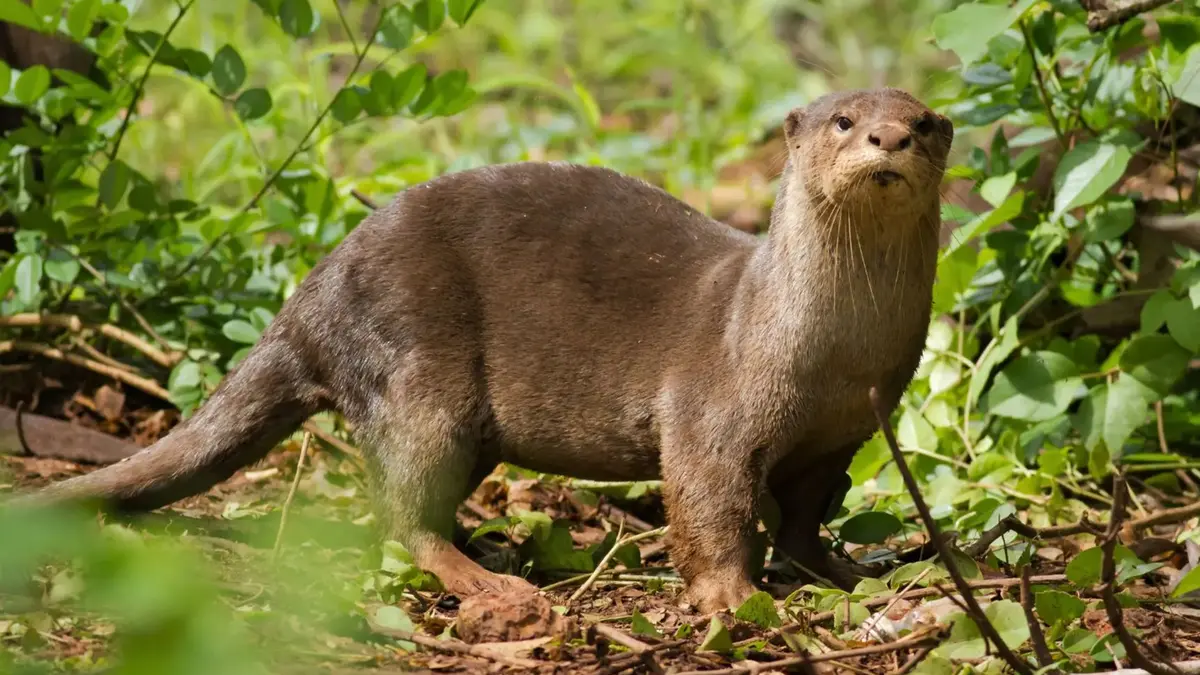
The smooth-coated otter is a semi-aquatic carnivorous mammal with the scientific name Lutrogale perspicillata.
It belongs to Mustelidae, the family containing otters, badgers, martens and weasels.
Lutrogale perspicillata is the only living species placed within the genus Lutrogale.
Its short, sleek fur gives the species its common English name.
A flattened tail and webbed feet support efficient swimming through rivers and wetlands.
Distribution and habitat
The species occurs across parts of South and Southeast Asia.
A geographically separated population also survives within the marshes of southern Iraq.
Habitats include large rivers, lakes, reservoirs, floodplains, mangroves, estuaries and rice-growing wetlands.
Dense bankside vegetation provides resting places, den sites and cover for young otters.
Stable water, adequate prey and relatively safe banks strongly influence local distribution.
Behaviour and ecological role
Smooth-coated otters usually live in vocal family groups and often hunt cooperatively.
Fish dominate their diet, although they also eat crustaceans, frogs, insects and other animals.
As upper-level aquatic predators, otters influence prey populations and freshwater food webs.
Their presence can indicate usable habitat, prey and bankside cover.
However, one sighting alone cannot prove that an entire waterbody is pollution-free.
Mettur and the Cauvery
Mettur Dam crosses the Cauvery River within Salem district of Tamil Nadu.
Its reservoir is widely called the Stanley Reservoir.
Reservoir edges, river channels, islands and vegetated banks can create varied otter habitat.
Fishing pressure, sand extraction, traffic and fluctuating water levels can disturb these sites.
Protection should therefore connect reservoir management with upstream and downstream river conservation.
What did earlier Cauvery research show?
An older study surveyed a 62.5-kilometre Cauvery stretch during 2010–11.
It mapped otter evidence across 31 kilometres and identified at least 36 individuals.
The researchers recorded seven groups and examined twenty-one spraint samples for dietary evidence.
Greater water depth and vegetation showed positive relationships with otter habitat use.
Human disturbance showed a negative relationship with recorded distribution.
Conservation status
| Framework | Status |
|---|---|
| International Union for Conservation of Nature Red List | Vulnerable |
| Convention on International Trade in Endangered Species | Appendix I |
| Wild Life (Protection) Act, 1972 | Schedule I under the amended schedules |
Appendix I places the strictest convention controls upon international commercial trade.
It does not replace India’s separate domestic wildlife-protection law.
Major threats
- Wetland conversion and altered river flows remove feeding and breeding habitat.
- Pollution can reduce fish availability and expose predators to accumulated contaminants.
- Sand mining destroys resting banks, dens and riverside vegetation.
- Fishing nets can entangle otters and create conflict with local fishers.
- Poaching and illegal wildlife trade continue threatening populations across their range.
Conservation priorities
Authorities need repeated surveys using comparable methods across seasons and river reaches.
Protecting denning banks and vegetated corridors can support movement between habitat patches.
Cleaner inflows and sustainable fishing protect otters while benefiting communities and other aquatic wildlife.
Local fishers can help record sightings, prevent entanglement and identify important breeding areas.
Conclusion
The Mettur report strengthens the case for landscape-level protection of the Cauvery’s connected freshwater habitats.