

Why in news?
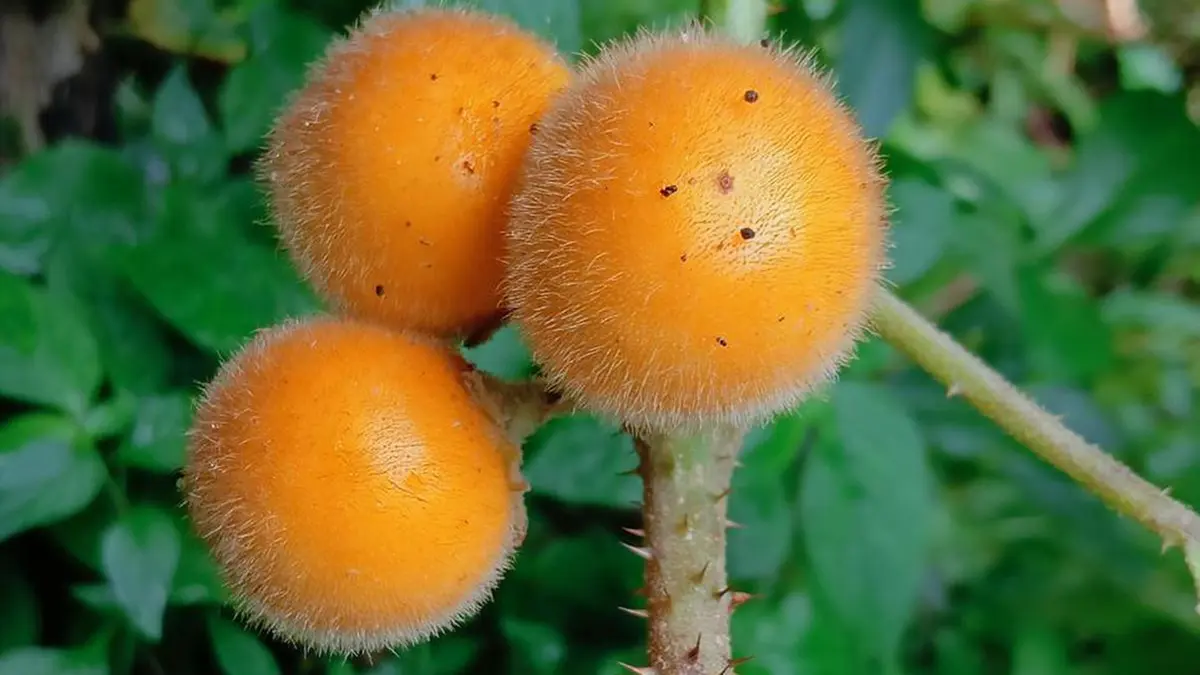
Scientists from the Botanical Survey of India (BSI) recently discovered a new species of wild brinjal in the evergreen forests of Middle Andaman Island. The species, named Solanum pandeyi, adds to the rich botanical diversity of the Andaman and Nicobar archipelago and honours plant taxonomist Prof. Arun Kumar Pandey of the University of Delhi.
Background
The Andaman and Nicobar Islands harbour many unique plant species due to their isolation and tropical climate. The genus Solanum includes brinjal, tomato and potato. Solanum pandeyi was discovered growing along forest edges where it was already used by the Great Andamanese tribe as a food and medicine. The new plant resembles Solanum lasiocarpum but differs in leaf shape and floral traits. It belongs to the Leptostemonum clade, which contains many prickly solanums.
Uses and facts
- Traditional uses: The Great Andamanese people consume the fruit and use seeds and roots to relieve tooth infections. Settler communities on the island prepare a sour‑sweet sauce using ripe fruit, jaggery, chilli, garlic, ginger and salt.
- Taxonomic importance: The discovery expands our understanding of India’s wild brinjal diversity. Detailed documentation helps in conservation and potential domestication of useful traits like disease resistance.
- Role of BSI: Established in 1890, the BSI is India’s premier institute for plant taxonomy under the Ministry of Environment, Forest and Climate Change. It identifies plant species, maintains herbaria and guides conservation policies.
Conclusion
Solanum pandeyi highlights the hidden botanical wealth of the Andaman Islands and the importance of ethnobotanical knowledge. By cataloguing and preserving wild relatives of crop plants, scientists can harness traits that improve food security while safeguarding indigenous traditions.