
Why in news?
A July article revisited research criticising exclusionary fortress conservation. The study presented Soliga experience in the Biligiri Hills as an alternative. It argued for conservation that recognises Indigenous knowledge, rights and stewardship. The underlying research was published in 2024, not newly conducted in July 2026.
Background
The Soliga, also written Solega, are a Scheduled Tribe of southern India.
They mainly live across the Biligiri Rangan Hills and adjoining landscapes of Karnataka and Tamil Nadu.
The community speaks a Dravidian language and also commonly uses Kannada.
Community narratives describe Soligas as the “children of bamboo.”
Their identity combines forest knowledge, sacred places, small farming and collection of forest produce.
The Biligiri landscape
The Biligiri Rangan Hills lie in Chamarajanagar district of southern Karnataka.
The landscape forms an ecological bridge between the Western and Eastern Ghats.
Its elevation range supports scrub, deciduous, evergreen and grassland habitats.
Tigers, elephants, leopards, gaur and many smaller species occur within this varied terrain.
The region became a wildlife sanctuary in 1974 and a tiger reserve in 2011.
What is fortress conservation?
Fortress conservation treats protected nature as an area needing separation from resident people.
It assumes that human use is inherently incompatible with biodiversity protection.
This model can restrict access, displace communities and ignore earlier human stewardship.
The phrase describes a policy approach rather than a separate Indian statute.
What did the 2024 research examine?
The Global Ecology and Conservation paper was titled “Reshaping conservation incorporating Indigenous perspectives.”
Researchers reviewed conservation literature, policies and the Soliga experience within the tiger reserve.
They held workshops with elders during late 2022 and 2023.
Informal discussions, observations and long field experience also informed the research note.
The authors recommended collaborative management and culturally appropriate livelihood incentives.
The study is a policy and community perspective analysis, not a controlled ecological experiment.
How did protected-area rules affect Soligas?
The 1974 sanctuary declaration restricted hunting, shifting cultivation and customary forest access.
Many families were displaced or pressed to leave parts of their ancestral landscape.
Restrictions later affected collection and sale of non-timber forest produce.
These changes weakened livelihoods, cultural practices and direct intergenerational knowledge transfer.
The tiger-reserve declaration renewed fears of further exclusion.
The Forest Rights Act
Parliament enacted the Scheduled Tribes and Other Traditional Forest Dwellers (Recognition of Forest Rights) Act in 2006.
It is commonly called the Forest Rights Act, or FRA.
The law recognises historical injustice caused by denying customary forest rights.
It covers individual habitation and cultivation rights alongside several community rights.
Community rights can include grazing, forest produce, cultural sites and conservation responsibilities.
Claims require evidence and approval through the law’s Gram Sabha-centred process.
Why is the Soliga case notable?
Soliga communities secured community forest rights inside the tiger-reserve landscape around 2011.
They are widely described as India’s first community receiving such recognition inside a tiger reserve.
This achievement followed community organisation, mapping, advocacy and engagement with government institutions.
The recognition came through administrative implementation of the FRA, not a single court judgment.
Traditional ecological knowledge
Soliga knowledge contains detailed names for plants, animals, habitats, seasons and ecological relationships.
It includes ways of avoiding dangerous encounters with elephants, tigers and other wildlife.
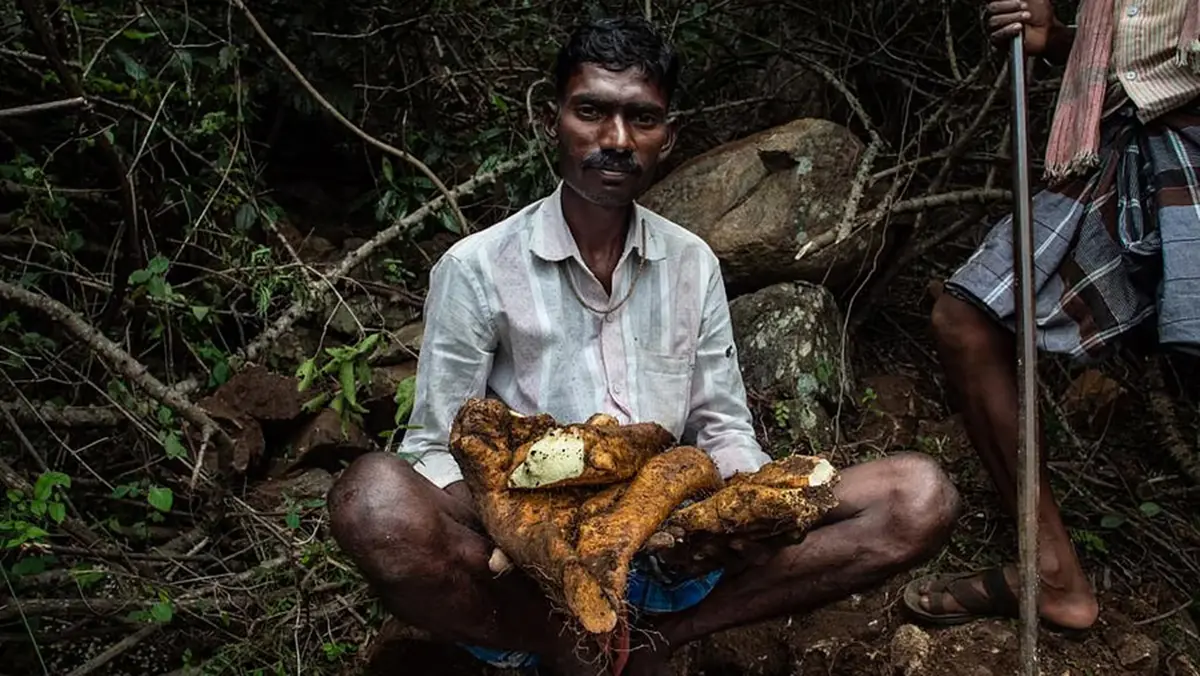
Community members collect honey, amla, lichen, tubers and other forest materials.
Sacred groves, trees and animal-linked beliefs reinforce responsibilities toward particular places.
This knowledge changes over time and should not be treated as fixed folklore.
Fire and Lantana camara
Soliga elders link major forest changes with bans on customary low-intensity litter burning.
They report that dense invasive Lantana camara replaced many grasses and useful understorey plants.
The thickets can obstruct movement by people and large animals.
Research confirms a strong regional expansion of lantana, although its causes remain multiple.
Any fire management must combine local knowledge with weather, safety and biodiversity evidence.
A collaborative model
| Management need | Possible community contribution |
|---|---|
| Habitat monitoring | Fine-scale observations of species, water and seasonal change. |
| Invasive control | Site knowledge, labour and long-term follow-up after removal. |
| Fire planning | Knowledge of fuels, safe periods and culturally important sites. |
| Wildlife coexistence | Locally tested avoidance practices and rapid conflict information. |
| Livelihood security | Sustainable forest-produce collection with transparent benefit sharing. |
Successful participation needs real authority, transparent data and fair payment, not symbolic consultation.
Prelims facts
- Soligas are a Scheduled Tribe associated with southern Karnataka and adjoining northern Tamil Nadu.
- Biligiri Rangan Hills form an ecological connection between the Western and Eastern Ghats.
- The wildlife sanctuary was declared in 1974 and became a tiger reserve during 2011.
- The Forest Rights Act recognises both eligible individual and community forest rights.
- Non-timber forest produce includes honey, medicinal plants, fruits and many other non-wood materials.
Conclusion
The Soliga experience supports conservation that combines community rights, traditional knowledge and scientific monitoring.