
Why in News?
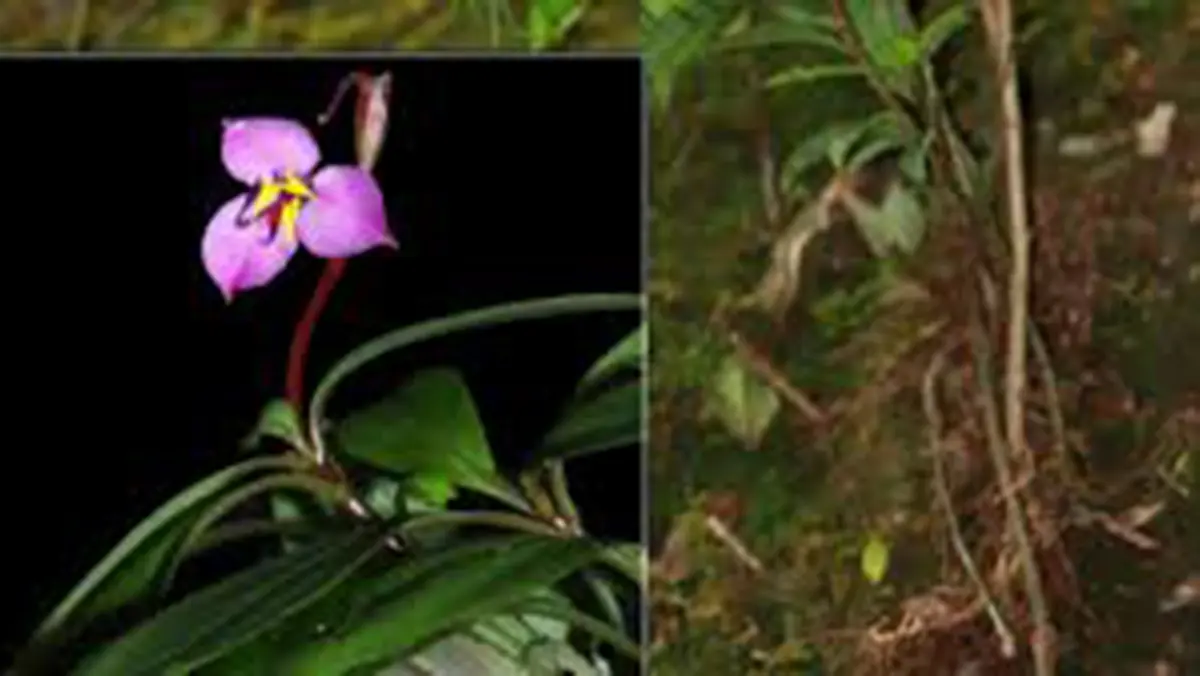
Botanists from the University of Calicut and the Botanical Survey of India have described a new species of flowering plant from the Western Ghats of Kerala. Named Sonerila roxburghii, the plant was found in the high‑altitude forests of the Idukki district and highlights the rich yet fragile biodiversity of the region.
Background
The genus Sonerila belongs to the family Melastomataceae and comprises delicate herbs confined primarily to the tropical forests of Asia. Many species inhabit the Western Ghats, a UNESCO World Heritage site recognised for its endemism. In recent years botanists have intensified explorations in lesser‑known habitats, often discovering new species that are highly localised and vulnerable.
The newly described species honours William Roxburgh, a pioneering Scottish surgeon botanist often called the “father of Indian botany”. Roxburgh catalogued numerous Indian plants during his service with the British East India Company in the late 18th century. Naming the plant after him acknowledges his contributions to systematic botany in India.
Key Features
- Habitat: S. roxburghii grows in moist, shaded rock outcrops at elevations between 1,380 m and 1,480 m in the Mankulam and Kallar forests of Kerala. It thrives on high‑altitude slopes constantly misted by cloud cover.
- Growth form: The herb reaches up to 60 cm in height. Its stems are slender and terete (cylindrical).
- Leaves: The leaves are lanceolate to elliptic with smooth surfaces that taper gradually towards the stem. They have a cuneate (wedge‑shaped) base and entire margins.
- Flowers: The plant bears light‑pink, 3‑ to 10‑flowered cymes. The hypanthia (floral tubes) are obscurely six‑ribbed, and the anthers are acuminate to rostrate (tapering to a beak‑like tip).
- Fruit: Capsules are six‑ribbed and contain tiny seeds. These features distinguish the species from other members of the genus such as S. grandiflora and S. sadasivanii.
- Conservation status: Because the species is known only from a few small populations and occupies a specialised habitat threatened by road expansion and tourism, it has been provisionally assessed as Critically Endangered.
Significance
- The discovery underscores the importance of exploring understudied habitats in the Western Ghats, where many species may be on the brink of extinction even before they are documented.
- Naming the plant after William Roxburgh connects modern botanical research with historical scholarship, highlighting India’s long legacy of plant exploration.
- Protecting the microhabitats of S. roxburghii requires careful management of ecotourism and infrastructure projects in the Western Ghats, a biodiversity hotspot of global significance.
Conclusion
Sonerila roxburghii adds to the growing list of narrowly endemic plants in the Western Ghats. Its discovery reminds us that safeguarding India’s botanical wealth demands both scientific research and proactive conservation.
Source: ETV Bharat

